
Escucha gratis este podcast en la aplicación: Descarga gratuita en la App Store
radio.net
Sleep timer
Favoritos
73 episodios
Brian Kernighan: Inside Bell Labs, The Best Programmer, Why C Won
26/10/2026 | 1 h 28 minBrian Kernighan is a former Bell Labs member of technical staff, co-author of the original C book, and the one who popularized “Hello World.” We talked about what Bell Labs was like and the stories behind all the famous tools that were built there.
• My ergonomic keyboard project I mentioned, you can follow along here: https://read.compose.llc/
• The Kickstarter page for it: https://www.kickstarter.com/projects/ryanlpeterman/compose-simple-ergonomics-beautifully-done
Podcast links:
• YouTube: https://www.youtube.com/watch?v=sMllOlxVgD0
• Apple: https://podcasts.apple.com/us/podcast/the-peterman-pod/id1777363835
• Transcript: https://www.developing.dev/p/e072-brian-kernighan
Thank you to this episode's sponsor for supporting my work:
• WorkOS: makes your app Enterprise Ready with easy to use APIs to add SSO, SCIM, RBAC, and more in just a few lines of code, check them out at https://workos.com/
Timestamps:
(00:00) Intro
(00:42) What Bell Labs was and how he got hired
(06:34) Why so many inventions came from Bell Labs
(14:15) A day in the life at Bell Labs
(27:55) The most impressive people he worked with
(33:50) The AT&T film explaining Unix
(39:46) Why C was so influential
(43:25) How awk was created
(48:40) What he misses most about Bell Labs
(54:10) Are LLMs bad for computer science education
(01:01:46) His 1972 commit in the Go repo
(01:03:43) Grace Emlen, the fake Bell Labs employee
(01:07:39) Why he writes so many books
(01:19:58) His favorite and least favorite languages
(01:24:28) Advice for students and young people
(01:27:42) Outro
Where to find Brian:
• Personal website: https://www.cs.princeton.edu/~bwk/
• Princeton University faculty profile: https://www.cs.princeton.edu/people/profile/bwk
• Wikipedia: https://en.wikipedia.org/wiki/Brian_Kernighan
Where to find Ryan:
• Newsletter: https://www.developing.dev/
• X/Twitter: https://x.com/ryanlpeterman
• LinkedIn: https://www.linkedin.com/in/ryanlpeterman/
• Threads: https://www.threads.com/@ryanlpeterman
• Instagram: https://www.instagram.com/ryanlpeterman
• TikTok: https://www.tiktok.com/@ryanlpeterman
Referenced in this episode:
• UNIX: Making Computers Easier to Use: https://www.youtube.com/watch?v=XvDZLjaCJuw
• Brian Kernighan’s first Harvard CS50 lecture (1996): https://www.youtube.com/watch?v=6Ba1XFVy7qw
• A Beautiful Mind: https://www.universalpicturesathome.com/movies/a-beautiful-mind
• Shifts: Important Ideas in Computing: https://www.amazon.com/Shifts-Nine-Ideas-Revolutionized-Computing/dp/0262064294/
• Labscam (Penn & Teller at Bell Labs, 1989): https://www.nokia.com/bell-labs/about/dennis-m-ritchie/labscam.html
• Labscam video: https://www.youtube.com/watch?v=qnsmDNamd2g
• Understanding the Digital World (new edition): https://www.amazon.com/Understanding-Digital-World-Computers-Internet/dp/0691288879The Story Behind Creating DNS | Paul Mockapetris
19/10/2026 | 53 minThis interview is with Paul Mockapetris, the creator of the internet's Domain Name System (DNS). I talked to him about the story behind building it and certain design choices he made.
• My ergonomic keyboard project I mentioned, you can follow along here: https://read.compose.llc/
• The Kickstarter page for it: https://www.kickstarter.com/projects/ryanlpeterman/compose-simple-ergonomics-beautifully-done
Podcast links:
• YouTube: https://www.youtube.com/watch?v=LT4iVeUoL18
• Apple: https://podcasts.apple.com/us/podcast/the-peterman-pod/id1777363835
• Transcript: https://www.developing.dev/p/e071-paul-mockapetris
Thank you to this episode's sponsor for supporting my work:
• WorkOS: makes your app Enterprise Ready with easy to use APIs to add SSO, SCIM, RBAC, and more in just a few lines of code, check them out at https://workos.com/
Timestamps:
(00:00) Intro
(00:40) What computing was like before DNS
(09:02) Why URLs are inverted
(16:33) How DNS works
(20:27) How he migrated the internet to DNS
(25:17) Why do companies host DNS servers
(33:17) What is an RFC
(35:07) How he got into computing
(46:39) Advice for his younger self
(52:56) Outro
Where to find Paul:
• Wikipedia: https://en.wikipedia.org/wiki/Paul_Mockapetris
Where to find Ryan:
• Newsletter: https://www.developing.dev/
• X/Twitter: https://x.com/ryanlpeterman
• LinkedIn: https://www.linkedin.com/in/ryanlpeterman/
• Threads: https://www.threads.com/@ryanlpeterman
• Instagram: https://www.instagram.com/ryanlpeterman
• TikTok: https://www.tiktok.com/@ryanlpeterman
Referenced in this episode:
• Original DNS RFC 882: https://www.rfc-editor.org/info/rfc882/
• Original DNS RFC 883: https://www.rfc-editor.org/info/rfc883/Scott Aaronson: The Mathocalypse, Will Intelligence Matter Anymore?
12/10/2026 | 1 h 1 minScott Aaronson is one of the world's leading quantum computing researchers and spent two years at OpenAI working on AI safety.
We talked about why he thinks the singularity has already begun for math, who gets credit when AI writes the proof, and whether intelligence will still matter once machines do the thinking.
• My ergonomic keyboard project I mentioned, you can follow along here: https://read.compose.llc/
• The Kickstarter page for it: https://www.kickstarter.com/projects/ryanlpeterman/compose-simple-ergonomics-beautifully-done
Podcast links:
• YouTube: https://www.youtube.com/watch?v=ORlscppGGh4
• Apple: https://podcasts.apple.com/us/podcast/the-peterman-pod/id1777363835
• Transcript: https://www.developing.dev/p/e070-scott-aaronson
Thank you to this episode's sponsor for supporting my work:
• WorkOS: makes your app Enterprise Ready with easy to use APIs to add SSO, SCIM, RBAC, and more in just a few lines of code, check them out at https://workos.com/
Timestamps:
(00:00) Intro
(00:34) Why he updated so hard on AI
(01:14) The people still denying AI progress
(03:53) The singularity has already begun for math
(08:30) Will human-driven math research survive
(13:12) Who gets credit for AI-written papers
(15:55) OpenAI's $15M Navier-Stokes proof
(19:20) What if AI proved P = NP
(23:07) Why AI is so good at finding counterexamples
(26:13) The goalposts keep moving
(28:52) Why AI disclosure matters in research
(32:59) The fake Monet experiment
(35:23) Why he blogs instead of getting rich
(39:45) Are AI labs racing too fast
(42:01) Will intelligence still matter
(47:12) Book recommendations
(52:27) Advice for students today
(57:23) Reacting live to a new AI result
(59:58) Outro
Where to find Scott:
• Personal website: https://www.scottaaronson.com/
• Blog — Shtetl-Optimized: https://scottaaronson.blog/
• Wikipedia: https://en.wikipedia.org/wiki/Scott_Aaronson
Where to find Ryan:
• Newsletter: https://www.developing.dev/
• X/Twitter: https://x.com/ryanlpeterman
• LinkedIn: https://www.linkedin.com/in/ryanlpeterman/
• Threads: https://www.threads.com/@ryanlpeterman
• Instagram: https://www.instagram.com/ryanlpeterman
• TikTok: https://www.tiktok.com/@ryanlpeterman
Referenced in this episode:
• OpenAI's Navier–Stokes Millennium Prize solution: https://cdn.openai.com/pdf/32d9f210-8b73-45e0-91bc-82a30aef8a9a/navier-stokes.pdf
• Rebecca Goldstein's The Mind-Body Problem: https://rebeccagoldstein.com/the-mind-body-problem-contemporary-american-fiction/
• Andrew Hodges's Alan Turing: The Enigma: https://www.turing.org.uk/book/
• The Man Who Knew Infinity: https://www.simonandschuster.com/books/The-Man-Who-Knew-Infinity/Robert-Kanigel/9781476763491
• The Adventures of Huckleberry Finn: https://www.gutenberg.org/ebooks/76
• Anthropic's subquadratic 3SUM result: https://arxiv.org/abs/2610.06783Neetcode: Google vs Amazon, Programming Interviews, Quitting Big Tech
05/10/2026 | 34 minNeetcode is the most well-known coding interview prep creator with over 1M+ subs on YouTube. I interviewed him about the latest on coding interviews, his career at Amazon vs Google, and what it was like quitting big tech to do his own thing.
• My ergonomic keyboard project I mentioned, you can follow along here: https://read.compose.llc/
• The Kickstarter page for it: https://www.kickstarter.com/projects/ryanlpeterman/compose-simple-ergonomics-beautifully-done
Podcast links:
• YouTube: https://youtu.be/K15dND_Kfvg
• Apple: https://podcasts.apple.com/us/podcast/the-peterman-pod/id1777363835
• Transcript: https://www.developing.dev/p/neetcode-google-vs-amazon-programming
Thank you to this episode's sponsor for supporting my work:
• WorkOS: makes your app Enterprise Ready with easy to use APIs to add SSO, SCIM, RBAC, and more in just a few lines of code, check them out at https://workos.com/
Timestamps:
(00:00) Intro
(00:33) Quitting Amazon after 2 months
(06:00) Testing Neetcode on Leetcode
(12:57) Memorizing vs deriving solutions and intelligence
(16:13) The story behind Neetcode
(22:24) Getting a job at Google
(27:47) How it was quitting big tech
(29:38) What he hated most about Google
(30:52) Top technical book recommendation
(32:34) Advice for his younger self
(33:46) Outro
Where to find Neetcode:
• LinkedIn: https://www.linkedin.com/in/navdeep-singh-3aaa14161/
• Twitter/X: https://x.com/neetcode1
• His website: https://neetcode.io/
• YouTube: https://www.youtube.com/@NeetCodeIO
• GitHub: https://github.com/neetcode-gh
• Instagram: https://www.instagram.com/neetcodeio/
• TikTok: https://www.tiktok.com/@neetcode.io
• Discord: https://discord.gg/ddjKRXPqtk
Where to find Ryan:
• Newsletter: https://www.developing.dev/
• X/Twitter: https://x.com/ryanlpeterman
• LinkedIn: https://www.linkedin.com/in/ryanlpeterman/
• Threads: https://www.threads.com/@ryanlpeterman
• Instagram: https://www.instagram.com/ryanlpeterman
• TikTok: https://www.tiktok.com/@ryanlpeterman
Referenced in this episode:
• Neetcode's "Maybe Some People Should Just Give Up" video: https://www.youtube.com/watch?v=rsoEipuwXiI
• Designing Data-Intensive Applications: https://www.amazon.com/Designing-Data-Intensive-Applications-Reliable-Maintainable/dp/B08VL1BLHBAmazon VP: Questions On Corporate Politics But They Get Increasingly Darker | Ethan Evans
28/09/2026 | 3 h 7 minIn this episode, I asked Ethan Evans (ex-Amazon VP) questions about common situations in corporate politics but they get increasingly darker.
• My ergonomic keyboard project I mentioned, you can follow along here: https://read.compose.llc/
• The Kickstarter page for it: https://www.kickstarter.com/projects/ryanlpeterman/compose-simple-ergonomics-beautifully-done
Podcast links:
• YouTube: https://www.youtube.com/watch?v=KhjhRRz3VJw
• Apple: https://podcasts.apple.com/us/podcast/the-peterman-pod/id1777363835
• Transcript: https://www.developing.dev/p/e068-ethan-evans
Thank you to this episode's sponsor for supporting my work:
• WorkOS: makes your app Enterprise Ready with easy to use APIs to add SSO, SCIM, RBAC, and more in just a few lines of code, check them out at https://workos.com/
Timestamps:
(00:00) Intro
(00:42) How to receive credit for your work
(19:18) Ways for quiet people to get visibility
(21:32) How to be trusted for top projects
(29:52) How to defend from others taking your project
(36:13) How to reject bad projects
(44:10) How to be first for promo
(55:35) How to handle managers that dislike career growth talk
(01:06:30) What if your manager is in the way
(01:15:43) Did he ever have overly political reports
(01:28:06) How to fire a bad manager
(01:35:16) What gives you leverage
(01:43:41) How to defend against peers undermining you
(01:50:24) What if everyone is good at politics
(01:55:11) How Jeff Bezos burned him for empire building
(02:03:27) How to retain your headcount
(02:07:31) Career recommendations for the current landscape
(02:15:11) How to avoid negative layoff optics
(02:18:39) How to develop executive presence
(02:29:25) How to network in a natural way
(02:33:30) How to network with powerful people
(02:41:01) How to learn hidden incentives
(02:44:43) What happens behind the scenes with HR
(02:50:13) Did he burn people to get ahead
(02:53:24) What he says to people who hate politics
(02:59:03) Top book recommendations on power dynamics
(03:00:45) How he would speedrun career growth today
(03:06:56) Outro
Where to find Ethan:
• Personal website: https://www.ethanevans.com/
• Newsletter: https://levelupwithethanevans.substack.com/
• LinkedIn: https://www.linkedin.com/in/ethanevansvp/
• YouTube: https://www.youtube.com/@EthanEvansVP
• X/Twitter: https://x.com/EthanEvansVP
• Facebook: https://www.facebook.com/ethanevansvp
Where to find Ryan:
• Newsletter: https://www.developing.dev/
• X/Twitter: https://x.com/ryanlpeterman
• LinkedIn: https://www.linkedin.com/in/ryanlpeterman/
• Threads: https://www.threads.com/@ryanlpeterman
• Instagram: https://www.instagram.com/ryanlpeterman
• TikTok: https://www.tiktok.com/@ryanlpeterman
Referenced in this episode:
• Never Split the Difference: https://www.blackswanltd.com/never-split-the-difference
• Leadership and Self-Deception: https://arbinger.com/bookstore/leadership-and-self-deception
• The 48 Laws of Power: https://www.penguinrandomhouse.com/books/330912/the-48-laws-of-power-by-robert-greene/
Más podcasts de Tecnología






Podcasts a la moda de Tecnología













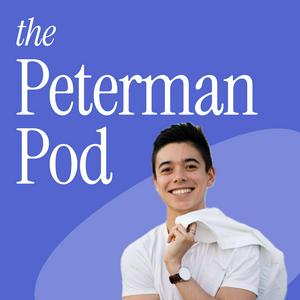
Acerca de The Peterman Pod
Sharing the transparent career stories of technical people. Hosted by an ex-Staff engineer at Instagram
Sitio web del podcastEscucha The Peterman Pod, All-In with Chamath, Jason, Sacks & Friedberg y muchos más podcasts de todo el mundo con la aplicación de radio.net
Descarga la app gratuita: radio.net
- Añadir radios y podcasts a favoritos
- Transmisión por Wi-Fi y Bluetooth
- Carplay & Android Auto compatible
- Muchas otras funciones de la app
Descarga la app gratuita: radio.net
- Añadir radios y podcasts a favoritos
- Transmisión por Wi-Fi y Bluetooth
- Carplay & Android Auto compatible
- Muchas otras funciones de la app
The Peterman Pod
Escanea el código,
Descarga la app,
Escucha.
Descarga la app,
Escucha.
 Colombia