PodcastsEconomía y empresaCorruption Crime & Compliance

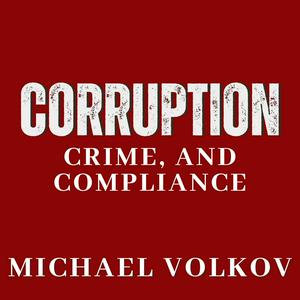
Corruption Crime & Compliance

Michael Volkov
Corruption Crime & Compliance
Último episodio

Episodios disponibles

5 de 385
  • [Replay] Five Strategies to Mitigate a New Risk Environment

    What do you do when the headlines shift faster than your risk matrix can keep up? In this episode, Michael Volkov dives into the challenge of adapting compliance programs in the face of volatile and fast-changing global risks—from tariffs and trade controls to supply chain disruptions and third-party exposures. While the pressure to react is constant, the real key is staying anchored in your company’s values while making smart, timely adjustments.Legal and compliance officers are used to adjustments and continuous improvement of their compliance programs. Building and maintaining an effective ethics and compliance program never ends — it is a continuous process. In a climate of rapid change, the strategies may feel familiar, but the risks themselves are taking new shape. To that end, Michael outlines five specific strategies for evolving your compliance program without losing your footing.You'll hear him discuss:Why culture isn't just a buzzword—it's the first and most critical line of defense in volatile timesHow to run a quick-turn, focused risk assessment to identify new hotspots like sanctions, tariffs, and supply chain gapsThe rising danger of indirect exposure to foreign terrorist organizations and cartels through third partiesWhat companies need to know about tariff classification, scope, and enforcement to avoid legal and economic penaltiesWhy sanctions and export controls enforcement is heating up—and what that means for your global operationsHow to recalibrate third-party risk management to account for trade-based threats and hidden ownership structuresResourcesMichael Volkov on LinkedIn | TwitterThe Volkov Law Group
    --------  
    13:36
  • [Replay] Third-Party Risks and Sanctions Compliance
    With the beginning of the “New FCPA” era coined by DOJ’s Deputy Attorney General Lisa Monaco, we now need to focus on third-party risk and sanctions enforcement. The law, the practice, and the risks are important and not just the same as FCPA legal requirements. As we embark on a new criminal enforcement era surrounding sanctions violations, companies have to address this issue and do it correctly. In this episode, Michael Volkov takes a comprehensive look at third-party risks from the distribution and supply sides and outlines appropriate strategies to manage these risks.Epsilon Electronics serves as a stark reminder of the financial consequences of non-compliance. The company faced an OFAC enforcement action due to a shipment to Iran, resulting in a staggering penalty of over $4 million.Apollo Aviation Group settled with OFAC for $210,600 for leasing aircraft engines which ultimately ended up being placed in to aircraft of a prohibited entity, Sudan Airways, violating sanctions regulations.ELF Cosmetics settled with OFAC for $996,000 for importing false eyelash kits containing materials sourced from North Korea, highlighting supply chain due diligence failures.The ELF Cosmetics case underscores the crucial role of supply chain due diligence in preventing sanctions violations. Instead of sticking their heads in the sand, companies must undertake basic supply chain due diligence when sourcing products from regions close to high-risk countries or regions.“Reason to know” is now the key phrase guiding the New FCPA era. OFAC does not need to prove goods ultimately end up in a sanctioned country. When you see red flags, you must resolve them or they could be considered a “reason to know” in OFAC’s eyes.Seven essential elements to boost your compliance program and effectively mitigate third-party sanctions risks include risk assessment, varying levels of due diligence, end-user documentation, monitoring, training, and red flag identification.ResourcesMichael Volkov on LinkedIn | TwitterThe Volkov Law Group
    --------  
    18:35
  • FCPA Update: Declination and New Indictment
    Is the DOJ really changing its playbook on FCPA enforcement, or is it business as usual under a new administration? In this episode, Michael digs into two headline developments that say a lot about where things are headed - the first FCPA declination under the Trump Administration and the first indictment. Both shed light on how DOJ is applying its policies in practice, what companies should expect, and why individuals are squarely in the crosshairs. Taken together, these cases remind listeners that while priorities may shift, the fundamentals of disclosure, cooperation, and accountability remain very much alive.You’ll hear him discuss:Why Liberty Mutual’s $4.7 million disgorgement shows DOJ is sticking closely to its Corporate Enforcement PolicyHow voluntary disclosure and cooperation continue to all but guarantee a declinationThe details behind Liberty Mutual’s misconduct in India and the factors DOJ weighed in its decisionWhat the Pemex indictment tells us about DOJ’s push to hold individuals accountableThe role of disgorgement in DOJ resolutions and whether the policy might be applied with more flexibility going forwardHow luxury goods and personal perks were used in the Pemex scheme and why DOJ zeroed in on those detailsWhat these developments signal for companies trying to strengthen compliance programs in a shifting enforcement landscapeResourcesMichael Volkov on LinkedIn | TwitterThe Volkov Law Group
    --------  
    10:11
  • AI Legal Compliance and Governance
    AI promises efficiency, innovation, and new opportunities - but are companies moving too fast in the rush to adopt it? The risks are very real, from false content to flawed decision-making, and the global regulatory patchwork is only getting more complex. The challenge now is building governance and compliance frameworks that keep pace without stifling progress.In this episode of Corruption, Crime, and Compliance, Michael Volkov explains why an AI compliance program is essential to corporate governance today.You’ll hear him discuss:Why companies need to start with a clear use case and weigh benefits against potential legal and compliance risks before rolling out AIThe evolving patchwork of regulations, including the FTC, state-level laws in the US, and the EU’s AI ActHow sector-specific rules in healthcare, financial services, and defense add new layers of complexityThe two biggest risks: AI-generated false content that can cause liability and reputational harm, and decision-making systems that create unfair or discriminatory resultsWhat strong AI governance looks like, from board oversight and compliance officers to clear policies and cross-functional committeesThe role of training, documentation, and incident reporting in ensuring responsible, transparent AI useWhy embedding responsible AI into company values and employee performance reviews helps build a culture of accountabilityResourcesMichael Volkov on LinkedIn | TwitterThe Volkov Law Group
    --------  
    13:30
  • Cadence Systems Pays $140 Million for Trade Violations and Pleads Guilty to Criminal Export Control Conspiracy
    What happens when a company tries to outsmart the system - and gets caught red-handed by the DOJ in a $140 million export control scheme tied to Chinese military supercomputers?In this episode, Michael dives into the DOJ’s criminal enforcement action against Cadence Design Systems - a case that marks yet another major step in the DOJ’s rapidly unfolding trade enforcement strategy. We’re no longer in the FCPA era. This is a whole new ballgame, where national security and trade compliance have collided, and companies that haven’t adjusted are already behind.You’ll hear him discuss:Why Cadence’s plea deal - not a DPA or NPA - is such a big dealHow the DOJ and BIS coordinated to secure over $140 million in criminal and civil penaltiesThe simple, sloppy scheme that involved fake names, hidden aliases, and blatant attempts to skirt export controlsWhy partial cooperation didn’t earn Cadence a full credit reduction - and what they failed to doThe shocking compliance gap: only one export control officer handling global riskWhat this case signals about the DOJ’s growing focus on national security and semiconductor enforcementWhy ethics, due diligence, and transaction monitoring are still your best defenseHow companies can avoid getting blindsided by embracing the new trade enforcement landscapeResourcesMichael Volkov on LinkedIn | TwitterThe Volkov Law Group
    --------  
    17:54

Más podcasts de Economía y empresa

Acerca de Corruption Crime & Compliance

Michael Volkov tackles the current and hot topics in the legal realms of corruption, crime, and compliance.
Sitio web del podcast

Escucha Corruption Crime & Compliance, Cracks Podcast con Oso Trava y muchos más podcasts de todo el mundo con la aplicación de radio.net

Descarga la app gratuita: radio.net

  • Añadir radios y podcasts a favoritos
  • Transmisión por Wi-Fi y Bluetooth
  • Carplay & Android Auto compatible
  • Muchas otras funciones de la app
Aplicaciones
Redes sociales
v8.1.2 | © 2007-2025 radio.de GmbH
Generated: 12/13/2025 - 11:21:35 PM