

Escucha gratis este podcast en la aplicación: Descarga gratuita en la App Store
radio.net
Sleep timer
Favoritos
288 episodios
Is It Really "Behavior"? Medical Issues We May Miss in Autistic & ADHD Kids
07/10/2026 | 28 minWhat if the "behavior" you're seeing isn't simply behavior?
When an autistic or ADHD child suddenly becomes more irritable, anxious, withdrawn, aggressive, avoidant, or emotionally dysregulated, it's easy to focus on what we can see—and how to make it stop.
But what if the behavior is actually a clue?
In this episode of The Autism ADHD Podcast, I'm joined by my dear friend Dr. Purnima Valdez, a developmental-behavioral pediatrician and Associate Professor in the Department of Pediatrics at Duke University Medical Center.
Together, we explore medical, emotional, and environmental factors that may contribute to changes in behavior in autistic and ADHD children and teens—and why some of these concerns can be surprisingly easy to miss.
Because even a child who speaks fluently may not be able to recognize, interpret, or communicate:
"Something doesn't feel right in my body."
Instead, we may see irritability, anxiety, withdrawal, aggression, avoidance, emotional dysregulation, or other changes in behavior.
And that's where curiosity becomes incredibly important.
In this episode, we talk about:
• Why behavior can be important information—not an explanation
• Sleep difficulties, fractured sleep, snoring, and sleep apnea
• How poor sleep can affect behavior and emotional regulation
• Headaches and migraines in neurodivergent children and teens
• Constipation, GI discomfort, and changes in behavior
• Interoception and difficulty recognizing or communicating what's happening inside the body
• Medication side effects—including side effects that may appear after a child has taken a medication for some time
• Eating, nutrition, safe foods, and restrictive eating patterns
• Anxiety, sensory overwhelm, school demands, and environmental stress
• Why "they're just trying to get out of class" may be the wrong conclusion
• How assumptions about behavior can unintentionally add shame to an already struggling child
• Why looking for patterns can help us better understand what a child may be experiencing
• When parents may want to involve their child's pediatrician or other healthcare professionals
• Why collaboration between parents, therapists, educators, medical professionals, and the child or teen matters
One of my favorite perspective shifts from this conversation is simple:
Maybe our expectation is off.
We often expect children to tell us exactly what's wrong.
"My stomach hurts."
"I have a headache."
"I didn't sleep well."
"Something feels different."
But autistic and ADHD children may experience, recognize, and communicate what's happening inside their bodies differently.
That doesn't mean they aren't communicating.
We may need to get better at recognizing how they're telling us.
And when a child is struggling, instead of immediately asking:
"How do we stop this behavior?"
we can become curious and ask:
"What might be happening that we haven't understood yet?"
This episode is especially important for parents of autistic and ADHD children, therapists, counselors, psychologists, educators, and other professionals supporting neurodivergent kids and teens.
Please share it with someone who needs this reminder: sometimes the behavior we're trying to change may be one of the most important clues we have.
FOR THERAPISTS, COUNSELORS & PSYCHOLOGISTS
Want to deepen your neurodiversity-affirming work with autistic and ADHD children and teens?
I've created continuing education trainings specifically for mental health professionals who want practical, neurodiversity-affirming strategies they can use in their clinical work.
Learn more about my continuing education trainings:
hollyblancmoses.com/cetraining
DOES YOUR CHILD OR CLIENT NEED HELP AT SCHOOL?
You'll love the 135 School Accommodations for Autistic & ADHD Students Guide! The guide includes practical, neurodiversity-affirming supports for
executive functioning,
academics,
sensory needs,
emotional regulation,
social support,
self-advocacy, and more, with examples of each accommodation. PLUS - 3 student examples
Parents, click here for the Guide
Therapists, click here for the Guide
JOIN MY FACEBOOK GROUPS
Parents click here
Therapists click here
Learn about my private practice - North Carolina Center for Autism and ADHD
🙋🏻♀️ Join me on Instagram, Facebook, and YouTube
❤️ If this episode helped you, please follow The Autism ADHD Podcast, share this episode, and leave a five-star review. Your support helps me continue creating free neurodiversity-affirming resources for parents and professionals.
ABOUT THE AUTISM ADHD PODCAST
The Autism ADHD Podcast provides neurodiversity-affirming information and practical strategies for parents, therapists, educators, and other professionals supporting autistic and ADHD children and teens.
Hosted by Holly Blanc Moses—a neurodivergent therapist, psychologist, mom, and speaker—the podcast explores emotional regulation, mental health, anxiety, executive functioning, sensory differences, social interaction, communication, school support, parenting, and more.
Guest - Dr. Purnima Valdez is a developmental behavioral pediatrician and an associate professor in the Department of Pediatrics at Duke University Medical Center.
MENTIONS
NCPAL
ASAN
Important: This podcast is provided for informational and educational purposes and is not a substitute for individualized medical or psychological diagnosis, advice, or treatment. Please consult an appropriate healthcare professional regarding medical or mental health concerns for you or your child.Are We Telling the Wrong Story? Executive Functioning in Autistic & ADHD Children
23/09/2026 | 38 minAre they really refusing—or are we expecting their brain to do something it can't reliably access in that moment?
Executive functioning differences can look like laziness, carelessness, defiance, lack of motivation, "not listening," forgotten homework, unfinished assignments, meltdowns, or complete shutdown after school.
But those "behaviors" may be telling us a very different story.
In this episode, you'll learn:
Why "try harder" often misses the real problem
How working memory affects classroom performance
Why multi-step verbal instructions can fall apart
Why kids may complete assignments but never turn them in
Why some neurodivergent kids are completely depleted after school
How visual directions, checklists, chunking, routines, and external supports can help
Why accommodations are about access—not special treatment
Helpful ways to think about support in IEP and 504 meetings
The goal isn't to make neurodivergent kids try harder.
It's to give their brain what it needs.
🎒 Need school accommodation ideas?
You'll love the 135 School Accommodations for Autistic & ADHD Students Guide! The guide includes practical, neurodiversity-affirming supports for executive functioning, academics, sensory needs, emotional regulation, social support, self-advocacy, and more, with examples of each accommodation.
Parents, click here for the Guide
Therapists, click here for the Guide
Join me in my Facebook Groups!
➡️ Parents click here
➡️ Therapists click here
Learn about my private practice - North Carolina Center for Autism and ADHD
🙋🏻♀️ Join me on Instagram, Facebook, and YouTube
Please leave a review! Your 5-star reviews help other families and professionals find The Autism ADHD Podcast. Thank you:)
About Holly Blanc Moses: Holly Blanc Moses is an AuDHD psychologist with 28 years of experience. She is a speaker, consultant, continuing education provider, and host of The Autism ADHD Podcast, Autism ADHD TV, and parent masterclasses.
About The Podcast
The Autism ADHD Podcast is for parents and professionals who want a neurodiversity-affirming approach to supporting autistic and ADHD children and teens — with a focus on emotional regulation, executive functioning, mental health, and connection.Could One Page Change Your Child's School Year?: Free Tool to Help Teachers, Therapists & Others Better Understand Autistic & ADHD Children
20/08/2026 | 54 minCould One Page Change Your Child's School Year?
A Free Tool to Help the Adults in Their World Truly Understand Them
If you're the parent of an autistic or ADHD child, you know how exhausting it can be to explain your child to every new teacher, therapist, physician, coach, tutor, or camp counselor. You hope they'll understand your child's strengths, communication style, sensory needs, executive functioning challenges, and what helps them thrive—but those conversations don't always happen the way you'd hoped.
In this episode of The Autism ADHD Podcast, I'm introducing a brand-new FREE resource designed to make those conversations easier.
The Get to Know My Child Snapshot is a one-page, fillable tool that helps the adults in your child's world understand who they are before assumptions, misunderstandings, or unnecessary struggles begin. Whether your child is autistic, ADHD, or both, this practical resource can help create stronger relationships, reduce anxiety, and support better outcomes at school, in therapy, at medical appointments, during extracurricular activities, and beyond.
As a psychologist who has spent nearly three decades supporting neurodivergent children, teens, and their families, I've seen firsthand how understanding changes everything. When adults understand why a child communicates differently, struggles with executive functioning, experiences sensory overload, or responds in unexpected ways, they're far more likely to respond with compassion, support, and effective accommodations instead of frustration or correction.
In this episode, you'll learn:
Why autistic and ADHD children often begin the school day already feeling anxious or overwhelmed.
How misunderstandings can increase anxiety, self-esteem challenges, and school avoidance.
Why communication differences are often mistaken for defiance, disrespect, or lack of motivation.
How sensory differences and executive functioning challenges affect learning, participation, and emotional regulation.
Why understanding a child's strengths is just as important as understanding their challenges.
How therapists can use the Get to Know My Child Snapshot to support self-awareness, self-advocacy, and collaboration with families.
How one simple tool can help teachers, therapists, physicians, coaches, tutors, camp counselors, and other caregivers better support autistic and ADHD children.
What's Included in the FREE Get to Know My Child Snapshot?
Your download includes:
Three one-page fillable PDF formats.
Completed examples to make completing the Snapshot simple.
Sections for strengths and interests.
Communication preferences.
Executive functioning.
Sensory needs.
Emotional regulation.
Social interaction.
Helpful supports and accommodations.
Behavior as communication.
It takes about five minutes to complete and can be updated as your child grows and their needs change.
This Episode Is Perfect For:
Parents of autistic and ADHD children and teens.
Mental health therapists, psychologists, counselors, occupational therapists, and speech-language pathologists.
Teachers, school counselors, and other educators.
Pediatricians and medical professionals.
Coaches, tutors, camp counselors, caregivers, and anyone who supports neurodivergent children.
Download Your FREE Get to Know My Child Snapshot
Parents Click Here
If you're getting ready for a new school year, beginning therapy, meeting a new physician, starting a new activity, or simply want the important adults in your child's life to better understand them, download your FREE Get to Know My Child Snapshot today.
Therapists, are you ready for real, neurodiversity-affirming continuing education trainings? If you thought, "YESS!" CLICK HERE.
About The Autism ADHD Podcast
The Autism ADHD Podcast provides neurodiversity-affirming information for parents, therapists, educators, and other professionals supporting autistic and ADHD children and teens. Each episode combines practical strategies, current research, and lived experience to help adults better understand neurodivergent children while supporting their mental health, emotional well-being, relationships, and long-term success.
If This Episode Helped You...
Please follow The Autism ADHD Podcast, leave a five-star review on Apple Podcasts, and share this episode with another parent, therapist, educator, physician, or coach. Every review and share helps more families discover neurodiversity-affirming support and resources.
And if you know someone who's preparing for a new school year, starting therapy, or meeting new providers, please send them this episode—and don't forget to download your FREE Get to Know My Child Snapshot.Why Some Tasks Feel Impossible for Autistic & ADHD Kids: Visual-Spatial Skills, Executive Functioning, and the Cost of Shame
18/06/2026 | 32 minWhy does your autistic or ADHD child struggle with things that seem easy for everyone else?
Maybe they can't keep their room organized. Maybe they lose things constantly. Maybe they seem overwhelmed by tasks that other children complete without much effort.
And maybe you've wondered...
"Are they just not trying?"
In this episode, I share a personal story that completely changed the way I think about strengths, executive functioning, and why some tasks feel impossible for certain brains.
When I opened the door to a cluttered closet at my clinic, I felt immediate overwhelm, shame, and paralysis. The teenager I hired to organize it had the exact opposite reaction—excitement, energy, and endless ideas.
Same closet. Different brains. Different strengths.
Using my own experiences as an autistic and ADHD psychologist, I discuss how visual-spatial differences and executive functioning challenges can impact organization, problem-solving, learning, navigation, daily living skills, and self-confidence.
We also explore why shame doesn't help autistic and ADHD children develop skills, and how repeatedly being told they're lazy, or not trying hard enough, can have lasting effects on their mental health and self-esteem.
In this episode, you'll learn:
• Why some autistic and ADHD children struggle with organization, planning and cleaning their rooms
• How executive functioning and visual-spatial abilities affect daily life
• Why shame is not a strategy
• How to identify and build on strengths
• Ways parents, educators, and therapists can provide support without damaging mental health
• Why different doesn't mean broken
If you're a parent, educator, or therapist supporting autistic and ADHD children and teens, this episode will help you better understand what's really happening beneath the struggle—and how to respond with compassion, understanding, and practical support.
Sincerely,
Holly Blanc Moses, The Mom/Neurodivergent Therapist
Check out these resources!
The 135 School Accommodations for Autistic & ADHD Students Guide is now available, including three detailed cases with accommodations for ONLY $27.95
What's Inside:
📚 Academic Supports (45 accommodations)
From pre-teaching strategies to assistive technology, the tools students need to access the curriculum without barriers
🎨 Sensory & Environmental Supports (22 accommodations)
Create a learning environment where your child can focus, regulate, and engage—not just survive
🧠 Executive Functioning & Self-Advocacy (24 accommodations)
Build the skills that will serve them for life—organization, time management, and speaking up for their needs
🤝 Social Supports (21 accommodations)
Turn recess and group work from nightmare to opportunity with structured, supportive approaches
💚 Mental Health & Emotional Regulation (23 accommodations)
Because learning can't happen when a child is overwhelmed, anxious, or in crisis
🌟 3 Detailed Student Examples With Individualized Accommodations
Plus:
✅ An example of each accommodation
✅ Tips on how to identify areas of need
✅ Free helpful education resources
Don't miss this opportunity to access 135 neurodiversity-affirming accommodations for only $27.95
➡️ Parents click here
➡️ Therapists click here
➡️ Educators click here
Join me in my Facebook Groups!
➡️ Parents click here
➡️ Therapists click here
Learn about my private practice - North Carolina Center for Autism and ADHD
🙋🏻♀️ Join me on Instagram, Facebook, and YouTube
Please leave a review! Your 5-star reviews help other families and professionals find The Autism ADHD Podcast. Thank you:)
About Holly Blanc Moses: Holly Blanc Moses is an AuDHD psychologist with 28 years of experience. She is a speaker, consultant, continuing education provider, and host of The Autism ADHD Podcast, Autism ADHD TV, and parent masterclasses.
About The Podcast
The Autism ADHD Podcast is for parents and professionals who want a neurodiversity-affirming approach to supporting autistic and ADHD children and teens — with a focus on emotional regulation, executive functioning, mental health, and connection.Small Language Shifts That Protect The Mental Health of Autistic & ADHD Children
11/06/2026 | 49 minThe Small Language Shifts That Protect the Mental Health of Neurodivergent Kids
What if some of the most common words we use with autistic and ADHD children are actually creating confusion, shame, masking and self-doubt?
Words like:
• Respectful
• Responsible
• Pay attention
• Motivated
• Trustworthy
• Nice
• Confident and on and on
Most of us use these words every day without thinking twice. But for many neurodivergent children and teens, these words can feel vague, confusing, and impossible to understand.
When children don't know exactly what is expected of them, they aren't learning the skill we hope to teach. Instead, they may begin to believe they are constantly getting things wrong.
Over time, that misunderstanding can impact mental health, learning, and relationships.
In this episode, I'm covering why and how commonly used words cause damage and how small shifts in communication can create more clarity, connection, safety, and understanding.
In this episode, you'll discover:
✔ Why vague language creates confusion for autistic and ADHD children
✔ How words like "respectful," "responsible," and "motivated" can unintentionally hurt neurodivergent children
✔ The connection between communication, mental health, and emotional safety
✔ What many neurodivergent children are actually trying to communicate
✔ Specific language shifts that improve cooperation and understanding
Whether you're a parent, educator, therapist, psychologist, or someone who supports neurodivergent children and teens, this episode will help you communicate in ways that foster understanding instead of confusion and connection instead of shame.
Because the goal isn't to make neurodivergent kids guess what we mean.
The goal is to help them feel safe, understood, capable, and supported.
If this episode resonates with you, please share it with another parent, educator, therapist, or psychologist who supports autistic and ADHD children and teens:) Thanks for joining me for this episode, Holly Blanc Moses - The Mom/Neurodivergent Therapist
Check out these resources!
The 135 School Accommodations for Autistic & ADHD Students Guide is now available, including three detailed cases with accommodations for ONLY $27.95
What's Inside:
📚 Academic Supports (45 accommodations)
From pre-teaching strategies to assistive technology, the tools students need to access the curriculum without barriers
🎨 Sensory & Environmental Supports (22 accommodations)
Create a learning environment where your child can focus, regulate, and engage—not just survive
🧠 Executive Functioning & Self-Advocacy (24 accommodations)
Build the skills that will serve them for life—organization, time management, and speaking up for their needs
🤝 Social Supports (21 accommodations)
Turn recess and group work from nightmare to opportunity with structured, supportive approaches
💚 Mental Health & Emotional Regulation (23 accommodations)
Because learning can't happen when a child is overwhelmed, anxious, or in crisis
🌟 3 Detailed Student Examples With Individualized Accommodations
Plus:
✅ An example of each accommodation
✅ Tips on how to identify areas of need
✅ Free helpful education resources
Don't miss this opportunity to access 135 neurodiversity-affirming accommodations for only $27.95
➡️ Parents click here
➡️ Therapists click here
➡️ Educators click here
Join me in my Facebook Groups!
➡️ Parents click here
➡️ Therapists click here
Learn about my private practice - North Carolina Center for Autism and ADHD
🙋🏻♀️ Join me on Instagram, Facebook, and YouTube
Please leave a review! Your 5-star reviews help other families and professionals find The Autism ADHD Podcast. Thank you:)
About Holly Blanc Moses: Holly Blanc Moses is an AuDHD psychologist with 28 years of experience. She is a speaker, consultant, continuing education provider, and host of The Autism ADHD Podcast, Autism ADHD TV, and parent masterclasses.
About The Podcast
The Autism ADHD Podcast is for parents and professionals who want a neurodiversity-affirming approach to supporting autistic and ADHD children and teens — with a focus on emotional regulation, executive functioning, mental health, and connection.
Más podcasts de Educación
 Seminario Fenix | Brian TracyCultura y sociedad, Economía y empresa, Educación, Empresa, Filosofía, Superación personal
 DianaUribe.fmEducación
 LA MAGIA DEL CAOS con Aislinn DerbezCultura y sociedad, Diarios personales, Educación, Salud mental, Salud y forma física, Superación personal
 Inglés desde ceroAprendizaje de idiomas, Educación
 Estoicismo FilosofiaEducación, Superación personal
 Tu Desarrollo PersonalEducación, Superación personal
 Dr. Mario Alonso PuigEducación, Superación personal
 Listening Time: English PracticeAprendizaje de idiomas, Educación
 BBVA Aprendemos juntosArte, Ciencias, Cultura y sociedad, Educación, Filosofía, Libros, Matemáticas, Música, Naturaleza
 American English PodcastAprendizaje de idiomas, Cultura y sociedad, Educación, Historia, Lugares y viajes
Podcasts a la moda de Educación
 Derecho en 5 minutosEducación
 InnerFrenchAprendizaje de idiomas, Educación
 Alimente Su FeEducación, Superación personal
 IKIGAI CAFÉEducación, Superación personal
 Vocabulario en InglésAprendizaje de idiomas, Educación
 La Fonda Filosófica (audio)
 Diego RuzzarinCiencias, Ciencias sociales, Cultura y sociedad, Educación, Filosofía, Superación personal
 Aprende portugués con LinguaBoostAprendizaje de idiomas, Cursos, Educación
 Good Life ProjectEconomía y empresa, Educación, Salud y forma física, Superación personal, Tutoriales
 Motivation Daily by MotiversityEducación, Salud y forma física, Superación personal
 Las Cosas Como SonEducación, Espiritualidad, Religión y espiritualidad, Salud mental, Salud y forma física, Superación personal
 Dutch Today: leer Nederlands met MartijnAprendizaje de idiomas, Educación
 Aprende coreano paso a pasoAprendizaje de idiomas, Educación
 Nayo Escobar PodcastEducación, Superación personal
 Martha DebayleEducación, Superación personal
 El Camino es Hacia Adentro ®Educación, Superación personal
 جافکری | JafekriEducación, Superación personal
 Real English Conversations Podcast | English Fluency For Newcomers And International ProfessionalsAprendizaje de idiomas, Cursos, Educación
 English Vocabulary BoosterAprendizaje de idiomas, Cursos, Educación, Tutoriales
 ¿Como Estudiar?Cursos, Educación
Acerca de THE AUTISM ADHD PODCAST
Welcome to The Autism ADHD Podcast, your go-to podcast for neurodiversity-affirming, insightful, and practical support. We discuss mental health, emotional regulation, social interaction, academics, independence, and more! Whether you're a parent, therapist, or educator, you'll find knowledge, evidence-based tips, and real-life stories to empower Autistic and ADHD children and teens to live a life they love.
Sincerely, Holly Blanc Moses - The Mom/Neurodivergent Therapist
Sitio web del podcastEscucha THE AUTISM ADHD PODCAST, Seminario Fenix | Brian Tracy y muchos más podcasts de todo el mundo con la aplicación de radio.net
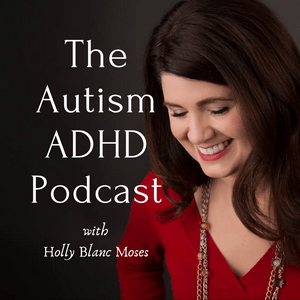
Descarga la app gratuita: radio.net
- Añadir radios y podcasts a favoritos
- Transmisión por Wi-Fi y Bluetooth
- Carplay & Android Auto compatible
- Muchas otras funciones de la app
Descarga la app gratuita: radio.net
- Añadir radios y podcasts a favoritos
- Transmisión por Wi-Fi y Bluetooth
- Carplay & Android Auto compatible
- Muchas otras funciones de la app
THE AUTISM ADHD PODCAST
Escanea el código,
Descarga la app,
Escucha.
Descarga la app,
Escucha.
 Colombia