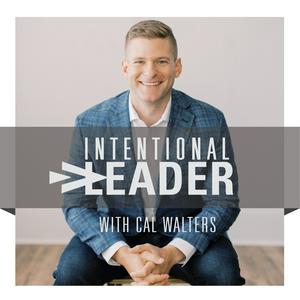
PodcastsEconomía y empresaIntentional Leader with Cal Walters

Intentional Leader with Cal Walters

Cal Walters
Intentional Leader with Cal Walters
Último episodio

Episodios disponibles

5 de 134
  • 133: LTG(R) Milford Beagle "Beags" — A Three-Star General on True North, Resilience, Feedback, and How to Lead With Confidence Without Becoming Overconfident
    ➡️ Get my free weekly newsletter (The Intentional Letter): https://courses.calwalters.me/signup 📚 Get LTG (Ret.) Beagle's new book, When the Map Runs Out: https://www.amazon.com/When-Map-Runs-Out-Uncertain/dp/B0G1ZGH76J As leaders rise, they often hear less and less truth. LTG (Ret.) Milford Beagle calls this the cone of silence—and he warns that it's one of the quietest ways leaders lose their true north. In this episode, we explore how to lead when your "map" falls apart. General Beagle shares his journey from a stunned new platoon leader at Fort Polk to commanding the U.S. Army Combined Arms Center, and what he's learned about staying grounded, humble, and effective in uncertainty. We dig into his new book, When the Map Runs Out: Values, Judgment, and Clarity in Uncertain Times, and talk about practical tools: a one-page "How to Handle Me" document, a journaling habit to process negative emotions, and how to invite real feedback without shutting people down. If you're navigating change, promotion, or pressure to have all the answers, this conversation will help you lead with confidence and humility at the same time. 🔎 In This Episode, You'll Learn Why the higher you go, the more you're at risk of a cone of silence. How leaders lose true north—not from incompetence, but distortion. The difference between maps (plans, strategies, frameworks) and the compass (your values and judgment). Two key disciplines of leadership: bearing (self-awareness) and calibration (inviting others to check your bearing). How introverts, extroverts, and ambiverts can all be authentic leaders without pretending to be someone else. A practical tool: the "How to Handle Me" document that accelerates trust and clarifies expectations. How to create a culture where honest feedback is normal—especially for senior leaders. Why even three-star generals feel imposter syndrome, and how to work through it. How to provide clarity without certainty using "signposts on the road." Simple habits for resilience: journaling, reframing failure, and "always quit tomorrow." ⏱️ TIMESTAMPS 00:00 – The cone of silence: how leaders lose true north as they rise 01:56 – Cal's intro, the Intentional Leader Podcast, and LTG Beagle's background 03:15 – Fort Polk & the first platoon: "I felt like a leader… and not a very good one" 08:45 – From follower to leader: athletics, ROTC, and early moments when the map ran out 10:27 – Why When the Map Runs Out and the map/compass metaphor 12:36 – Frameworks, bearing, and calibration: why leaders need more than maps 16:54 – Authentic leadership for every personality type 22:57 – Designing a "How to Handle Me" one-pager for your team 26:27 – Examples: not liking details, humor, and getting quiet when processing 29:57 – Public speaking fear, reps & sets, and keeping the bar high 32:16 – Ego, promotion, and the cone of silence at senior levels 36:27 – Training your team to give you unvarnished feedback 40:24 – Feedback as the breakfast of champions (and why it stings) 42:09 – Imposter syndrome at the Combined Arms Center 46:01 – Clarity vs. certainty: the signpost town hall during organizational change 52:05 – True north and values: integrity, empathy, resilience, "quit tomorrow," loyalty 58:33 – The hurdles metaphor: falling, resilience, and running through obstacles 1:02:10 – Journaling to process emotion and see your own growth over time 1:07:17 – Time, priorities, and the cost of diluted focus 1:15:02 – Knowing your weaknesses and starting with them in interviews 1:16:15 – Where to find When the Map Runs Out and connect with LTG Beagle 1:17:53 – Cal's closing: four practical actions you can take this week 🧭 Practical Ways to Apply This Episode Create your own "How to Handle Me" document One page, honest, and specific: quirks, tendencies, what you're working on, and how people can best work with you. Start (or restart) a journaling habit For the next 7 days, write at least one sentence about how you're feeling and what you're facing. Ask for one piece of real feedback Pick one person you trust. Ask, "What's one thing I could do differently that would make me a better leader for you?" Then thank them. Practice clarity in uncertainty In one messy situation this week, clearly state: What we know What we don't know What we're going to do next
    --------  
    1:20:44
  • 132: Joe McCormack — Special Operations Communication Expert Shares How to Say Less, Communicate With Clarity, and Lead With Quiet Confidence
    Connect with Joe: https://www.linkedin.com/in/josephpmccormack/ Learn more about The Brief Lab: https://thebrieflab.com/ How do you become the kind of leader who cuts through noise, communicates with clarity, and actually moves people to action? In this episode of the Intentional Leader Podcast, Cal talks with Joe McCormack—founder of The Brief Lab and author of Brief, Noise, and Quiet Works. Joe has trained elite military units and Fortune 500 executives to be clear, concise, and intentional communicators, and to rediscover the quiet that makes powerful communication possible. They explore: Why noise is the real villain in your leadership story The "sword and shield" of effective communication: brief (cut through clutter) and quiet (protect your attention) Why being brief actually requires more preparation, not less The 3 levels of detail and how to stop overwhelming people How to build quiet into your day so you think better and lead better Why thinking time is part of your job, not a luxury How to use small pockets of quiet before and after meetings Practical ways to manage your phone instead of being managed by it How AI + quiet work can become a leadership superpower If you've ever felt frustrated by endless meetings, rambling updates, or your own distracted brain, this conversation will give you practical tools you can use this week. Episode Highlights Noise as the villain – How constant distractions, disruptions, and devices are eroding our ability to think and communicate. The brief & quiet toolkit – Brief is the sword that cuts through clutter; quiet is the shield that protects your attention so you can prepare. Why we overtalk – Insecurity, lack of preparation, ego, and a poor understanding of attention spans. The 3 levels of detail – Level 1 (headline), Level 2 (support), Level 3 (full detail). Most leadership moments only need Levels 1–2. Clarity like comedy – Sequence and timing matter. If it takes too long to get to the punchline, you lose people—even if the content is good. Quiet as an appointment – Why you should literally block quiet time on your calendar and not treat it like a "snow day." Quiet before collaboration – Simple practices like two minutes of silence at the start of meetings can transform outcomes. Redefining work in the AI age – Undistracted thinking is becoming a rare and valuable skill; AI works best when you can sit still and think. Your phone works for you – Reframing your phone as a tool, not a master. Practical Takeaways Take 3 minutes before your next meeting or email to decide: What's my headline? Use Joe's 3 levels of detail filter: Am I giving a headline, a trailer, or the entire movie? Block 15 minutes of quiet in the morning and afternoon, and connect it directly to upcoming or recent communication. Start your next team meeting with 2 minutes of silence for everyone to think about what they want to say and what they hope to get out of the meeting. Put your phone in another room for your quiet block and remind yourself: My phone works for me; I don't work for it.  
    --------  
    55:36
  • 131: Dr. Liz Werly — What an Army Psychologist for Special Ops Teaches About High Performance and Emotional Intelligence
    How do the best military leaders go from operating at an already elite level… to an even higher level under pressure? In this episode, Army psychologist Dr. Liz Werly (who works directly with some of the U.S. military's most elite units) breaks down the exact framework she uses to help high performers: build accurate self-awareness using gold-standard assessments, "engineer" their personality to fit the context (calm under fire and present at home), develop emotional intelligence as the differentiator once IQ and talent are in place, and translate values into visible daily behaviors that protect what matters most. We also dig into groundedness and intentionality as core high-performance habits, the basics that leaders ignore at their own risk (sleep, rhythm, connection), and how generational shifts and resiliency trends are reshaping today's force and workplaces. In this episode, you'll learn: How Dr. Werly assesses elite leaders (IQ, Big Five, emotional measures) and turns data into a growth plan Why emotional intelligence becomes more important than raw intellect at higher levels of leadership A simple values → beliefs → behaviors framework (including the "20-minute Lego" example) How to recognize when your strengths (e.g., robotic under pressure) become liabilities at home or with your team Practical tools for grounding, bandwidth management, and emotional "dialing" What leaders need to understand about younger generations, resiliency, and expectations If you're already a high performer and want to become a more grounded, self-aware, and sustainable leader, this conversation is for you. Mentioned in this episode: Connect with Dr. Liz Werly on LinkedIn: https://www.linkedin.com/in/elizabeth-h-werly-psy-d-b843b817/ Join the waitlist for the next Intentional Leader Lab cohort: intentionalleaderlab.com The views expressed in this episode are those of the participants and do not represent the official position of the U.S. Government or the U.S. Army. Chapters: 00:00 Intro – How elite leaders go from high to higher 00:33 Disclaimer + what this episode will cover 01:06 Welcome to The Intentional Leader Podcast + IL Lab mention 01:36 Meet Dr. Liz Werly & her work with elite military units 03:35 "If I walked into your office…" – her framework for high performers 05:19 Patterns, personality, and "engineering" your strengths 07:42 Robotic under pressure, distant at home – dialing traits up/down 09:20 Big Five, gold-standard assessments & why cheap tests fall short 11:24 Why tests need interpretation, not labels 13:18 How leaders react when they see their data 16:50 Values-based goals & Acceptance and Commitment mindset 18:58 IQ vs personality vs EQ – what you can actually change 21:00 The four pillars of emotional intelligence (Liz's breakdown) 24:25 Why EQ is the edge once IQ is "good enough" 24:50 Groundedness & intentionality as #1 performance levers 26:44 Designing your "ideal day" for this season of life 29:04 Sleep, basics, and whole-person performance 29:50 Values → beliefs → behaviors (the 20-minute Lego example) 32:36 When values collide (deployments, travel, guilt & shame) 34:44 Emotions as information vs letting emotions drive decisions 36:30 Generational friction & why it's an emotional intelligence issue 39:25 Tech, expectations, and how younger leaders are different 41:06 Resiliency, safety culture, and maturity gaps 43:18 Recruiting, mental health, and opportunity in today's force 45:00 Where to connect with Liz + her final advice to leaders 46:24 Outro – 5 practical challenges: grounding, values, bandwidth, dialing, feedback
    --------  
    48:34
  • 130: Dr. Zach Mercurio — The Hidden Engine of High-Performing Teams: Mattering, Trust, and Purpose-Driven Leadership
    Apply to work with me 1-1: https://courses.calwalters.me/coaching Join the Intentional Leader Lab waitlist: https://courses.calwalters.me/intentional-leader-lab Learn more about Zach: https://www.zachmercurio.com/ In this conversation, Dr. Zach Mercurio discusses the importance of creating a sense of purpose and mattering within teams. He emphasizes that feeling valued is a basic human instinct and that leaders play a crucial role in fostering an environment where everyone feels significant. The discussion covers the psychological impacts of not feeling like one matters, the barriers leaders face in demonstrating care, and practical strategies for enhancing team dynamics through small, intentional interactions. The conversation ultimately highlights the shift from traditional command-and-control leadership to a more trust-based approach that prioritizes relationships and emotional intelligence. 00:00 Creating a Sense of Purpose in Teams 02:10 Understanding the Cost of Not Mattering 04:28 The Role of Leaders in Mattering 07:56 The Importance of Mattering in Work and Life 11:41 Barriers to Caring in Leadership 16:10 The Shift from Command and Control to Trust-Based Leadership 19:35 Leading Indicators vs. Lagging Indicators 23:28 The Power of Small Interactions 28:59 Practical Actions for Leaders to Show Mattering 44:26 Noticing, Affirming, and Needing in Leadership
    --------  
    55:10
  • 129: Dr. Ryan Gottfredson — The Groundbreaking Science of Personal Transformation, Mindsets, Emotional Intelligence, and Becoming Better
    Update: Now only 6 spots left in the Intentional Leader Lab!   ➡️ Learn about the Intentional Leader Lab: https://intentionalleaderlab.com Book a call: https://tally.so/r/w8X6dz Apply today: https://tally.so/r/nr40XM Please visit my website to get more information: https://calwalters.me/ In this episode, Dr. Ryan Gottfredson returns to discuss the concepts of trauma, vertical development, and the distinction between 'being' and 'doing' in leadership. He emphasizes the importance of self-awareness and healing one's internal operating system to achieve true personal transformation. The conversation explores how mindsets shape our experiences and the role of emotional intelligence in effective leadership. Ryan shares his personal journey of transformation and the impact of trauma on leadership effectiveness, providing insights into how leaders can grow both personally and professionally. 00:00 Introduction to the Intentional Leader Lab 01:12 Deep Dive with Dr. Ryan Gottfredson 02:35 Exploring Mindsets and Personal Transformation 04:49 The Importance of Vertical Development 11:13 Understanding Self-Protective Fears 16:12 The Doing Side vs. The Being Side 22:42 The Impact of Trauma on Leadership 29:58 Emotional Intelligence and Its Connection to Being 38:47 The Neuroscience of Emotional Intelligence 44:23 Ryan's Personal Journey of Transformation 50:40 Final Thoughts on Becoming Better Takeaways - The Intentional Leader Lab offers a six-month leadership experience - Dr. Ryan Gottfredson emphasizes the importance of vertical development - Mindsets are crucial for personal transformation - Self-protective fears can hinder leadership growth - The distinction between doing and being is vital for leaders - Emotional intelligence is primarily a being side ability - Trauma can significantly impact leadership effectiveness - Awareness is the first step towards transformation - Expanding your window of tolerance is essential for growth - Healing one's internal operating system is key to becoming better #leadership #leader #leadershipdevelopment #emotionalintelligence #podcast #personalgrowth #growth #growthmindset #growthjourney #trauma #traumahealing #selfimprovement #selfcare #selflove #selfgrowth #intentionalliving #fear #fearless #team #teamwork #neuroscience #science
    --------  
    56:42

Más podcasts de Economía y empresa

Acerca de Intentional Leader with Cal Walters

Let's be honest. The hardest person you will ever have to lead is the person you look at in the mirror everyday. Self-leadership is the most important thing we do as leaders, but it's hard. And it hasn't gotten any easier in a world of smart phone addiction, social media comparison, global pandemics, and information overload (just to name a few obstacles). That's why Intentional Leader exists. We help leaders take the guesswork out of self-leadership, fight a reactionary lifestyle, accelerate their personal growth, and achieve their God-given potential at home, at work, and in their communities. This is why we get out of bed each morning. We love helping leaders on their personal growth journey! Because we know when the leader gets better everyone benefits. Organizations, communities, and families all thrive when the leader is thriving. We are a team of ordinary people with an extraordinary passion for personal growth and helping leaders thrive. Join this community to pursue personal growth and leadership excellence, to inspire others, and make a lasting impact on the world. Life is short, so let's make it count by living an intentional life. On this podcast, Cal Walters — a follower of Jesus, a husband, father, West Point graduate, former Infantry Officer, Army Ranger, combat veteran, lawyer, and Army JAG — passionately explores ways to live intentionally, make each day count, and lead with greater influence and impact. Cal firmly believes leadership matters, and this podcast will help you lead yourself and inspire others. Cal believes we each have a unique contribution to make to the world, and he wants to help you make yours! For show notes, visit https://www.calwalters.me/ Disclaimer: The views expressed on this podcast are those of the author and guests and do not reflect the official policy, position, or endorsement of the US Army JAG Corps, US Army, DoD, or the US Government.
Sitio web del podcast

Escucha Intentional Leader with Cal Walters, Cracks Podcast con Oso Trava y muchos más podcasts de todo el mundo con la aplicación de radio.net

Descarga la app gratuita: radio.net

  • Añadir radios y podcasts a favoritos
  • Transmisión por Wi-Fi y Bluetooth
  • Carplay & Android Auto compatible
  • Muchas otras funciones de la app
Aplicaciones
Redes sociales
v8.1.2 | © 2007-2025 radio.de GmbH
Generated: 12/16/2025 - 6:28:16 AM