
Escucha gratis este podcast en la aplicación: Descarga gratuita en la App Store
radio.net
Sleep timer
Favoritos
93 episodios
92: Why Movies Predicted The Future Before It Happened
27/10/2026 | 24 minYou can support the show and your skin by shopping my small-batch, all-natural skincare at Arvoti.com. Every purchase helps keep the podcast going while giving you all-natural, thoughtfully made products for your daily routine. Thank you!
Predictive programming: Has Hollywood been programming us by showing us “the future”?
Enemy of the State (1998) portrayed government surveillance. Fifteen years later, Edward Snowden’s disclosures revealed extensive real-world government surveillance programs.
That’s one of several examples I keep coming back to. They Live (1988) showed broadcast signals controlling what people see. The Matrix (1999) put September 11th, 2001 on Neo’s passport. Eyes Wide Shut (1999) portrayed masked rituals among the ultra-wealthy that look a lot like the 1972 Rothschild Surrealist Ball, a party with dismembered baby dolls on its tables. Contagion (2011) walked through quarantines, overwhelmed hospitals, and vaccine development almost a decade before COVID.
The theory behind predictive programming is that powerful groups deliberately introduce events, technologies, and agendas through entertainment before they unfold publicly. Some say it’s preparation. Others say it’s a symbolic obligation, revealing the method through fiction so the public can dismiss it as make-believe later.
My honest take is that Hollywood would never release something the people in charge genuinely wanted buried. If it made it to theaters, it was allowed to.
Taylor Swift released the song Patient Zero while plague headlines were coming out of Russia, and I’ll explain why I now close the app instead of reporting on it. Red pill or blue pill, let me know in the comments.
You’ll Learn:
[0:00] Introduction
[3:35] They Live, and the sunglasses that reveal the truth
[5:09] Shape-shifting clips and malfunctioning frequencies on TV
[7:15] Why the fight to put on the glasses mirrors waking people up
[8:25] The Matrix and why most people take the blue pill
[12:01] Kubrick’s death and the theory of missing footage
[14:45] Rothschild Surrealist Ball compared to Eyes Wide Shut
[16:52] Contagion portraying a pandemic nearly a decade before COVID-19
[17:49] Taylor Swift’s Patient Zero and harvesting our energy
[18:50] The mere exposure effect and normalizing the unfamiliar
[21:54] Far-fetched movie technology that became recognizable years later
Find more from Gubba:
Gubba Homestead | X | Facebook | Instagram | Pinterest | Website
Gubba Homestead Products | Shop91: Modern Cars Are Becoming Giant Surveillance Devices
20/10/2026 | 17 minYou can support the show and your skin by shopping my small-batch, all-natural skincare at Arvoti.com. Every purchase helps keep the podcast going while giving you all-natural, thoughtfully made products for your daily routine. Thank you!
Your car will be able to decide when you can drive.
Section 24220 of the 2021 Infrastructure Investment and Jobs Act directs the Department of Transportation to develop a safety standard for technology in future passenger vehicles that can passively detect impairment and restrict operation of the vehicle.
People call it the kill switch provision. It isn’t a remote government button; it’s technology built into the car that monitors the driver and makes a determination about whether you’re allowed to drive. That distinction matters, and so does the broader question of how much decision-making authority we’re comfortable building into the machines we own.
This is why I’ve been looking at older vehicles differently. A new truck can reach a price that would have sounded absurd not that long ago, and that’s before a single sensor fails and a repair balloons into programming, calibration, and dealer-specific equipment.
An old truck has an ignition, an engine, a transmission, and a driver. Nothing analyzing your face, no over-the-air updates, no internet connection needed to do its basic job.
The privacy side, the repair side, the ownership side, physical buttons, and a real key still win for me. If you’ve been eyeing an old truck lately, you’re not the only one. And yes, I have thoughts on Cash for Clunkers.
You’ll Learn:
[0:00] Introduction
[2:13] Modern vehicles became computers with an engine attached
[4:06] Your new car is collecting data and watching you
[6:26] The impairment-detection kill switch provision and what it actually says
[8:56] The “for our safety” rollout pattern I keep seeing
[10:53] When repair was a normal part of owning a vehicle
[13:03] The satisfaction of turning an actual key
[15:19] Cash for Clunkers and the cars that lacked tracking
Find more from Gubba:
Gubba Homestead | X | Facebook | Instagram | Pinterest | Website
Gubba Homestead Products | Shop90: Hospitals Were Designed to Heal. Now They Make Us Sick
13/10/2026 | 20 minYou can support the show and your skin by shopping my small-batch, all-natural skincare at Arvoti.com. Every purchase helps keep the podcast going while giving you all-natural thoughtfully made products for your daily routine. Thank you!
TikTok pulled my video on how American medicine was reshaped, and that reaction alone tells you this piece of history still makes somebody uncomfortable.
I'm a first-time homesteader, and the more I dug into old hospital photographs, the harder it was to ignore how much of an older approach to medicine was pushed aside within a generation or two.
Hospitals used to be built around sunlight, fresh air, and enormous porches where patients could recover outside. Heliotherapy, hydrotherapy, mustard plasters, copper surfaces, wool blankets, cross-ventilated wards. All of this existed in real hospitals and was used by real doctors, long before sealed windows and artificial lighting became the default.
Then in 1910, the Carnegie Foundation published Abraham Flexner's report, which redefined what a respectable medical school was supposed to look like.
Between 1913 and 1929, the Rockefeller-funded General Education Board poured tens of millions into a short list of institutions, enough to build the laboratories, hire the faculty, and fund the research programs that many competing schools, including homeopathic, eclectic, osteopathic, and naturopathic ones, could not match.
Those institutions trained the doctors. Those doctors became the professors, hospital administrators, journal editors, and licensing officials who decided what counted as legitimate care.
If that chain of influence is real, the hospital you walk into today starts to look less like progress and more like a decision somebody made for you.
You’ll Learn:
[0:00] Introduction
[3:59] Old hospitals treated the environment as part of the cure
[5:41] Cleanable surfaces believed to aid healing
[7:27] Mustard plasters then, antibiotics as the first resort now
[8:34] The Flexner Report narrowed a once diverse American medicine
[10:34] Rockefeller money funneled into a few selected medical schools
[13:14] The self-reinforcing chain from funding to doctors
[15:27] Certain forms of medicine did not die in fair competition
[17:19] What a building reveals about a system’s priorities
[18:58] Progress or the dollar behind the modern hospital
Find more from Gubba:
Gubba Homestead | X | Facebook | Instagram | Pinterest | Website
Gubba Homestead Products | Shop89: Why Younger Generations Are Stealing "Grandma Hobbies"
06/10/2026 | 20 minShop my all-natural skincare products at Arvoti.com.
The internet calls them grandma hobbies, but most of them were never hobbies at all.
Baking bread, canning, sewing, keeping chickens, making butter, drying herbs. These were everyday skills that stopped being passed down in the span of two generations, and now they're making a comeback at a time when people seem burned out by modern life.
I want to talk about why that's happening, and what we can actually learn from it instead of treating it like another passing internet trend.
My farmhouse has a meat locker in the basement. Households used to raise and grow much of what they consumed, and their homes reflected that.
What matters even more is competence. The first time you make butter, you realize how simple it is. The first time you bake bread, you realize it doesn't have to come from a plastic bag. That knowledge builds confidence.
I also caution against turning grandma hobbies into another form of consumerism. You don't need a curated kitchen or matching linens to start. Pick one skill that would actually be useful in your life, and give it a month.
You are capable. This is your little push to go and do it.
You’ll Learn:
[0:00] Introduction
[1:58] What people actually mean by grandma hobbies
[3:41] Grandmas made clothing from wool instead of recycled plastic
[6:32] Tangible results feel different from vanishing screen time
[8:02] The competence shift that comes from making something yourself
[11:04] Gardening can be as simple as you make it
[12:41] Older household items were expected to age, not be replaced
[15:09] How communities were dismantled in two generations
[17:06] The warning against turning grandma hobbies into consumerism
[18:49] Pick one skill and spend a month learning it
Related Gubba Homestead Episodes:
Are Modern Homes Designed to Keep You Dependent?
Does Electroculture Actually Work? Natural Plant Booster
Find more from Gubba:
Gubba Homestead | X | Facebook | Instagram | Pinterest | Website
Gubba Homestead Products | Shop88: Are Modern Homes Designed to Keep You Dependent?
29/09/2026 | 22 minShop my all-natural skincare products at Arvoti.com.
Old farmhouses were built to solve problems that new homes can’t handle… Is it a coincidence?
I live in a 75-year-old farmhouse with a root cellar, a giant pantry off the kitchen, and an old walk-in meat locker in the basement with all of its equipment still there. The more I learn about how older homes were designed, the more I realize how much the house itself used to do the work for the people inside.
Before central air, deep porches shaded exterior walls before heat ever entered the home. Windows sat opposite each other so air could actually move. Deciduous trees shaded the house in summer and dropped their leaves in winter to let sunlight back in. Sleeping porches caught the evening breeze. Root cellars held food without electricity, and summer kitchens kept cooking heat out of the main house.
Modern subdivisions skip most of that. Homes get jammed together for speed and resale, without much thought for the position of the sun or the seasons. Then some owners move into brand-new homes and discover water intrusion, HVAC problems, and finishes failing much earlier than expected.
There's also a tangent about millennial gray, personality-free interiors, and why I'm going to paint a mural of my farm in the laundry room regardless of what a future buyer thinks.
You’ll Learn:
[0:00] Introduction
[2:37] What the layout of an old home reveals about its people
[5:14] Wraparound porches shielded the house from heat
[6:52] Sleeping porches and catching the cooler evening breeze
[9:16] The millennial gray pandemic and losing a home's personality
[11:39] Modern kitchens with nowhere to store 30 jars of peaches
[13:21] Dense materials that moderate temperature through the day
[15:59] Whether homes are optimized for longevity or resale
[17:52] What happens when a single household system fails
[21:25] Relying on grocery stores as the new root cellar
Find more from Gubba:
Gubba Homestead | X | Facebook | Instagram | Pinterest | Website
Gubba Homestead Products | Shop
Más podcasts de Educación






Podcasts a la moda de Educación



















Acerca de Gubba Homestead Podcast
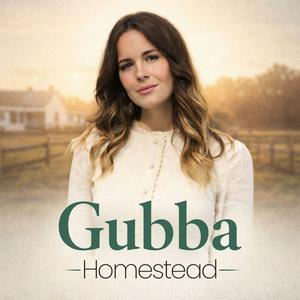
Would you like to learn how to nurture a garden, raise farm animals, cook recipes from scratch, and preserve food for SHTF? Join me on the Gubba Homestead Podcast, where we share traditional homesteading skills and country insights for a more natural, self-reliant, healthful homestead life.
Sitio web del podcastEscucha Gubba Homestead Podcast, BBVA Aprendemos juntos y muchos más podcasts de todo el mundo con la aplicación de radio.net
Descarga la app gratuita: radio.net
- Añadir radios y podcasts a favoritos
- Transmisión por Wi-Fi y Bluetooth
- Carplay & Android Auto compatible
- Muchas otras funciones de la app
Descarga la app gratuita: radio.net
- Añadir radios y podcasts a favoritos
- Transmisión por Wi-Fi y Bluetooth
- Carplay & Android Auto compatible
- Muchas otras funciones de la app
Gubba Homestead Podcast
Escanea el código,
Descarga la app,
Escucha.
Descarga la app,
Escucha.
 Colombia