

Escucha gratis este podcast en la aplicación: Descarga gratuita en la App Store
radio.net
Sleep timer
Favoritos
713 episodios

TPP 516: A Conversation with Dr. Gila About Supporting Single Parents of Neurodivergent Kids
11/08/2026 | 37 minToday we’re talking about a parenting experience that comes with its own unique set of challenges and complexities: raising neurodivergent kids as a single parent. My guest is Dr. Gila, a clinical psychologist, neuropsychologist, certified parenting coach, and single mom who is passionate about helping grownups support beautifully complex kids with compassion, connection, and brain-based tools that actually work. Drawing from both her professional expertise and lived experience, Dr. Gila has a gift for translating complex ideas into practical strategies parents can put into action right away.
In our conversation, we explore the unique realities of solo parenting neurodivergent children, including the emotional load, decision fatigue, and constant balancing act that so many single parents face. Dr. Gila shares practical approaches for managing overwhelm, staying connected to your values, and creating more sustainability in daily life. This is a validating and encouraging conversation for any parent carrying a lot—and especially for those doing it on their own.
About Dr. Gila
Dr. Gila is a single mom, certified parenting coach, clinical psychologist, and neuropsychologist. She’s passionate about helping grownups support beautifully complex kids with compassion, connection, and brain-based tools that actually work.
Dr. Gila combines her professional background with her lived experience in a relatable, down-to-earth style. Her background as an educator and medical writer makes her especially skilled at translating complex concepts into practical tools you can understand…and actually use.
Things you'll learn from this episode
Why grief, worry about the future, and emotional exhaustion are common realities for many single parents
How the “sink model” helps explain the mental, emotional, and cognitive load that can lead to overwhelm
How strategies like “stop, drop, and roll” and compassionate reframing can support parents through moments of dysregulation
Why community, support systems, and self-care practices such as audio journaling are essential for sustainability
How values-based parenting, creative connection, and letting go of perfection help families thrive through small, meaningful moments
Resources mentioned
Dr. Gila’s website
Dr. Gila’s Resources for Tilt listeners
Single Parenting with Connection podcast
Dr. Gila on Instagram
Dr. Gila’s Single Parenting with Connection, Not Perfection Facebook group
How to Practice Conscious Co-Parenting, with Jenna Flowers (Tilt Parenting podcast)
Sandi Lerman
Learn more about your ad choices. Visit podcastchoices.com/adchoicesTPP 104b: Dr. Lori Baudino on the Power of Movement, Dance, and the Mind/Body Connection
07/08/2026 | 38 minDance/movement therapist Dr. Lori Baudino talks about how teaching differently wired kids to tap into the mind-body connection can help with emotional regulation, social communication, and more.
Learn more about your ad choices. Visit podcastchoices.com/adchoicesTPP 515: Dr. Emily King & the Neurodivergent Learner: A New Approach to Your Child's Success
04/08/2026 | 48 minToday we’re exploring a more holistic, humane approach to supporting neurodivergent learners — one that starts with understanding the nervous system and builds from there. My guest is Dr. Emily King, a child psychologist who has spent more than 20 years working with neurodivergent youth in both school settings and private practice. She’s the creator of The Neurodiverse Classroom®, a professional development curriculum for educators, and the author of her new book The Neurodivergent Learner, which we’ll be talking about today.
In our conversation, Emily and I talk about why safety and regulation are foundational for learning, how relationships at school can shape outcomes in powerful ways, and what it means to redefine success for kids who don’t fit traditional models. We also explore practical ways parents can partner with schools to better support their children, and how shifting our lens can open up new possibilities for growth, connection, and well-being.
About Dr. Emily King
Dr. Emily King is a child psychologist who has worked with neurodivergent learners for over 20 years. She received a Ph.D. in School Psychology from the University of North Carolina-Chapel Hill and began her career in Houston, Texas, specializing in school-based mental health in K-12 public schools. She has since worked in private practice in North Carolina supporting the mental health, executive functioning, and social needs of neurodivergent youth. Dr. Emily hosts the Learn with Dr. Emily Substack, where she provides parent workshops, is the creator of The Neurodiverse Classroom®, a professional development curriculum for educators, and her first book, The Neurodivergent Learner, was released in August 2026.
Things you'll learn from this episode
How mental health, education, and neurodivergence are deeply interconnected in shaping a child’s experience
Why building felt safety and a true sense of community at school is foundational for learning
How navigating IEPs, homework, and behavior systems benefits from a flexible, relationship-centered approach
Why prioritizing social satisfaction over social achievement supports authentic connection and well-being
How parents can assess and choose school environments that truly fit their neurodivergent child
Why leading with relationships and adaptability strengthens both parenting and advocacy
Resources mentioned
Dr. Emily King’s website
Learn with Dr. Emily (Emily’s Substack)
Learn with Dr. Emily Podcast
Dr. Emily on Instagram
Dr. Emily on Facebook
Free downloads on Emily’s website
Redefining Success for Neurodivergent Children, with Dr. Emily (Tilt Parenting Podcast)
Learn more about your ad choices. Visit podcastchoices.com/adchoicesTPP 421a: A Bonus Conversation with Dr. Stuart Shanker about Self-Regulation and Helping Our Children Successfully Engage with Life
31/07/2026 | 1 h 4 minDr. Stuart Shanker, author of Self-Reg, shares his expertise on self-regulation, offering practical strategies and compassionate insights to help neurodivergent kids and their families manage stress and build self-awareness.
Learn more about your ad choices. Visit podcastchoices.com/adchoicesTPP 514: An Introduction to Neurodiversity-Affirming OT, with Dr. Bryden Carlson-Giving
28/07/2026 | 39 minToday, I’m joined by Bryden Carlson-Giving, an occupational therapy practitioner and the creator of the EMPOWER model, the first neurodiversity-affirming OT framework. Bryden is both neurodivergent and disabled himself, and his work focuses on helping practitioners challenge ableism and create more supportive, affirming environments for neurodivergent individuals.
In our conversation, Bryden walks us through the EMPOWER model and what it looks like in practice, especially when it comes to evaluations, goal-setting, and therapy approaches. We talk about how ableism can show up in subtle and systemic ways, and what it means to truly shift toward inclusive, affirming care. This is a thoughtful, important conversation about reimagining support — not just in therapy, but across education and systems more broadly.
About Bryden Carlson-Giving
Bryden Carlson-Giving, OTD, OTR/L is a neurodivergent and disabled occupational therapy practitioner (OTP) with experience in pediatric outpatient, inpatient, and school-based settings. Bryden earned his post-professional doctorate from Boston University, where his research focused on creating a toolkit to support OTPs in challenging ableism within the OT profession. This work led to the development of the first neurodiversity-affirming occupational therapy model, the EMPOWER model. He received the 2024 Emerging Leader Award from Boston University, and is the editor of the first neurodiversity-focused occupational therapy book, titled Neurodiversity-Affirming Occupational Therapy: Empowering Approaches to Foster Neurodivergent Participation.
Things you'll learn from this episode
How Bryden’s journey into occupational therapy led to creating a neurodiversity-affirming toolkit
Why the Empower model centers strengths-based practice, anti-racism, disability justice, and trauma-informed care
How inclusive evaluations can look in practice, especially within school-based systems
Why implementing neurodiversity-affirming approaches in bureaucratic settings comes with both challenges and opportunities
How ongoing self-reflection and unpacking internalized ableism are essential for practitioners
How parents, educators, and therapists can take practical steps to amplify neurodiversity-affirming work
Resources mentioned
Neuridivergent Nexus (Bryden’s website)
Neurodiversity-Affirming Occupational Therapy: Empowering Approaches to Foster Neurodivergent Participation edited by Dr. Bryden Carlson-Giving
Bryon Carlson-Giving on Instagram
Activist Emily Ladau on Demystifying Disability (Tilt Parenting podcast)
Kassiane Asasumasu (coined the term neurodivergence)
Dr. Destiny Huff on Neurodiversity-Affirming Advocacy in School (Tilt Parenting podcast)
Dr. Jade Rivera and Strength-Based Assessments (Tilt Parenting podcast)
Learn more about your ad choices. Visit podcastchoices.com/adchoices
Más podcasts de Educación
 BBVA Aprendemos juntosArte, Ciencias, Cultura y sociedad, Educación, Filosofía, Libros, Matemáticas, Música, Naturaleza
 Tu Ingles! podcastAprendizaje de idiomas, Educación
 Dr. Mario Alonso PuigEducación, Superación personal
 Inglés desde ceroAprendizaje de idiomas, Educación
 Tu Desarrollo PersonalEducación, Superación personal
 Estoicismo FilosofiaEducación, Superación personal
 Seminario Fenix | Brian TracyCultura y sociedad, Economía y empresa, Educación, Empresa, Filosofía, Superación personal
 6 Minute EnglishAprendizaje de idiomas, Educación
 El Estoico | Estoicismo en españolAdministración, Cultura y sociedad, Economía y empresa, Educación, Filosofía, Superación personal
 Mis Propias FinanzasEducación, Superación personal
Podcasts a la moda de Educación
 Te Invito un Cafe |- Desarrollo Personal, Autoayuda, Mente, Dudas, Inspiracion en Dosis DiariaCultura y sociedad, Educación, Medicina alternativa, Salud mental, Salud y forma física, Superación personal, Tutoriales
 El Daheeh - الدحيحEducación
 Português Pra ForaAprendizaje de idiomas, Cultura y sociedad, Educación, Superación personal
 Cómo recuperar a tu ex parejaEducación, Tutoriales
 French Mornings with ElisaAprendizaje de idiomas, Educación
 La Verdad del SerEducación, Superación personal
 El Primer PasoEducación, Tutoriales
 ¿A qué costo? | by FeminarioEducación, Superación personal
 Conversaciones en Inglés Reales: Audio en InglésAprendizaje de idiomas, Educación
 The Daily StoicCultura y sociedad, Economía y empresa, Educación, Superación personal
 Diego RuzzarinCiencias, Ciencias sociales, Cultura y sociedad, Educación, Filosofía, Superación personal
 Radio Kronos | Wicca by Omar HejeileEducación, Superación personal
 anything goes with emma chamberlainCultura y sociedad, Diarios personales, Educación, Superación personal
 Martha DebayleEducación, Superación personal
 FIESTA PARA DAÑADOSEducación, Superación personal
 Mitología griega (y romana)Educación, Historia, Religión y espiritualidad
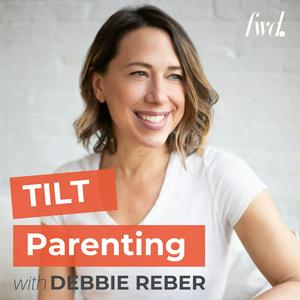
Acerca de Full-Tilt Parenting: Strategies, Insights, and Connection for Parents Raising Neurodivergent Children
Feeling overwhelmed by the complexities of raising a neurodivergent child? Full-Tilt Parenting is here to help. Hosted by parenting activist and author Debbie Reber, this podcast is your go-to resource for navigating life with ADHD, autism, learning disabilities, PDA (Pathological Demand Avoidance), giftedness, and twice-exceptional (2e) kids. With expert interviews and candid conversations, you'll discover practical solutions for things like school challenges and refusal, therapy options, and fostering inclusion, social struggles, advocacy, intense behavior, and more — all through a strengths-based, neurodiversity-affirming lens. Whether you're struggling with advocating for your child at school or seeking ways to better support their unique needs, Debbie offers the guidance and encouragement you need to reduce overwhelm and create a thriving, joyful family environment. It's like sitting down with a trusted friend who gets it. You’ve got this, and we’ve got your back!
Sitio web del podcastEscucha Full-Tilt Parenting: Strategies, Insights, and Connection for Parents Raising Neurodivergent Children, BBVA Aprendemos juntos y muchos más podcasts de todo el mundo con la aplicación de radio.net
Descarga la app gratuita: radio.net
- Añadir radios y podcasts a favoritos
- Transmisión por Wi-Fi y Bluetooth
- Carplay & Android Auto compatible
- Muchas otras funciones de la app
Descarga la app gratuita: radio.net
- Añadir radios y podcasts a favoritos
- Transmisión por Wi-Fi y Bluetooth
- Carplay & Android Auto compatible
- Muchas otras funciones de la app
Full-Tilt Parenting: Strategies, Insights, and Connection for Parents Raising Neurodivergent Children
Escanea el código,
Descarga la app,
Escucha.
Descarga la app,
Escucha.
 Colombia