PodcastsCienciasMath! Science! History!

Math! Science! History!

Gabrielle Birchak
Math! Science! History!
Último episodio

218 episodios

  • Math! Science! History!

    FLASHCARDS! You Are a Game Theorist!

    19/06/2026 | 7 min
    What if the negotiation strategies, workplace rhythms, and relationship instincts you've relied on your whole life already had names in mathematics? In today's FLASHCARDS! episode of Math! Science! History!, I break down three foundational concepts from game theory: dominant strategy, tit for tat, and Nash equilibrium, and connect each one to the everyday decisions, compromises, and unspoken social contracts you navigate all the time. Whether you're a math enthusiast or someone who swore they "weren't a math person," this episode reveals that you've been doing game theory your entire life without even knowing it.
    🃏 In This Episode, You Will Learn:
    What a dominant strategy is and how to recognize when you're already using one, from sending that follow-up email to ordering your favorite dish at a restaurant.
    The fascinating history of tit for tat, the surprisingly simple strategy that beat out complex algorithms in Robert Axelrod's famous 1980s tournament, and how it mirrors the unspoken rules of your closest relationships.
    How a Nash equilibrium shows up in everyday conflict, and why the moment you and someone else silently agree to "stop pushing" is actually a mathematically stable outcome.
    📚 Sources
    Von Neumann's 1928 minimax theorem is widely considered the founding document of modern game theory. https://en.wikipedia.org/wiki/Minimax_theorem
    John Nash received the Nobel Prize in Economic Sciences in 1994 for his pioneering analysis of equilibria in the theory of non-cooperative games. https://www.nobelprize.org/prizes/economic-sciences/1994/nash/facts
    Robert Axelrod's landmark book The Evolution of Cooperation (1984) explored how cooperation can emerge among self-interested agents, using his famous computer tournament in which tit for tat won. https://en.wikipedia.org/wiki/The_Evolution_of_Cooperation
    📣 Calls to Action
    Subscribe & Review: If today's episode made you see your everyday decisions in a whole new light, please subscribe to Math! Science! History! and leave a review wherever you listen. It helps more curious minds find the show!
    Share This Episode: Know someone who loves psychology, strategy, or really nails the follow-up email? Send them this episode; they're already game theorists and don't know it yet.
    Keep Learning: Catch up on last week's full episode on the birth of game theory and Monday's episode on using these strategies in the workplace!
    🔗 Explore more on our website: mathsciencehistory.com
    📚 To buy my book Hypatia: The Sum of Her Life on Amazon, visit https://a.co/d/g3OuP9h
     🎧 Enjoying the Podcast? 🔗 Explore more on our website: mathsciencehistory.com
    ☕ Support the Show: Coffee!! PayPal
    Leave a review! It helps more people discover the show!
    Share this episode with friends & fellow history buffs!
    Subscribe on your favorite podcast platform.
    Check out our merch: https://www.mathsciencehistory.com/the-store
    Music: All music is public domain and has no Copyright and no rights reserved.
    Selections from The Little Prince by Lloyd Rodgers 
    Until next time, carpe diem!
  • Math! Science! History!

    MOMENTUM! 3 Game Theory Power-Ups to Hack Your Daily Routine

    15/06/2026 | 6 min
    In this episode of Momentum Monday, I cover the unexpected power of game theory, not just for economists or chess players, but as a practical toolkit for smarter decisions in work, relationships, and personal habits. I break down three game-changing strategies: 
    1) Know Your "Game" (mapping players, rules, and payoffs)
    2) Build Your BATNA (your secret weapon for negotiation leverage)
    3) Tilt the Game in Your Favor (shaping interactions for win-win outcomes)
    Whether you're negotiating a raise, handling a tough conversation, or just trying to stick to your gym routine, these tactics will help you design your environment for success. Learn more about game theory's real-world applications here and how to apply BATNA in negotiations here.
    What You'll Learn:
    How to map your interactions like a game, identifying players, rules, and payoffs to make smarter decisions. (Source: Stanford Encyclopedia of Philosophy)
    Why BATNA (Best Alternative To a Negotiated Agreement) is your negotiation superpower, and how to build one. (Source: Harvard PON)
    How to shape your environment and incentives to tilt outcomes in your favor, even in everyday situations.
    Call to Action:🔹 Try it this week: Pick one interaction where you'll apply one of these power-ups. Notice how it changes your approach, and your results!🔹 Share your win: Tag me on social media @Math.Science.History with #MomentumMonday and tell me which strategy worked for you!🔹 Subscribe & Review: Help more people discover Momentum Monday by leaving a review on Apple Podcasts or Spotify. Every review fuels the momentum!
    🔗 Explore more on our website: mathsciencehistory.com
    📚 To buy my book Hypatia: The Sum of Her Life on Amazon, visit https://a.co/d/g3OuP9h
     ☕ Support the Show: Coffee!! PayPal
    Leave a review! It helps more people discover the show!
    Share this episode with friends & fellow history buffs!
    Subscribe on your favorite podcast platform
    Check out our merch: https://www.mathsciencehistory.com/the-store
    Music: All music is Public Domain Mark 1.0 Universal and has no Copyright and no rights reserved.
    Selections from Violin Machine: A Deconstruction of the Bach Concerto by Lloyd Rodgers
    Until next time, carpe diem!

  • Math! Science! History!

    Game Theory Explained: The History, Math, and Masterminds Behind It

    10/06/2026 | 16 min
    In this episode, I'm covering the fascinating origin story of game theory, the mathematical framework that explains how we make decisions when our choices depend on what others do. From the chess board to the Cold War, from traffic jams to Nobel Prizes, game theory is hiding everywhere in plain sight. I explore the brilliant, sometimes tortured minds of John von Neumann and John Nash, walk you through the elegant math of the minimax theorem and Nash equilibrium, and show you how these ideas have shaped economics, artificial intelligence, biology, and even nuclear diplomacy. Whether you're a math lover or just someone who's ever wondered why traffic jams form out of nowhere, this episode will completely change the way you see strategy, competition, and cooperation in everyday life.
    What You'll Learn
    ·         The historical and mathematical context of the early 20th century that made game theory possible
    ·         What a "game" actually means in the mathematical sense, and why it's about far more than chess or poker
    ·         Who John von Neumann was and how his 1928 minimax theorem became the cornerstone of game theory
    ·         How John Nash, a young Princeton doctoral student, revolutionized the field with the Nash equilibrium
    ·         Why the Prisoner's Dilemma shows that rational individuals can end up with collectively bad outcomes
    Quote from the Episode
    "As far as I can see, there could be no theory of games without that theorem … I thought there was nothing worth publishing until the Minimax Theorem was proved." - John von Neumann
    Episode Resources
    ·         von Neumann, John. "Zur Theorie der Gesellschaftsspiele" [On the Theory of Games of Strategy]. Mathematische Annalen 100 (1928): 295–320.
    ·         Nash, John F. "Equilibrium Points in N-Person Games." Proceedings of the National Academy of Sciences 36 (1950): 48–49.
    ·         Nasar, Sylvia. A Beautiful Mind: The Life of Mathematical Genius and Nobel Laureate John Nash. Simon & Schuster, 1998.
    ·         The Nobel Prize, 1994 Economics Prize Press Release: https://www.nobelprize.org/prizes/economic-sciences/1994/press-release/
    ·         Google DeepMind, AlphaGo at 10: https://deepmind.google/blog/10-years-of-alphago/
    ·         Springer Nature, Quantum Game Theory Review (2025): https://link.springer.com/article/10.1007/s11128-025-04913-4
    ·         Stanford Encyclopedia of Philosophy, Evolutionary Game Theory: https://plato.stanford.edu/entries/game-evolutionary/
    ·         MathWorld, Minimax Theorem: https://archive.lib.msu.edu/crcmath/math/math/m/m254.htm
    🔗 Explore more on our website: mathsciencehistory.com
    📚 To buy my book Hypatia: The Sum of Her Life on Amazon, visit https://a.co/d/g3OuP9h
    🌍 Let's Connect!
    Bluesky: https://bsky.app/profile/mathsciencehistory.bsky.social
    Instagram: https://www.instagram.com/math.science.history
    Facebook: https://www.facebook.com/mathsciencehistory 
    LinkedIn: https://www.linkedin.com/company/math-science-history/ 
    Threads: https://www.threads.com/@math.science.history 
    Mastodon: https://mathsciencehistory@mathstodon.xyz
    YouTube: Math! Science! History! - YouTube
    Pinterest: https://www.pinterest.com/mathsciencehistory 
    🎧 Enjoying the Podcast?
    ☕ Support the Show: Coffee!! PayPal
    Leave a review! It helps more people discover the show!
    Share this episode with friends & fellow history buffs!
    Subscribe on your favorite podcast platform
    Check out our merch: https://www.mathsciencehistory.com/the-store
    Music: All music is public domain and has no Copyright and no rights reserved.
    Selections from The Little Prince by Lloyd Rodgers
    I Love Math by Gabrielle Birchak – all rights reserved
    The Secret to Growing Up by Lee Rosevere - public domain from Pixabay
    Until next time, carpe diem!
  • Math! Science! History!

    FLASHCARDS! How You Can Reduce AI Energy Use

    24/04/2026 | 12 min
    In this Earth Day week special of Flashcards Friday, we explore the growing environmental impact of artificial intelligence and digital technology. While AI is revolutionizing our world, it comes with a hidden cost, massive energy consumption and increasing strain on our planet. In this episode, you'll learn how data centers contribute to global electricity use, how your everyday digital habits add to the problem, and most importantly, what you can do to help curb energy consumption. From holding tech companies accountable to making smarter personal choices, this episode empowers you to take meaningful action toward a more sustainable digital future.
    What You'll Learn in This Episode
    How AI and data centers contribute to global energy consumption and carbon emissions
    Simple, practical ways to reduce your personal digital energy footprint
    How to advocate for sustainable technology and hold companies accountable
    Key Takeaways
    Data centers already consume ~1% of global electricity, and demand is rising rapidly
    Everyday actions like sending emails, streaming, and using AI tools all have an energy cost
    Small habit changes can collectively make a significant environmental impact
    Consumer pressure and policy advocacy can push tech companies toward sustainability 


    Call to Action
    Audit your digital habits today: Clean out your inbox, reduce unnecessary emails, and limit high-energy digital activities
    Support sustainable companies: Choose tech platforms committed to renewable energy and transparency
    Speak up: Ask companies about their carbon footprint and share awareness on social media
    Subscribe & Share: If you found this episode valuable, share it with a friend and subscribe so you never miss a Flashcards Friday
    Flashcards Recap
    Ask & Advocate: Demand transparency and support green policies Cut Digital Waste: Reduce unnecessary digital consumption Choose Mindfully: Prioritize energy-efficient habits and technologies
    🔗 Explore more on our website: mathsciencehistory.com
    📚 To buy my book Hypatia: The Sum of Her Life on Amazon, visit https://a.co/d/g3OuP9h
    🎧 Enjoying the Podcast? 🔗 Explore more on our website: mathsciencehistory.com
    ☕ Support the Show: Coffee!! PayPal
    Leave a review! It helps more people discover the show!
    Share this episode with friends & fellow history buffs!
    Subscribe on your favorite podcast platform
    Check out our merch: https://www.mathsciencehistory.com/the-store
    Music: All music is public domain and has no Copyright and no rights reserved.
    Selections from The Little Prince by Lloyd Rodgers
    Until next time, carpe diem!
  • Math! Science! History!

    How AI Quietly Drives Climate Change

    22/04/2026 | 23 min
    In this Earth Day episode, I pull back the curtain on the hidden environmental cost of our digital lives. From streaming videos and sending emails to the explosive growth of artificial intelligence, I explore how the internet, often perceived as clean and intangible, is powered by massive, energy-hungry infrastructure that relies heavily on fossil fuels. I walk through the surprising math behind data centers, AI energy consumption, and e-waste, while challenging the narrative that tech is inherently sustainable. This episode isn't about guilt, it's about awareness, accountability, and asking better questions about the future we're building.
    What You'll Learn
    Why the internet produces 2–4% of global carbon emissions, rivaling the aviation industry
    How data centers consume massive amounts of electricity, enough to power millions of homes
    The hidden carbon cost of everyday actions like streaming, emailing, and searching online
    The environmental trade-offs of moving our lives online
    Whether AI is actually helping fight climate change, or making it worse
    What policies and systemic changes could meaningfully reduce tech's environmental impact
    How to think critically about digital consumption without falling into guilt-based thinking
    Quote from the Podcast
    "The invisibility of digital pollution is not a coincidence, it's a product of very deliberate branding."
    🔗 Explore more on our website: mathsciencehistory.com
    📚 To buy my book Hypatia: The Sum of Her Life on Amazon, visit https://a.co/d/g3OuP9h
     
     🎧 Enjoying the Podcast?
    ☕ Support the Show: Coffee!! PayPal
    Leave a review! It helps more people discover the show!
    Share this episode with friends & fellow history buffs!
    Subscribe on your favorite podcast platform
    Check out our merch: https://www.mathsciencehistory.com/the-store
    Music: All music from Pixabay is public domain and has no Copyright and no rights reserved.
    Selections from The Little Prince by Lloyd Rodgers
    Until next time, carpe diem!

Más podcasts de Ciencias
Acerca de Math! Science! History!

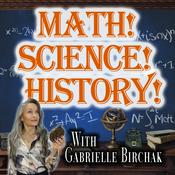
Why do some scientific breakthroughs look different up close than they do in our textbooks? How did math quietly shape the modern world? Math! Science! History! explores the human side of discovery, including the rivalries, the failed attempts, the bold ideas, and the marginalized voices behind the equations and experiments that changed science, technology, and everyday life. Hosted by Gabrielle Birchak, who holds degrees in mathematics and journalism, the show connects codebreaking, astronomy, probability, physics, and innovation to the world we live in today. If you enjoy science stories, historical investigations, and clear math grounded in context, clarity, and research, this show is for you. New episodes twice weekly. Visit www.MathScienceHistory.com for more information.
Sitio web del podcast

Escucha Math! Science! History!, Ologies with Alie Ward y muchos más podcasts de todo el mundo con la aplicación de radio.net

Descarga la app gratuita: radio.net

  • Añadir radios y podcasts a favoritos
  • Transmisión por Wi-Fi y Bluetooth
  • Carplay & Android Auto compatible
  • Muchas otras funciones de la app
Math! Science! History!: Podcasts del grupo