

Escucha gratis este podcast en la aplicación: Descarga gratuita en la App Store
radio.net
Sleep timer
Favoritos
161 episodios
Why Community Pharmacy Is Propping Up the NHS | Jay Patel, Day Lewis
23/09/2026 | 49 minCommunity pharmacy, pharmacist prescribing, Pharmacy First, NHS medicine shortages, prevention, blood pressure checks — Jay Patel, co-CEO of Day Lewis, on why the pharmacy on your high street is the most underused and underfunded part of UK healthcare.
A blood pressure check he almost declined caught the heart disease that would have killed him. Steve Roest sits down with Jay Patel — qualified pharmacist, MBA, Community Pharmacy England board member and co-CEO of one of the UK's largest pharmacy chains — on why community pharmacy is quietly becoming the front line of prevention, and what it could do if the system actually backed it.
In this episode:
Why a routine pharmacy check saved Jay's life, and what it says about prevention
Why every newly qualified pharmacist in the UK can now prescribe
How pharmacies are paid less for medicines than they cost to buy
Why Pharmacy First is the backbone of what's coming next
How AI will make pharmacists better, not replace them
Why online pharmacy hasn't killed the high-street model
The four lessons from building a 250-pharmacy family business
0:00 The pharmacy check that saved his life 0:44 Intro 3:10 Welcome & why community pharmacy keeps growing in importance 5:50 Growing up in the back of a pharmacy 11:11 Why pharmacy is a bigger front line than your GP 14:12 The blood pressure check that saved Jay's life 19:13 Pharmacist prescribing and Pharmacy First 24:49 Why AI will make pharmacists better, not replace them 47:45 Why pharmacies lose money on your prescriptions 49:27 The four lessons that shaped him
🎧 New episodes bi-weekly with the founders, clinicians, journalists and leaders shaping the future of healthcare.The Mental Health Crisis Starts in Primary School | Laura Earnshaw, myHappymind
08/09/2026 | 52 minChildren's mental health, prevention vs treatment, resilience, self-esteem, the CAMHS waiting list - Laura Earnshaw, Founder of myHappymind, on why we're solving children's mental health at the wrong end, and what teaching it early actually looks like.
What if most children's mental health problems could be prevented years before they ever reach a waiting list? Steve Roest sits down with Laura Earnshaw, former Global Head of Talent at AstraZeneca, now Founder and CEO of myHappymind, the NHS-backed programme in over 2,000 schools. After her own son struggled at school and a family member was sectioned, Laura left her corporate career to build the skills she'd been teaching senior leaders for children as young as three.
In this episode:
Why children's mental health needs prevention, not just treatment
What myHappymind teaches children as young as three
The 120% vs 20% data proving early intervention works
The commissioner who wouldn't fund prevention and why
Why "character, not competence" builds real self-esteem
Why founders should stop publicly blaming the NHS
Laura's mottos for getting through the hard days
0:00 Why we get children's mental health backwards 0:51 Intro 2:20 From AstraZeneca to founding myHappymind 5:44 The two moments that changed everything 8:04 A million kids waiting: prevention vs treatment 10:34 What you can teach a three-year-old 11:38 Character, not competence: building real self-esteem 15:54 The data - 120% vs 20% on school absence 19:12 The commissioner who wouldn't fund prevention 40:44 Why founders should stop blaming the NHS 42:42 How the NHS came to her first 50:05 "Everything is figureoutable"
🎧 New episodes bi-weekly with the founders, clinicians, journalists and leaders shaping the future of healthcare.The Chair of NHS England on Global Healthcare, NHS Data & Cancer Referrals | Dr Penny Dash
26/08/2026 | 51 minNHS data, global healthcare systems, cancer referrals, the single patient record, A&E pressures - Dr Penny Dash, Chair of NHS England, on what the UK gets right, what it gets wrong, and what it could learn from the rest of the world.
Is there a healthcare system better than the NHS? Steve Roest sits down with Penny Dash — former hospital doctor, ex-McKinsey European healthcare lead, and now Chair of NHS England - for one of the most wide-ranging conversations the show has had. After more than four decades in the system, she remains a rare voice of optimism: a realist who never sugarcoats, but always sees the potential for things to be better.
In this episode:
Why there's no clear winner among global healthcare systems, and what the UK still leads on
Why Dr Dash believes India could lead the world in healthcare
How Germany prices surgery like a market to manage waiting lists
Why your GP and hospital records still don't connect
The single patient record debate, and thirty years of the same resistance
Why "don't come to A&E" is the wrong message
Why most urgent cancer referrals now find nothing
0:00 Is there a better system than the NHS? 0:51 Intro 2:26 Staying optimistic after 45 years in healthcare 5:44 Which countries do healthcare best 9:19 Why India could lead the world in healthcare 11:50 How Germany prices surgery like a market 19:12 Innovation vs adoption: the 17-year lag 27:41 The single patient record debate 42:22 Why your GP and hospital records don't connect 47:48 "Telling people not to come to A&E is our failure" 56:31 Why 9 in 10 cancer referrals find nothing
🎧 New episodes every week with the founders, clinicians, journalists and leaders shaping the future of healthcare. Follow HealthTech Hour:Who Owns Your Health Data? NHS Data, Palantir & the Federated Data Platform | Matthew Whitty, ex-NHS England
04/08/2026 | 50 minHealth data, the single patient record, Palantir, the Federated Data Platform, UK Biobank, synthetic data — Matthew Whitty, former Director of Innovation at NHS England, on who really owns your health data and why the NHS still can't join it up.
Matt's career has spanned hospital pharmacy, commissioning, consultancy and national policy, giving him a rare view from the intersection of government, industry, academia and patient care. In this episode, Steve gets into why the data debate is really about trust, and what it'll take to unlock the NHS's most valuable asset safely.
We discuss:
Why the "privatisation" debate is really about trust and motivation, not sell-offs
Who actually owns your health data, and why no single patient record exists
The Federated Data Platform and Palantir controversy, explained without the noise
How de-identified data gets re-identified, and what really happened with UK Biobank
Why synthetic data and "sandbox" environments could make Britain the number one place to build healthtech
Why the NHS may compare far better to other systems than the headlines suggest
The NHS holds one of the largest single-system health datasets in the world
The question isn't whether to use it, but how to do it in a way patients actually trust
0:00 Who owns your health data? 0:55 Intro 4:00 From hospital pharmacist to NHS England innovation lead 8:45 The public vs private NHS debate 13:19 Who owns your data & the UK Biobank breach 17:24 The Federated Data Platform & Palantir, explained 33:30 Why healthtech gets support no other industry does 43:18 Synthetic data & sandboxes 48:00 Abolishing NHS England & reasons for optimism
Follow HealthTech Hour for more conversations with the founders, operators and builders shaping the future of UK health and tech. HealthTech Hour Socials: https://linktr.ee/healthtechhourIs the NHS Broken? A 20-Year Health Journalist on Waiting Lists, Funding & Reform | Paul Gallagher
24/07/2026 | 47 minNHS waiting lists, funding, staffing, maternity scandals, Alzheimer's drugs, social care — Paul Gallagher, a 20-year veteran of UK health journalism, on whether the NHS is actually broken or just badly managed.
In this episode of HealthTech Hour, Steve Roest speaks with veteran health journalist Paul Gallagher about the pressures facing the NHS, including waiting-list backlogs, workforce shortages, delayed hospital discharges, social-care gaps and the political sensitivity surrounding reform.
Paul draws on two decades of healthcare reporting to examine why the NHS repeatedly falls into short-term crisis management, how public expectations compare with the amount the UK is willing to spend, and why discussions about restructuring are so often reduced to fears of privatisation.
The conversation also explores the role technology can play in moving care from hospitals into communities, improving prevention and making services easier to access. Steve shares how a single SMS offering an at-home health check generated 80% uptake among previously unresponsive patients, illustrating how service design, not patient apathy, can determine engagement.
They discuss:
Why social-care shortages keep medically fit patients in hospital
How fragmented care and workforce vacancies create system-wide delays
Whether technology can meaningfully reduce pressure on NHS staff
Why convenience matters for preventative-health participation
The difference between private delivery and charging patients
Why NHS reform debates often default to comparisons with the US
What the UK could learn from healthcare systems in Europe and Japan
Whether higher taxation could support better public services
How politics and the media reinforce short-term decision-making
0:00 Is the NHS broken? 0:51 Intro 3:27 The state of the NHS: funding, waiting lists & the bed crisis 9:09 Staffing shortages & the ethics of overseas recruitment 13:03 Why people don't engage with health checks, and how to fix that 18:16 Privatisation, reform & what we're not allowed to debate 26:20 Real stories from the frontline & why change never sticks 32:40 Maternity scandals & accountability failures 38:23 Alzheimer's: causes, breakthroughs & the future of diagnosis
Paul Gallagher is a health journalist with more than 20 years of experience, including a decade as health correspondent at the i Paper and work for publications including The Times, The Telegraph and The Mirror. He is also contributing to an Alzheimer’s Disease International report focused on clinical trials.
HealthTech Hour features the founders, clinicians, journalists and system leaders changing healthcare in the UK and beyond.
Follow HealthTech Hour for more conversations with the founders, operators and builders shaping the future of UK health and tech. HealthTech Hour Socials: https://linktr.ee/healthtechhour
Más podcasts de Economía y empresa
 Libros para EmprendedoresAdministración, Economía y empresa, Empresa, Marketing
 The Diary Of A CEO with Steven BartlettCultura y sociedad, Economía y empresa, Educación
 Think Fast Talk Smart: Communication TechniquesAprendizaje de idiomas, Carrera, Economía y empresa, Educación, Humor, Improvisación
 Cállate y VendeEconomía y empresa, Educación, Marketing
 A Bit of OptimismCarrera, Economía y empresa, Educación, Superación personal
 Tengo un PlanEconomía y empresa
 Cracks Podcast con Oso TravaCultura y sociedad, Economía y empresa, Salud y forma física
 DinstintoEconomía y empresa, Empresa
 Libros para EmprendedoresAdministración, Economía y empresa, Empresa, Marketing
 Chisme CorporativoEconomía y empresa
Podcasts a la moda de Economía y empresa
 El Podcast de las VentasEconomía y empresa, Marketing
 Desafío 21 Dias de Meditación.Economía y empresa, Sin fines de lucro
 The Indicator from Planet MoneyEconomía y empresa
 Adrián Sáenz PodcastEconomía y empresa, Empresa
 No Falles A Tu Palabra by Mario PeláezEconomía y empresa
 Tu Marca PersonalEconomía y empresa, Empresa, Marketing
- Cállate y VendeEconomía y empresa, Educación, Marketing
- A Bit of OptimismCarrera, Economía y empresa, Educación, Superación personal
 FoundersEconomía y empresa, Empresa, Historia, Tecnología
 Cold CallAdministración, Economía y empresa, Empresa, Marketing
 Capital MarketsEconomía y empresa, Inversión, Noticias, Noticias financieras
 吳淡如人生實用商學院Arte, Economía y empresa
 Tiger SistersEconomía y empresa
 MENTOR360Carrera, Economía y empresa, Educación, Empresa, Superación personal
 David SenraEconomía y empresa
Acerca de HealthTech Hour
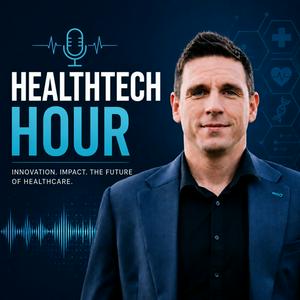
HealthTech Hour is a leading healthtech podcast exploring the people and technologies transforming healthcare. Each episode features conversations with healthtech founders, healthcare leaders, clinicians, investors and innovators building the future of digital health, AI, diagnostics, medtech and healthcare innovation. Whether you're a founder, investor, healthcare professional or simply passionate about health technology, HealthTech Hour brings insights from the people shaping the future of healthcare.🌍 Listeners in over 50 countries.🎙 New episode bi-weekly.🗣 Hosted by Steve Roest.
Sitio web del podcastEscucha HealthTech Hour, Libros para Emprendedores y muchos más podcasts de todo el mundo con la aplicación de radio.net
Descarga la app gratuita: radio.net
- Añadir radios y podcasts a favoritos
- Transmisión por Wi-Fi y Bluetooth
- Carplay & Android Auto compatible
- Muchas otras funciones de la app
Descarga la app gratuita: radio.net
- Añadir radios y podcasts a favoritos
- Transmisión por Wi-Fi y Bluetooth
- Carplay & Android Auto compatible
- Muchas otras funciones de la app

HealthTech Hour
Escanea el código,
Descarga la app,
Escucha.
Descarga la app,
Escucha.
HealthTech Hour: Podcasts del grupo
 Colombia