

Escucha gratis este podcast en la aplicación: Descarga gratuita en la App Store
radio.net
Sleep timer
Favoritos
16 episodios
The Truth About Resentment: 6 Types, Why It Stays, and How to Actually Heal It
07/04/2026 | 35 minMost people treat resentment like something to push away or white-knuckle through. But before you can release it, you need to know what you're actually holding — because not all resentment is the same, and the way you work with each type is completely different.
In this episode, we break down six distinct types of resentment, why one of them is actually a loving emotion, why chronic resentment has nothing to do with time, and what the path toward healing actually looks like.
What we cover:
Why resentment is the perception of being treated unfairly — and why that word matters more than you think
The CBT triangle: how your beliefs and perspectives create your feelings, not just the events themselves
Six types of resentment: deflected, relational, protective, displaced, inherited, and self-resentment turned outward
Why protective resentment blocks genuine repair — even when the other person is actually changing
How implicit memory and the nervous system keep old wounds alive in present-day relationships
A three-part framework for what to actually do with resentment once you've identified which type you're holding
TIMESTAMPS:
00:00 — Why releasing resentment without understanding it doesn't work
01:15 — What resentment actually is: perception, not reality
02:25 — CBT and the triangle: how perspectives create feelings
03:20 — The example: I resent my spouse because they don't care about me
05:00 — Resentment vs. anger: why resentment is waiting for something
05:39 — Intro to the six types
06:03 — Type 1: Deflected resentment
09:44 — Type 2: Relational resentment
12:14 — Type 3: Protective resentment
14:45 — Type 4: Displaced resentment
18:00 — Type 5: Inherited resentment
20:00 — Type 6: Self-resentment turned outward
22:40 — The disempowerment cycle and how to get your power back
23:57 — Why chronic resentment has nothing to do with time
24:40 — Implicit memory and the nervous system
27:27 — The cognitive bias underneath resentment
30:33 — What to do: identify the type, find the belief, understand beliefs are workable
35:04 — The Practice
ORDER MY BOOK: Why We Fight is my new book published by HarperOne. The book is a roadmap for understanding the core wound driving your conflict patterns, and how to change them. Available wherever books are sold. 👉 kimpolinder.com/book
JOIN THE PRACTICE: The Practice is my weekly community for doing the real work. It's not surface-level self-awareness, but the actual patterns underneath. Join at kimpolinder.substack.comWhen Only One Emotional Tone Is Allowed: Dismissive vs Anxious Attachment in Conflict
27/02/2026 | 21 minAvoidant attachment isn't one category. Dismissive and fearful avoidant patterns respond very differently in conflict, and using the wrong repair strategy can make things worse.
If one of you demands calm and the other escalates to be heard, this episode is for you.
Kim covers the real issue beneath tone, intensity, and shutdown: distress tolerance.
Timestamps:
00:00 When Only One Emotional Tone Is Allowed
00:55 This Isn't Incompatibility. It's Capacity.
03:01 What Attachment Theory Is (And Isn't)
05:28 Dismissive vs Fearful Avoidant: The Critical Difference
08:06 Why Repair Depends on the Pattern
09:15 "I Just Want Calm" vs "I Just Want to Be Heard"
11:28 Is Wanting Calm Unreasonable?
12:34 Boundary vs Emotional Control
14:38 The Real Issue: Distress Tolerance
15:03 Why Insight Isn't Enough
17:35 Reps for Anxious Preoccupied Patterns
18:15 Reps for Dismissive Avoidant Patterns
19:05 Reps for Fearful Avoidant Patterns
20:39 Why Skill Requires Practice
21:05 Join The Practice
If you're serious about widening your emotional lane instead of having the same fight again next week, my community The Practice is opening soon.AI Is Great at Insight. Growth Requires Integration.
13/02/2026 | 37 minMore than half of U.S. adults are now using AI to manage stress, anxiety, or emotional overwhelm. Among people who already use AI for mental health, nearly half say it's the first place they turn when something feels wrong.
So the real question isn't whether AI is good or bad.
It's this:
Can AI actually support mental health in a meaningful way? Or does it accidentally reinforce the very patterns people are trying to heal?
In this episode, I unpack where AI genuinely helps, and where it quietly breaks down when it comes to changing your old patterns.
We cover:
• Why AI feels supportive — and why that can be misleading
• The difference between insight and integration
• How systems are trained to mirror and validate
• The risk of comfort without accountability
• Why real emotional safety includes friction
• How self-trust erodes when authority gets outsourced
• Practical ways to configure AI so it challenges you instead of agreeing with you
Timestamps
00:00 — Is AI your best friend or your emotional echo chamber?
04:12 — The data: how many people are already using AI for mental health
07:35 — Why AI feels so validating
11:20 — Insight vs. integration: what most people miss
16:45 — Comfort without responsibility
21:10 — Real emotional safety includes friction
25:40 — Where self-trust quietly erodes
29:30 — How to configure ChatGPT to reduce sycophancy
33:10 — Prompts for deeper self-awareness
38:05 — When AI becomes a red flag instead of a tool
41:20 — Growth requires integration
Understanding yourself is powerful.
But growth happens when your nervous system learns something new. In real relationships, under real conditions.
Insight can start the process.
Integration is moving from self-awareness to changing your behaviors. This is what changes your life.
If this episode resonated and you're realizing insight isn't the same as change, that's exactly what The Practice is built for.
It's a community focused on integration. Building nervous system capacity, relational skill, and real-time repair. Not just understanding your patterns, but interrupting them.
You can learn more and join the waitlist at kimpolinder.com
Kim's Instagram: https://www.instagram.com/kp_counseling/
Kim's YouTube: https://www.youtube.com/@engineeringlovepodcastWhy Eating Disorders Are Not About Food
06/02/2026 | 33 minIn this episode, Kim sits down with eating disorder specialist Sarah Burney to unpack what's really going on beneath "food noise," body dissatisfaction, and chronic struggles with eating. This conversation moves beyond surface-level advice and into the deeper emotional, neurological, and relational drivers of disordered eating.
They explore why food is rarely the actual problem, how shame quietly fuels the cycle, and why changing your body never resolves the underlying distress. Sarah also clarifies common misconceptions around body dysmorphia versus negative body image, explains when professional support is warranted, and offers a grounded framework for helping both yourself and loved ones without reinforcing shame.
This episode is for anyone who feels consumed by food thoughts, stuck in body-based self-worth, or confused about where healing actually begins.
Guest: Sarah Burney Licensed in CA, AZ, OR, and PA burneytherapygroup.com
Timestamps
00:00 – What "food noise" actually feels like
02:31 – Stress eating, dopamine, and emotional regulation
03:54 – Food as self-soothing vs avoidance
05:06 – When food thoughts cross the line into needing support
05:26 – Medical vs psychological red flags
06:03 – How shame initiates and sustains disordered eating
07:19 – Why changing your body never solves the real problem
08:21 – Is body image ever the root issue?
09:00 – Core beliefs, trauma, and self-worth
10:15 – Why success and appearance don't fix internal distress
11:15 – What treatment actually looks like
12:11 – Body dysmorphia vs negative body image (important distinction)
14:12 – Separating self-worth from self-improvement
15:35 – Being treated differently based on appearance and why it matters
17:18 – Why reaching the "ideal" body doesn't bring relief
21:04 – The belief underneath "I need to look different"
24:33 – Disordered eating vs diagnosable eating disorders
25:26 – Why eating disorders are not about food
26:48 – How loved ones can help without causing harm
29:47 – What to look for in an eating disorder specialist
Kim's website: https://www.kimpolinder.com/
Kim's Instagram: https://www.instagram.com/kp_counseling/
Kim's YouTube: https://www.youtube.com/@engineeringlovepodcastThinking About Divorce? What to Know Before You Call a Lawyer
29/01/2026 | 32 minIn this episode, I'm joined by Alex Beattie, founder of The Divorce Planner, to talk about what actually helps in the earliest stages of separation and divorce. Alex is a divorce prep coach who works with people before they hire attorneys or mediators, helping them get grounded emotionally and prepared practically before big, irreversible decisions are made.
We talk about the grief, shame, and identity disruption that often catches people off guard, even when divorce feels mutual, and why slowing down at the beginning can protect you emotionally and financially in the long run.
Alex's web site: https://www.thedivorceplanner.net/
--------------
Timestamps & topics
00:00 – What a divorce prep coach actually does How divorce prep differs from legal strategy and why preparation before calling a lawyer matters
02:15 – Why people want to "just get it over with" Emotional overwhelm, avoidance, and the risks of making decisions from shutdown or panic
03:50 – Divorce as the end of an imagined future Grief, loss of identity, and facing a blank slate you didn't plan for
06:10 – The emotional pain people underestimate Why sadness, grief, and shame still show up even when divorce is the "right" decision
08:40 – How childhood patterns resurface during divorce Why old narratives about worth, safety, and capability come back online
10:20 – Divorce and confidence collapse Questioning your value, competence, and future, especially for stay-at-home parents
13:05 – Reframing skills, worth, and capability Recognizing transferable skills and rebuilding self-trust
14:45 – Retraining the brain during a destabilizing life transition Awareness, emotional regulation, and building stability when everything feels uncertain
17:00 – Social stigma, family reactions, and judgment Why divorce still carries shame and how others' reactions can complicate healing
19:10 – The most unhelpful things people say during divorce "Well-meaning" comments that actually increase shame and self-doubt
21:30 – How friends can offer real support Listening, practical help, and showing up without trying to fix or judge
24:10 – Letting yourself receive support Why isolation makes divorce harder and how connection actually builds resilience
28:40 – Why you should never negotiate money without knowing your numbers How fear around finances leads to long-term regret
30:10 – The 5-5-5 decision rule Evaluating divorce decisions based on their impact over time, not just immediate relief
32:00 – Final advice for early-stage divorce decisions Why slowing down now protects your future self and prevents costly mistakes later
--------------
Kim's website: https://www.kimpolinder.com/
Kim's Instagram: https://www.instagram.com/kp_counseling/
Kim's YouTube: https://www.youtube.com/@engineeringlovepodcast
Más podcasts de Cultura y sociedad
 Seminario Fenix | Brian TracyCultura y sociedad, Economía y empresa, Educación, Empresa, Filosofía, Superación personal
 Radio AmbulanteAprendizaje de idiomas, Comentando la noticia, Cultura y sociedad, Documental, Educación, Noticias
 DespertandoCultura y sociedad, Religión y espiritualidad, Salud y forma física
 Se Regalan DudasCultura y sociedad, Relaciones, Salud y forma física
 TED Talks DailyCultura y sociedad
 VOS PODÉSCultura y sociedad
 Atemporal con Andrés AcevedoCultura y sociedad
 Conversaciones con el ReflejoCultura y sociedad, Diarios personales
 Banrepcultural PodcastArte, Cultura y sociedad, Educación
 The Wild ProjectCultura y sociedad, Humor, Noticias, Noticias de entretenimiento
Podcasts a la moda de Cultura y sociedad
 Luces y sombras de la historiaCultura y sociedad, Religión y espiritualidad
 CARAS VEMOS SUFRIMIENTOSCultura y sociedad, Documental, Salud mental, Salud y forma física
 Marco Antonio Regil en FórmulaCultura y sociedad
 40Grados Entrevistas Calientes y más by Cris PasquelCultura y sociedad
 afueradentro ◌Arte, Cultura y sociedad, Educación, Superación personal
 99% La disciplina del éxitoCultura y sociedad
 Viene y Va con Dani G SchulzCultura y sociedad, Diarios personales
 Del Caribe y otros TulipanesCultura y sociedad
 If Books Could KillArte, Cultura y sociedad, Libros, Noticias, Política
 La cena de los idiotésCultura y sociedad
 The Curiosity Shop with Brené Brown and Adam GrantCultura y sociedad, Economía y empresa
 Within ReasonCultura y sociedad, Filosofía, Religión y espiritualidad
 OnlyFantasyCultura y sociedad, Documental, Historia de la música, Música
 The Shawn Ryan ShowCultura y sociedad, Filosofía
 LO QUE TÚ DIGAS con Alex FidalgoCultura y sociedad
 WomansplainingCultura y sociedad
 ElementalCultura y sociedad, Documental
 Mente en caosCultura y sociedad, Diarios personales
 Amor sano para tu vidaCultura y sociedad, Relaciones
 TED en EspañolCultura y sociedad, Educación, Tecnología
 Entre NosotrasCultura y sociedad, Diarios personales
Acerca de Engineering Love
Most of us aren't fighting because we're bad communicators. We're fighting because our nervous systems are hijacked, our past is leaking into the present, and we don't know how to translate what we feel into something another human can actually hear.
This podcast is about what's really happening underneath conflict, shutdown, anxiety, resentment, and emotional exhaustion in relationships. Not pop psychology. Not quick fixes. And not "just communicate better."
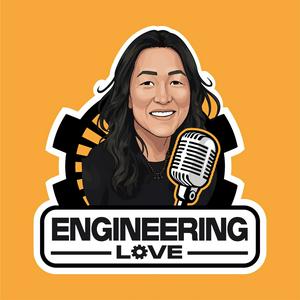
Hosted by Kim Polinder, associate therapist and relationship coach, each episode breaks down the emotional mechanics behind fights, attachment patterns, shame responses, trauma adaptations, and self-esteem. You'll learn why insight alone doesn't change behavior, how coping strategies that once kept you safe can start sabotaging your relationships, and what it actually looks like to build emotional regulation, repair after conflict, and self-trust over time.
Expect grounded psychology, real relational examples, and practical language you can use in your own life. This is for people who want to understand themselves more clearly, stop repeating the same patterns, and build relationships that feel steadier, more honest, and less exhausting.
If you've ever thought "Why do we keep having the same fight?" or "I know better, so why can't I do better?" you're in the right place.
Sitio web del podcastEscucha Engineering Love, Seminario Fenix | Brian Tracy y muchos más podcasts de todo el mundo con la aplicación de radio.net
Descarga la app gratuita: radio.net
- Añadir radios y podcasts a favoritos
- Transmisión por Wi-Fi y Bluetooth
- Carplay & Android Auto compatible
- Muchas otras funciones de la app
Descarga la app gratuita: radio.net
- Añadir radios y podcasts a favoritos
- Transmisión por Wi-Fi y Bluetooth
- Carplay & Android Auto compatible
- Muchas otras funciones de la app
Engineering Love
Escanea el código,
Descarga la app,
Escucha.
Descarga la app,
Escucha.
Engineering Love: Podcasts del grupo
 Colombia