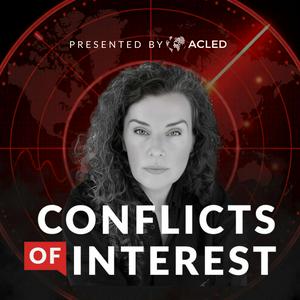
On this episode of Conflicts of Interest, Professor Clionadh Raleigh and Bron Mills catch up on Day 88 of the Iran war — a moment defined more by paralysis than progress.
They unpack Iran's internet blackout, finally ending after months of restrictions, what it reveals about Tehran's grip on internal dissent, and why the latest round of US-Iran peace talks remains trapped in a web of competing agendas. Washington, Tel Aviv, Riyadh, Doha, Abu Dhabi, the Gulf states are pulling in different directions, and that fracture is poisoning any path to a genuine deal. Clionadh's assessment is direct: there is "no peaceful way out" of the current crisis.
From Iran, the conversation shifts to Russia. As drone warfare reshapes the Ukrainian battlefield, Clionadh breaks down what Moscow's mounting desperation actually looks like on the ground, and what it means for a war that shows no sign of resolution.
Also on the episode: Pakistan's renewed wave of suicide bomb attacks and the domestic security spiral no one is covering, the widening Saudi-Qatar-UAE divide over regional strategy, Trump's comments on Iran's football team ahead of the World Cup, and what it says when sport and geopolitics keep colliding.
Plus: the surprisingly difficult task of avoiding dead bodies on holiday.
For more conversations like this, subscribe to Conflicts of Interest and watch the full episode on YouTube.
Conflicts of Interest: https://www.youtube.com/@ConflictsOfInterestACLED
📱 Did you know you can follow Conflicts of Interest on TikTok?


















 Colombia