
Escucha gratis este podcast en la aplicación: Descarga gratuita en la App Store
radio.net
Sleep timer
Favoritos
110 episodios
TURNING A NONPROFIT INTO A DIGITAL MEDIA POWERHOUSE
05/11/2026 | 45 minJubilee Media started with a failed busking attempt in a New York subway station. Ten years later it has 12 million YouTube subscribers and has become a town hall for Gen Z, and a stop for politicians before traditional media.
This episode of the Media Odyssey Podcast features Evan Shapiro and special co-host Jamie Shapiro (sitting in for Marion Ranchet) in conversation with Jason Y. Lee, founder and CEO of Jubilee Media. They cover how Jubilee built viral YouTube formats like Surrounded, Middle Ground, and Spectrum, why YouTube on the TV screen matters, and how a 37-person team produces so much original content. They also discuss the creator economy and brand partnerships, the CNN town hall, and what comes next for Jubilee, including FAST channels, live events, and a new era of audience participation.
Key Takeaways:
1. From Haiti Fundraiser to Gen Z Town Hall
Jason Lee left a consulting job at Bain to start the Jubilee Project, a nonprofit, after a YouTube video raised thousands for Haiti. The 2017 election inspired Jubilee Media as it exists today, a media company built to bring people together in conversation that feels authentic.
2. Why YouTube Comes First
Jubilee Media has 12 million YouTube subscribers and reaches roughly 200 to 300 million views a month. Jason says YouTube is the hardest place to build an audience but the stickiest, with Surrounded episodes averaging over 45 minutes of viewing and more people watching on TV.
3. Build Formats, Not One-Off Viral Videos
Jason explains why a viral format that produces 100 videos beats a single viral hit, and how hackathons, quick pilots, and a “batting average” mindset drive the process. Fast feedback from digital audiences is the advantage.
4. Low Production Costs, High Authenticity
A team of about 37 puts out at least three original videos a week, and the stripped-down sets came from budget limits, not genius. Evan argues that Hollywood confuses production value with quality.
5. Politics, Partnerships, and What’s Next
Jubilee recently co-produced a CNN town hall with Texas Senator-elect James Talarico, and Lee discusses how Jubilee stays nonpartisan and how brand partnerships fit in. He also previews Jubilee Clubs and upcoming live events.
Thank you to Jason Y. Lee for joining the pod!
Jason Y. Lee - https://www.linkedin.com/in/jasony-lee/
Jubilee - https://www.linkedin.com/company/jubileemedia/home/
Interested in sponsorship? https://forms.gle/2LCWfX2HBNT8mtpx8
Connect with us on Linkedin:
Evan Shapiro - https://www.linkedin.com/in/eshap-media-cartographer/
Marion Ranchet - https://www.linkedin.com/in/marionranchet/
The Media Odyssey Podcast - https://www.linkedin.com/company/the-media-odyssey-podcast
(00:00) - Welcome and Guest Intro
(02:26) - From Haiti to Jubilee
(06:06) - Scale and Audience Reach
(07:16) - Platform Strategy and TV
(08:46) - Building Viral Formats
(11:01) - MVP Hackathons and Iteration
(15:18) - Team Structure and Output
(18:49) - Costs and Authenticity
(23:03) - CNN Town Hall Collab
(24:42) - Candidates In The Hot Seat
(28:07) - Nonpartisan By Design
(32:18) - Learning From Opposing Views
(33:50) - How Jubilee Makes Money
(34:54) - Brand Safety And Guidelines
(38:25) - Beyond Politics New Formats
(41:06) - What's Next For Jubilee
(45:17) - Podcast Wrap And GoodbyeTHE SECRET TO HALLMARK'S BILLION-MINUTE FANDOM
29/10/2026 | 29 minHallmark makes 100 movies a year in two to three weeks each, has a 70,000-person waitlist for its annual cruise, and received 84 million views in its first year on YouTube. The 116-year-old, family-owned brand shows how fandom, formula, and a “One Hallmark” ecosystem keep audiences loyal across TV, streaming, and live events.
This episode of the Media Odyssey Podcast, recorded live at MIPCOM, features hosts Evan Shapiro and Marion Ranchet with Jon Sichel, head of distribution for Hallmark Media. They discuss Hallmark’s YouTube strategy and the launch of Hallmark Movies on YouTube, the Hallmark+ streaming membership, and the Hallmark Channel turning 25. They also cover the brand’s global expansion and licensing strategy, the Hallmark movie formula, and why sticking to a clear brand identity and putting fans first beats trying to be everything to everyone.
Key Takeaways:
1. YouTube Finds a Younger Hallmark Fandom
Hallmark Movies launched on YouTube in October 2025 and has already seen 84 million views and about 2.6 billion minutes of viewing time. Jon Sichel explains why the audience skews younger than the typical TV viewer.
2. One Hallmark: The Fan Flywheel
From 1,000 retail stores to Hallmark+ to a cruise with a 70,000-person waitlist, Hallmark moves fans across every part of its business. YouTube viewers are pointed to Hallmark+, the streaming service, where members get store discounts, free cards, unlimited e-cards, and access to events like a Kansas City Christmas Experience that draws 100,000 visitors. It’s more a membership than a subscription.
3. The Playbook Behind 100 Movies a Year
Hallmark makes about 100 movies annually, roughly 40 of them holiday films, shot in two to three weeks each. The company doesn’t spend $30 million per film, and Jon Sichel says tax credits, tight budgets, and a tried-and-true production approach make the volume possible
4. Going Global
Hallmark licenses select content to Netflix and Peacock, including earlier seasons of The Way Home, to introduce fans and bring them back to its own platforms. The company is in 145 countries with partners including TF1, Corus, RAI, and Sky, and it mostly dubs its films in over 50 languages. Sichel shares why taking Hallmark+ abroad is a top priority.
5. Why Staying Private Matters
Hallmark is family-owned, with the grandsons of founder J.C. Hall still active in running it, and it has declined offers to sell. Sichel says that not reporting to Wall Street each quarter supports a culture of reinvestment and innovation.
Thank you to Jon Sichel for joining the pod!
Jon Sichel - https://www.linkedin.com/in/jonathansichel/
Hallmark - https://www.linkedin.com/company/hallmark-channel/
Interested in sponsorship? https://forms.gle/2LCWfX2HBNT8mtpx8
Connect with us on Linkedin:
Evan Shapiro - https://www.linkedin.com/in/eshap-media-cartographer/
Marion Ranchet - https://www.linkedin.com/in/marionranchet/
The Media Odyssey Podcast - https://www.linkedin.com/company/the-media-odyssey-podcast
(00:00) - Podcast Introductions
(00:51) - Hallmark Plus Preview
(01:58) - Hallmark Origin Story
(03:54) - Hallmark Formula Scale
(04:50) - YouTube Expansion Strategy
(07:10) - Fan Flywheel Experiences
(08:49) - One Hallmark Ecosystem
(14:15) - Owning Christmas Worldwide
(17:16) - Global Distribution Plans
(21:51) - Private Company Advantage
(27:20) - Playbook Not Formula
(29:05) - Closing ThanksWHY BROADCASTERS ARE PARTNERING WITH THE PLATFORM THEY ONCE FEARED
22/10/2026 | 30 minThree years ago RTL Deutschland had no relationship with YouTube. Today, 200 old episodes of a 1996 action series are driving 123% more first video views and 26% more subscriptions on RTL+. This YouTube and RTL partnership case study shows how legacy TV can monetize its back catalog and grow streaming subscriptions.
This episode of the Media Odyssey Podcast features Evan Shapiro in conversation with Pedro Pina (Vice President of YouTube EMEA) and Stefan Schmitter (CEO of RTL Deutschland). They discuss how RTL treats YouTube as a partner of equals instead of a threat, and why the cannibalization fear doesn’t hold up. They also cover YouTube monetization and revenue share, the Cobra 11 catalog strategy, Ad Alliance and the packaging of YouTube, linear TV, and streaming ad inventory, creator collaborations, and news on YouTube. Together they make the case for a “third golden age of television” built on thinking like a creator.
Key Takeaways:
1. YouTube Is a Partner, Not the Villain
RTL had no YouTube relationship three years ago and now treats it as an additional channel with a clear role, strategy, and room for trial and error. Stephan argues that audiences increasingly live in “bubbles” (YouTube, Netflix, Amazon, TikTok), so a traditional media house needs partnerships to reach younger age groups. On the other hand, YouTube doesn’t produce content, so it only succeeds when its partners do.
2. Cobra 11 Turns a Burnt-Out Catalog into a Subscription Funnel
RTL put about 200 full episodes of the action series Cobra 11 (on air since 1996 and sold to 120 countries) on YouTube after they had run out of value in its own ecosystem through repeated reruns. The episodes earned around 30 million views in 365 days from an audience that is 83% male and about 30 years old on average. The content produced 123% more first video views on RTL+ and about 26% more RTL+ subscriptions, and Evan notes it all happens one click away from the YouTube app on the TV screen.
3. Ad Alliance Packages YouTube, TV, and Streaming Inventory
RTL’s Ad Alliance sells advertisers a combined package of RTL+, RTL, Sky, and YouTube inventory, pairing RTL+’s female-leaning audience (34 years old on average) with YouTube’s younger male audience. Stephan says revenues are significantly up, with near double-digit millions in incremental money and a clear path with YouTube through 2030. Pedro notes that partners selling their own inventory with their own sales forces achieve higher CPMs, especially on the big screen.
4. Experiment, Don’t Abandon Linear, and Build a Creator Flywheel
Pedro’s lessons from the partnership are to be willing to change, to experiment freely on YouTube, and to remember YouTube is not the only solution, since free-to-air and linear TV remain an important chunk of the business. Stephan adds that YouTube’s creator network can supply pre-shows and highlight content RTL cannot produce itself, while creators gain validation by appearing on shows like Let’s Dance and I’m a Celebrity... Get Me Out of Here!
5. News on YouTube Reaches Audiences Where They Are
With 52-54% of the world getting news from social video or social media, RTL put its N-TV news channel and short-form videos made with journalistic creators on YouTube, which Schmitter calls part of RTL’s responsibility in the democratic system. Pedro says traditional players leaning in broadens the range of voices heard, citing the BBC becoming the largest English-speaking news channel on YouTube, and notes YouTube’s recommendation systems give authoritative news sources special placement.
Thank you to Pedro Pina and Stephan Schmitter for joining the pod!
Pedro Pina - https://www.linkedin.com/in/pedro-pina-06a413/
Stephan Schmitter - https://www.linkedin.com/in/stephan-schmitter-08016038/
YouTube - https://www.linkedin.com/company/youtube/
RTL Deutschland - https://www.linkedin.com/company/rtl-deutschland/
Interested in sponsorship? https://forms.gle/2LCWfX2HBNT8mtpx8
Connect with us on Linkedin:
Evan Shapiro - https://www.linkedin.com/in/eshap-media-cartographer/
Marion Ranchet - https://www.linkedin.com/in/marionranchet/
The Media Odyssey Podcast - https://www.linkedin.com/company/the-media-odyssey-podcast
(00:00) - Welcome and Setup
(00:48) - RTL Showcase Reel
(01:58) - Beyond Cosplaying Digital
(03:17) - Additive Reach Not Cannibalization
(05:22) - YouTube Platform Partnership Model
(08:26) - Cobra 11 Full Episodes Case
(12:04) - Fandom Flywheel and CTV Monetization
(14:21) - Ad Alliance and Premium Inventory Sales
(17:34) - Advertiser One Stop Shop Strategy
(20:01) - Lessons for Legacy Media Partners
(24:00) - Creators Meet Broadcast Flywheel
(25:20) - News on YouTube and Democracy
(29:07) - Closing Thanks and YouTube MessageFINDING YOUR AUDIENCE FROM THE COUCH TO THE TOILET
15/10/2026 | 33 minPremium streaming lost 89% of the subscribers that signed up for new subscriptions last year, and the audience it’s chasing is watching video in the bedroom, on the bus, and on the toilet. Evan Shapiro’s keynote makes the case that media has to redefine broadcast and follow the whole consumer.
In this keynote episode of the Media Odyssey Podcast, recorded on stage at Jupiter Festival in Miami, Evan Shapiro unveils the newest Media Universe map and the Creator Ecosphere map. He walks through cross-screen attention data from 23 regions, including why YouTube, TikTok, and vertical video are winning the phone-first audience, how the creator economy is shifting toward the affinity economy, and why the “cannibalization” fear is a myth, using World Cup viewership as proof. He also covers streaming retention, the rise of advertising over subscriptions, vertical premium television, employee-generated content, and how brands and media companies can win by thinking like creators in the user-centric era.
Key Takeaways:
1. The User-Centric Era Is Here, and the Phone Is the Remote Control
81% of the world’s population is 54 or younger, and phones beat television sets for video time by more than two to one in the US and more than three to one in Brazil and Mexico. In the 23 regions surveyed, the bedroom was the top place to watch video, and 75% of the Indian Premier League cricket final was watched on phones.
2. YouTube Wins by Serving the Whole Consumer
The new de-duplicated cross-screen attention index (index.eshap.tv) puts YouTube first in the US because it is the only platform on both television sets and phones, with a vertical product. Among under-55s TikTok ranks second, and among under-25s TikTok wins total attention in the US.
3. Premium Streaming Is Plateauing as Advertising Overtakes Subscriptions
In the past year SVOD added 175 million subscribers and lost 156 million, a net retention of just 11%. PwC data shows advertising surpassing subscriptions in global revenue for the first time in a long time, which explains why premium streamers are rushing into ads.
4. The Cannibalization Myth Doesn’t Hold Up
During the World Cup, CazéTV in Brazil hit 24 million concurrent YouTube streams for the final while 70 million people watched on broadcast at the same time. RTL in Germany reports a 26% increase in paid subscriptions and a 126% increase in sampling from audiences reached on YouTube, and BBC Studios’ Jasmine Dawson says that in every case studied, social distribution is additive.
5. Think Like a Creator
Indie creators on the Affinity 100 list showed three to five times better engagement quality than mega creators. Heinz drove about $45 million in earned media and a 12% sales lift by mocking FIFA’s stadium branding rules, and Kit Kat’s stolen-truck posts reached 128 million people and $224 million in earned media. World of Wonder’s WOW Presents, built on its Drag Race fandom, reports 96% retention.
Interested in sponsorship? https://forms.gle/2LCWfX2HBNT8mtpx8
Connect with us on Linkedin:
Evan Shapiro - https://www.linkedin.com/in/eshap-media-cartographer/
Marion Ranchet - https://www.linkedin.com/in/marionranchet/
The Media Odyssey Podcast - https://www.linkedin.com/company/the-media-odyssey-podcast
(00:00) - Opening Banter
(00:07) - Mapping the Media Universe
(01:12) - User Centric Era Begins
(02:30) - Creator Ecosphere Shift
(02:59) - Who the Consumers Are
(04:25) - Streaming vs Social Video
(06:39) - Where People Watch Video
(09:38) - Phone First Attention Index
(14:31) - Affinity Economy Explained
(17:51) - Bluey and No Cannibalization
(20:08) - Sports Second Screen Fandom
(22:58) - Vertical Video Explosion
(24:27) - Brands Acting Like Creators
(27:18) - Employee Generated Content Wins
(29:25) - Drag Race Creator Mindset
(31:27) - Final Takeaways and CloseHOW TO FIX KIDS CONTENT
08/10/2026 | 49 minYouTube built the kids content economy, then broke its own monetization pipeline. Now it's time to fix kids content.
This episode of the Media Odyssey Podcast features hosts Evan Shapiro and Marion Ranchet with kids media analyst Emily Horgan (The Kids Streamersphere), breaking down her latest Netflix Kids Content Performance Report. They dig into why Netflix isn't building new kids IP, YouTube's broken monetization pipeline for children's content, and how what's actually working for creators and franchises in a brutally competitive kids' content landscape can be the roadmap to fixing kids content.
Key Takeaways:
1. Netflix Is the Stage, Not the Lab
Netflix's recent kids hits (Gabby's Dollhouse, Creature Cases) mostly originated five-plus years ago, and newer breakouts like Ms. Rachel and the digital-first animation flooding Netflix (Sheriff Labrador, ChuChu TV) were built elsewhere, mainly on YouTube. Emily Horgan argues Netflix is "North Starred on streaming" rather than franchise-building, licensing proven IP (Paw Patrol, Peppa Pig, Miraculous Ladybug) rather than developing new characters from scratch.
2. YouTube's Kids Monetization Pipeline Is Broken
Advertising revenue for kids content on YouTube has collapsed over the past five years following FTC regulation (COPPA enforcement) and cooling advertiser appetite even though kids content represents roughly 15% of platform usage. This has throttled the pipeline that once produced hits like Cocomelon, making it far harder for "the next Ms. Rachel" to emerge.
3. Old IP Still Dominates (But Legacy Live-Action Is Resurging)
Decade-old Nickelodeon live-action shows like The Thundermans and Sam & Cat continue to perform strongly on Netflix, a trend Emily Horgan's team began tracking closely around the Paramount-Warner Bros merger. Shows like SpongeBob and Bluey show that durable franchises, often 20+ years old, dominate the kids top 10. New entries can take 28 months or more to build an audience.
4. AI's Double-Edged Role in Kids Animation
Studios like Toonstar are using AI-assisted animation to cut production costs to roughly 5% of traditional costs, enabling profitable, creator-led shows and faster turnaround. But the same efficiency is flooding YouTube with low-quality "AI slop," which erodes parental trust that is already weakened among Gen Z parents.
5. The Playbook: Build the Audience, Then the Business
The winning model is audience-first, not commission-first. Success shows now need to build direct relationships with fans via YouTube, live events, and merch before pursuing traditional distribution deals. Examples include Steven and Parker (now reaching 30 million weekly viewers across six languages) and Sesame Street's multi-platform windowing strategy between Netflix and YouTube.
Thank you to Emily Horgan for joining the pod!
Emily Horgan - https://www.linkedin.com/in/emohorgan/
Kids Media Club Podcast - https://kids-media-club-podcast.captivate.fm/listen
The Kids Kids StreamerSphere - https://thekidsstreamersphere.substack.com/
Interested in sponsorship? https://forms.gle/2LCWfX2HBNT8mtpx8
Connect with us on Linkedin:
Evan Shapiro - https://www.linkedin.com/in/eshap-media-cartographer/
Marion Ranchet - https://www.linkedin.com/in/marionranchet/
The Media Odyssey Podcast - https://www.linkedin.com/company/the-media-odyssey-podcast
(00:00) - Welcome and Dublin Banter
(03:10) - Inside the Netflix Kids Report
(05:36) - Live Action Surprise Hits
(07:23) - YouTube IP Flood Returns
(09:35) - Why Netflix Licenses More
(12:55) - Kids Strategy and Pipeline
(16:57) - YouTube as the Lab
(17:56) - Kids Monetization Collapse
(19:15) - Regulation and Ad Chill
(22:35) - Co-Viewing and Nostalgia Wins
(23:28) - Fixing YouTube Kids
(25:18) - Monetization and Prominence
(27:57) - Regulation and Responsibility
(29:46) - Netflix Engagement Shift
(34:15) - New IP and Revenue Models
(36:41) - AI Animation Promise and Slop
(40:01) - Mini SVOD and Superfan Subscriptions
(43:49) - Creator Entrepreneur Mindset
(47:16) - Wrap Up and MIPCOM Plans
Más podcasts de Cine y Televisión







Podcasts a la moda de Cine y Televisión






Acerca de The Media Odyssey
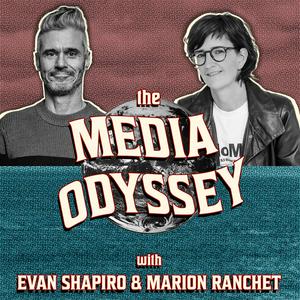
Each week, two of media’s most influential thinkers, Evan Shapiro & Marion Ranchet, take on the hottest media topics with their hottest takes, helping their audience chart a course through the maelstrom that is today’s Media Odyssey.
Based in the US, Evan Shapiro is the Media Industry’s official Cartographer, known for his well-researched and provocative analysis of the entertainment ecosystem in his must read treatises on Media’s latest trends and trajectories.
Marion Ranchet, French expat based in Amsterdam, has become the industry’s go-to expert in all things streaming, building a following for turning even the most complex problems into easily digestible and actionable insights.
Ranchet and Shapiro are known for their sharp-yet-accessible content on Media consumption, audience trends, and the shifting fundamentals of the business itself. Even during the toughest of topics, they each make talking about Media fun. Together every week, these two will offer entertaining, often humorous, and always educational content on today’s Media Odyssey.
Escucha The Media Odyssey, Solteras y fabulosas... Interrogación y muchos más podcasts de todo el mundo con la aplicación de radio.net
Descarga la app gratuita: radio.net
- Añadir radios y podcasts a favoritos
- Transmisión por Wi-Fi y Bluetooth
- Carplay & Android Auto compatible
- Muchas otras funciones de la app
Descarga la app gratuita: radio.net
- Añadir radios y podcasts a favoritos
- Transmisión por Wi-Fi y Bluetooth
- Carplay & Android Auto compatible
- Muchas otras funciones de la app
The Media Odyssey
Escanea el código,
Descarga la app,
Escucha.
Descarga la app,
Escucha.
The Media Odyssey: Podcasts del grupo
 Colombia

