For The Wild

For The Wild
For The Wild
Último episodio

397 episodios

  • For The Wild

    IN THE COMPANY OF HUMPBACKS, S1:E1

    26/03/2026 | 33 min
    “Learning whale language is about being in right relationship.”
    In the first episode of For The Wild’s In the Company of Humpbacks, we hear from Joe Olson and Dr. Fred Sharpe about their approaches to analyzing whale sound. When we desire to understand whales, what more than human impulse are we activating? Immersing the listener in a world of exploration and investigation, this episode leaves us with the spirit of questioning and a hope for deeper relationality in our pursuit of understanding.
    With delightful insight from Dr. Fred Sharpe, Rachel Meade, and Joe Olson, this series contains a wealth of knowledge and beauty. We’re so excited to bring you along with us on this magical journey through the more-than-human world. 
    Learn more and support this work at thrums.org. We gratefully acknowledge the contributions of our partners: Alaska Whale Foundation, Five Fingers Lighthouse, and the American Cetacean Society.
    *Sounds and images collected under NOAA/NMFS Research Permit 26663.

    Behind-the-Scenes Extras
    By joining us on Patreon, you can get early access to episodes, reflection prompts, a bonus episode, and behind the scenes content. Patreon membership also gives you access to our zines, archives of extended episodes, and more. Join us at patreon.com/forthewild.

    Biographies
    Dr. Fred Sharpe has been studying the foraging ecology of humpback whales in SE Alaska since 1987. He received his Ph.D. from Simon Fraser University and is currently collaborating with the Cetacean Institute on the study of the humpback’s aerial sounds. Fred’s interest in conservation biology has led him to follow the whales south to their Hawaiian wintering to document their historical ecology and legacy impacts from commercial whaling. He has been awarded the Fairfield Award for Innovative Marine Mammal Research and the Society for Marine Mammology’s Award for Excellence in Scientific Communication. Fred volunteers with NOAA as a large whale entanglement responder. He is a naturalist in the classical tradition and enjoys botanizing and preserving native oaks grasslands. During his botany undergraduate days (University of Washington) he co-authored and illustrated Wild Plants of the San Juan Islands. After graduation, he continued his work in the archipelago and co-authored and illustrated Birding in the San Juan Islands.   
    Joe Olson's love of cetaceans began when he was three years old and his grandfather routinely took him to visit Namu the killer whale at the Seattle Marine Aquarium. His concern for the general wellbeing of cetaceans started in fourth grade while writing a report about blue whales being on the verge of extinction. After receiving a degree in Physics and working as a Research Engineer and Research Physicist for several years, Joe started the hydrophone design and manufacturing company named Cetacean Research Technology in 1994. In 1999, Joe founded the Puget Sound Chapter of the American Cetacean Society (ACS) and is currently serving as the chapter president. Since selling Cetacean Research Technology at the end of 2022, Joe has been delighted to direct much more of his energy toward ecosystem protection and restoration issues with ACS and toward interesting cetacean research projects with colleagues and former hydrophone customers. When not volunteering on such projects or attending astrobiology colloquia at the University of Washington, Joe provides underwater and bioacoustics consultation through his company, Cetacean Communication, and he also wo
    Support the show
  • For The Wild

    Introducing: In the Company of Humpbacks

    19/03/2026 | 2 min
    Hey, friends. Ayana, here. 
    We are so excited to announce our brand new audio documentary series in the company of humpbacks. Three episodes. One goal to take you into the quiet the thrums and the wild rhythms of Southeast Alaska. 
    How it started. Fred Sharpe, old friend, longtime explorer of these waters, and we're always running into each other at his field station in Chichagof Island. Now, every time I see him, he brings a smile and usually a little giggle because of his very Dr. Seuss like spirit, same place different years, and the conversations just keep getting longer. This summer, we ran into each other again, picking blueberries on a little boardwalk trail, and we just stayed there hours, talking about whales, politics, AI, the ocean, Alaska, life, everything just tangled together. A few months later, I'm at my neighbor's house picking cherries, hands full, not stopping very on brand for me. And Fred calls. He's got Joe Olson on speaker, and they say you've got to come to Five Fingers Lighthouse. Tiny island, remote cliff, storms, toddlers in tow, oldest lighthouse in Alaska, totally wild, and somehow I said yes.
    That yes turned into walks, recordings and hours of listening to whale thrums, wind and the subtle rhythms of life all around us along the way. Rachel Meade, Joe Olson, Fred and I shared stories that are funny, strange, challenging and often pretty magical.

    We couldn't have made the series without the generosity of the Alaska Whale Foundation, the American Cetacean Society, the Alaska Fisheries Development Foundation, Five Fingers Lighthouse and Barnacle Foods. 
    Thanks to these organizations, we are able to listen deeper, wander further and bring these stories to you. This series is also the first in the new chapter for for the wild. We're now a studio, and we are loving this new way of relational storytelling, collaborating with constellations of people who want their stories heard. If you've got a story, a campaign, or a place that feels like it needs to be shared. 
    Connect with us at [email protected] now. 
    In the Company of Humpbacks drop soon, so step into the quiet, tune your ears to the thrums and come along with us.

    Support the show
  • For The Wild

    PLANTS ARE POLITICAL on the Sweetness of Watermelon and Prickly Pear S1:3

    25/12/2025 | 19 min
    “Connection to the land and knowing the plants that surround you and knowing what food your ancestor ate and trying to go back there is probably one of the most important things that we can do as resistance today.” - Aya Gazawi Faour
    In For The Wild’s series in collaboration with Olive Oddessey, we hear from their co-founder, Aya Gazawi Faour, who shares about plants indigenous to the Palestinian landscape and their deep ties to culture, resistance, and enduring lifeways. 

    In this concluding episode, Aya shares about both the symbols and material history of watermelon and prickly pear in Palestine, emphasizing the history of the plants as integral to their current uses. From reminders of resilience and patience to subtle efforts of resistance, plants can be helpful teachers on our paths towards liberation, and this episode leaves us with the sweet promise of freedom and liberation to come.  
    Let this conversation be an invitation to look more closely at the lands and living beings of Palestine. If Aya’s stories moved you, take the next step: learn from the farmers and stewards keeping these lifeways alive. Explore the work of Palestinian growers, deepen your understanding of their traditions, and support their harvests through Olive Odyssey. Every gesture of connection helps nourish a culture, a landscape, and a people rooted in resilience.
    Olive Odyssey brings together farmers from across Palestine with a shared purpose: to tell the story of the Palestinian people through the food they produce. Their mission is simple yet powerful — each bottle reflects a deep connection to the land and a commitment to sustainable, community-centered practices. To learn more about the farmers, their methods, and to source olive oil and recipes, visit https://oliveodyssey.com.
    Learn more about this episode by visiting https://www.forthewild.world
    Plants Are Political is based on Olive Odyssey’s series by the same name.
    Learn more at https://www.forthewild.world
    Credits
    Music for this episode was composed by Doe Paoro from her album “Living Through Collapse.” For The Wild is created by Ayana Young, Erica, Ekrem, Julia Jackson, and Victoria Pham. 
    Support the show
  • For The Wild

    PLANTS ARE POLITICAL on the Flavor of Za'atar S1:2

    18/12/2025 | 30 min
    “If you don't forage for Za’atar, how are you going to feel connected to the land? How are you going to understand what your ancestors have been doing for thousands of years here?” - Aya Gazawi Faour
    In For The Wild’s series in collaboration with Olive Odyssey, we hear from Aya Gazawi Faour, their co-founder, who shares about plants indigenous to the Palestinian landscape and their deep ties to culture, resistance, and enduring lifeways. 
    In this episode, Aya shares about the herb Za’atar and its role in Palestinian kitchens. Aya details the ban placed on foraging Za’atar by Israel and its selective enforcement against Palestinians. Despite encroachments on their land and these restrictive practices, Aya emphasizes connection to the land down to the very flavor of Palestinian food and the scent of Palestinian kitchens. Colonizing forces try to separate people and the land, but as Aya speaks, it is clear that this separation is neither sustainable nor wholly possible. 
    Let this conversation be an invitation to look more closely at the lands and living beings of Palestine. If Aya’s stories moved you, take the next step: learn from the farmers and stewards keeping these lifeways alive. Explore the work of Palestinian growers, deepen your understanding of their traditions, and support their harvests through Olive Odyssey. Every gesture of connection helps nourish a culture, a landscape, and a people rooted in resilience.
    Olive Odyssey brings together farmers from across Palestine with a shared purpose: to tell the story of the Palestinian people through olive oil. Their mission is simple yet powerful — each bottle reflects a deep connection to the land and a commitment to sustainable, community-centered practices. To learn more about the farmers, their methods, and to source olive oil, za’atar, recipes, and more, visit https://oliveodyssey.com.
    Plants Are Political is based on Olive Odyssey’s series by the same name.
    Credits
    Music for this episode is “Rosa” and “Anima” composed by Doe Paoro from her album “Living Through Collapse.” For The Wild is created by Ayana Young, Erica, Ekrem, Julia Jackson, and Victoria Pham. 
    Learn more at https://www.forthewild.world
    Support the show

  • For The Wild

    PLANTS ARE POLITICAL on the Lifeway of Olive Trees S1:1

    08/12/2025 | 39 min
    “The moment people are disconnected from their land and from the plants around them, it's easier to control them because they don't feel the spiritual connection to the land.”  —Aya Gazawi Faour, Olive Odyssey Co-Founder
    In For The Wild’s new series in collaboration with Olive Odyssey, we hear from their co-founder, Aya Gazawi Faour, who shares about plants indigenous to the Palestinian landscape and their deep ties to culture, resistance, and enduring lifeways. 
    In this opening episode, Aya shares how olive trees shape Palestinian life through everyday routines and long-held traditions. Families structure their seasons around trips to the groves and the olive press, gathering to harvest, share meals, and pass down knowledge. Even in dense urban areas, many keep a single olive tree on a crowded balcony as a living reminder of home. Olives are rooted in memory, community, and resilience and remain deeply defining across the region. This powerful aspect of culture goes far beyond the material. It is a sacred connection to the land and its abundance, a means of making community both with neighbors and with the world, and a crucial reminder of resistance and resilience.       
    Let this conversation be an invitation to look more closely at the lands and living beings of Palestine. If Aya’s stories moved you, take the next step: learn from the farmers and stewards keeping these lifeways alive. Explore the work of Palestinian growers, deepen your understanding of their traditions, and support their harvests through Olive Odyssey. Every gesture of connection helps nourish a culture, a landscape, and a people rooted in resilience.
    Olive Odyssey brings together farmers from across Palestine with a shared purpose: to tell the story of the Palestinian people through olive oil. Their mission is simple yet powerful — each bottle reflects a deep connection to the land and a commitment to sustainable, community-centered practices. To learn more about the farmers, their methods, and to source olive oil and recipes, visit https://oliveodyssey.com.

    Plants Are Political is based on Olive Odyssey’s series by the same name.
    Learn more at https://www.forthewild.world
    Credits
    Music for this episode was composed by Doe Paoro from her album “Living Through Collapse.” For The Wild is created by Ayana Young, Erica, Ekrem, Julia Jackson, and Victoria Pham. 

    Support the show

Más podcasts de Cultura y sociedad

Acerca de For The Wild

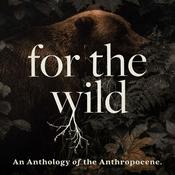
For The Wild is a slow media organization dedicated to land-based protection, co-liberation, and intersectional storytelling. We are rooted in a paradigm shift away from human supremacy, endless growth, and consumerism. Our work highlights impactful stories and deeply-felt meaning making as balms for these times.

Sitio web del podcast

Escucha For The Wild, Seminario Fenix | Brian Tracy y muchos más podcasts de todo el mundo con la aplicación de radio.net

Descarga la app gratuita: radio.net

  • Añadir radios y podcasts a favoritos
  • Transmisión por Wi-Fi y Bluetooth
  • Carplay & Android Auto compatible
  • Muchas otras funciones de la app

For The Wild: Podcasts del grupo

Aplicaciones
Redes sociales
v8.8.4| © 2007-2026 radio.de GmbH
Generated: 3/27/2026 - 5:39:29 AM