

Escucha gratis este podcast en la aplicación: Descarga gratuita en la App Store
radio.net
Sleep timer
Favoritos
Energ’Ethic - Climate Justice and Energy Transition
Marine Cornelis
Último episodio
106 episodios
What She Doesn't Know She's Owed - Nina Campbell, Consumers International
08/09/2026 | 39 minSome of the most consequential facts about an energy system never appear on a policy dashboard: whether an 85-year-old can read her own bill, whether she knows help exists, whether she trusts the voice on the phone enough to answer it.
Nina Campbell, Global Energy Lead at Consumers International, led the Blueprint for Inclusive Energy Services, the report examining a liberalised, choice-based energy market from the perspective of Italians aged 75 and over. Marine co-authored the Blueprint and brings that collaboration into this conversation on trust, exclusion, and who a market is actually built for.
In this episode:
– Why Consumers International moved away from "vulnerable consumer" toward "energy hardship," and what that shift changes about people's willingness to ask for help
– The loyalty premium: why discovering you paid more for staying put damages trust more deeply than a plainly bad deal
– The invisible labour of carers, 16% of Italians in a caregiving role around energy, mostly women over 45, absorbing costs the system doesn't recognise
– How the Blueprint's ten solutions took shape through direct collaboration with suppliers
– What it would take to replicate this method for other consumer groups and other markets
Reference: Blueprint for Inclusive Energy Services, Consumers International. (2026)
Energ'Ethic, with Marine Cornelis of Next Energy Consumer: the energy transition examined through the people it touches and the systems that govern it. If you are working on a related mandate or research question, you can reach her at contact@nextenergyconsumer.eu
Energ' Ethic goes out every other week.
Keep up to date with new episodes straight from your inbox
Reach out to Marine Cornelis via BlueSky or LinkedIn
Music: I Need You Here - Kamarius
Edition: Podcast Media Factory
Support Energ'Ethic on Patreon
© Next Energy Consumer, 2026
Hosted on Ausha. See ausha.co/privacy-policy for more information.A Mirror or a Map? EUSEW at 20
30/06/2026 | 53 minEUSEW turns 20. To mark it, Marine Cornelis sits down at the European Sustainable Energy Week with three people who have spent two decades inside EU energy policy: Thomas Nowak (heat pumps and buildings), Dušan Jakovljević (industrial energy efficiency) and Heike Winkler (offshore wind and the North Sea).
The conversation treats EUSEW as a mirror. What it foregrounds, and what it sidelines, tracks whatever the Commission has in vogue, from hydrogen to carbon capture, often at the expense of people, consumers and energy poverty.
What we get into:
Why a convening that reflects priorities struggles to set them, and how limited slots turn the agenda into a zero-sum game
Electrification as the efficient core of the system, and the "primary energy fallacy" still used against it
Re-industrialisation, green hydrogen and jobs, and where a top-down European approach might have moved faster
The single market's unfinished business, and the real cost of member-state deviations
Why EUSEW keeps talking to the already-convinced, and how to bring member states and silos into the same room
Parallel agendas, from the New European Bauhaus to energy poverty and citizen advisory hubs, and the risk of fragmentation
A stocktake of what changed, what was harder than it should have been, and what a fair, socially accepted transition still demands.
Energ'Ethic, with Marine Cornelis of Next Energy Consumer: the energy transition examined through the people it touches and the systems that govern it. If you are working on a related mandate or research question, you can reach her at contact@nextenergyconsumer.eu
Energ' Ethic goes out every other week.
Keep up to date with new episodes straight from your inbox
Reach out to Marine Cornelis via BlueSky or LinkedIn
Music: I Need You Here - Kamarius
Edition: Podcast Media Factory
Support Energ'Ethic on Patreon
© Next Energy Consumer, 2026
Hosted on Ausha. See ausha.co/privacy-policy for more information.You Have More Power Than You Think (Literally)
16/06/2026 | 19 minYou have more energy rights than you think, and the EU's Unlock Your Power campaign wants you to start using them.
Most of us never think about our energy rights until a bill stops adding up or a supplier gets something wrong. That is the day those rights are tested in real life, and the day you find out whether they mean anything at all.
Recorded live on launch day at EU Sustainable Energy Week, Marine speaks with Katarzyna Wolos of European Commission's DG Energy about Unlock Your Power, the European Commission's first awareness campaign on consumer energy rights. Built around ordinary life stages rather than legislation, it rests on one idea: the power to understand, choose and act is already yours.
In this conversation:
Why awareness is the weak link when only a third of Europeans say they fully understand their bill
How the Citizens Energy Package becomes real: protection from disconnection, transparent billing, the right to join an energy community
One message across three realities: cooling in Greece, heating in Czechia, shared solar in Spain
Redress as the invisible right, and why knowing a door exists changes how people act
Trust as a confident relationship with the unknown, and what that asks of institutions
A companion to Ep "The Public Square" with Ewelina Hartstein, the episode sits where consumer rights, vulnerability and the credibility of EU energy policy meet.
Campaign: Unlock Your Power: https://energy.ec.europa.eu/topics/markets-and-consumers/energy-consumers-and-prosumers/unlock-your-power_en
Marine Cornelis is the founder of Next Energy Consumer, a policy consultancy working on energy poverty, consumer rights, and housing at EU level. If you are working on a related mandate or research question, you can reach her at contact@nextenergyconsumer.eu
Energ' Ethic goes out every other week.
Keep up to date with new episodes straight from your inbox
Reach out to Marine Cornelis via BlueSky or LinkedIn
Music: I Need You Here - Kamarius
Edition: Podcast Media Factory
Support Energ'Ethic on Patreon
© Next Energy Consumer, 2026
Hosted on Ausha. See ausha.co/privacy-policy for more information.The public square - Ewelina Hartstein, DG Energy
02/06/2026 | 41 minTwo years ago at EUSEW 2024, I called my vox pop episode "the dog who caught the bus." After years of running hard to define the European Green Deal, the EU had finally caught what it was chasing, and seemed unsure what to do next. I ended that episode saying it was time for extra communication efforts, starting with uncomfortable conversations.
Two years on, this episode asks the same question from inside the institution. Ewelina Hartstein leads external communication at DG Energy and is one of the people responsible for staging EUSEW. We talk about the work behind the work: how DG Energy chooses what gets said, who gets to speak, and what remains off-stage at a moment when energy policy is entangled with affordability, security, and trust.
What the conversation surfaces:
Why "it comes from Brussels" is, in her own words, an expression she does not like
What it means that EUSEW "brings together a community of people who are convinced," and how DG Energy thinks about engaging the unconverted
The 20th anniversary edition's three-word theme (clean, secure, competitive) and the affordability dimension she insists belongs alongside them
A live disagreement on whether the conversations EUSEW hosts are "uncomfortable" or "perfectly legitimate"
The shift she names directly: energy moving from commodity to right, and a new EU awareness campaign on people's rights in energy launching at EUSEW
A behind-the-scenes conversation released around EUSEW 2026 (9 to 11 June, Brussels and online).
Marine Cornelis is the founder of Next Energy Consumer, a policy consultancy working on energy poverty, consumer rights, and housing at EU level. If you are working on a related mandate or research question, you can reach her at contact@nextenergyconsumer.eu
Energ' Ethic goes out every other week.
Keep up to date with new episodes straight from your inbox
Reach out to Marine Cornelis via BlueSky or LinkedIn
Music: I Need You Here - Kamarius
Edition: Podcast Media Factory
Support Energ'Ethic on Patreon
© Next Energy Consumer, 2026
Hosted on Ausha. See ausha.co/privacy-policy for more information.The Subsidy That Went to the Wrong Address — Anna Bajomi, FEANTSA
19/05/2026 | 44 minThe EU's energy transition contains clear legal obligations to prioritise vulnerable households. The EPBD requires financial incentives to target energy-poor households first. The Energy Efficiency Directive requires member states to make the best possible use of public funding for low-income consumers. And yet without binding targeting requirements, public money flows to middle-income and affluent groups by institutional default — not by accident, but by design.
Anna Zsófia Bajomi, Energy Poverty Policy Officer at FEANTSA, traces the mechanism: post-financing schemes that assume households can pre-invest thousands of euros; eligibility criteria built around formal employment and debt-free status; CO₂ savings indicators easier to reach among better-off households. The outcome is predictable — and avoidable.
In this episode:
Why firewood users in Central and Eastern Europe remain invisible in EU statistics and crisis response, and how EU policy has perversely incentivised continued burning while punishing countries for the air pollution it causes
How renovation schemes including France's MaPrimeRenov structurally exclude the poorest through co-contribution requirements
The gap between EPBD and EED targeting obligations and what the MFF 2028–2034 actually delivers
Why untargeted public subsidies crowd out private finance rather than leverage it
New York State's 35% community benefit mandate as a governance reference for Europe
References: FEANTSA · European Energy Poverty Handbook · Jacques Delors Institute · EPBD Art. 17(18) · EED Art. 24(3) · MaPrimeRenov · New York State Climate Act
Marine Cornelis is the founder of Next Energy Consumer, a policy consultancy working on energy poverty, consumer rights, and housing at EU level. If you are working on a related mandate or research question, you can reach her at contact@nextenergyconsumer.eu
Energ' Ethic goes out every other week.
Keep up to date with new episodes straight from your inbox
Reach out to Marine Cornelis via BlueSky or LinkedIn
Music: I Need You Here - Kamarius
Edition: Podcast Media Factory
Support Energ'Ethic on Patreon
© Next Energy Consumer, 2026
Hosted on Ausha. See ausha.co/privacy-policy for more information.
Más podcasts de Ciencias
 Das Wissen | SWRCiencias
 Ologies with Alie WardCiencias, Cultura y sociedad, Humor
 Materia OscuraCiencias
 This Podcast Will Kill YouCiencias, Salud y forma física
 RadiolabCiencias, Ciencias naturales, Cultura y sociedad, Documental, Historia
 StarTalk with Neil deGrasse TysonCiencias, Educación
 Palabra Plena, con Gabriel RolónCiencias, Física
 Unexpected ElementsCiencias
 Short WaveCiencias, Ciencias de la vida, Noticias, Noticias diarias
 UnexplainableCiencias, Ciencias de la vida
Podcasts a la moda de Ciencias
 Ático Primera con Laia CastelCiencias, Ciencias sociales
 The Joy of WhyCiencias, Ciencias de la vida
 La Tertulia de CómicosCiencias, Humor
 The Nature Of with Willow DefebaughCiencias, Cultura y sociedad, Espiritualidad, Filosofía, Naturaleza, Religión y espiritualidad
 CarneCastCiencias
 All In The MindCiencias, Ciencias de la vida, Salud mental, Salud y forma física
 More or LessCiencias, Comentando la noticia, Cultura y sociedad, Matemáticas, Noticias
 Forschung aktuellCiencias
 The Science of BirdsCiencias, Ciencias de la vida, Naturaleza
- Unexpected ElementsCiencias
 Heavy MentalCiencias
 Fiebres LúcidasCiencias
 Quilo de Ciencia - Cienciaes.comCiencias, Ciencias naturales, Cultura y sociedad, Diarios personales, Educación, Noticias, Noticias tecnológicas, Tecnología
 A hombros de gigantesCiencias
 Vida Eterna. Respuestas desde la Ciencia | Dr. Manuel Sans SegarraCiencias
 Universo curioso de la NASACiencias
 Coffee Break: Señal y RuidoAstronomía, Ciencias
 Navigating NeuropsychologyCiencias, Ciencias sociales
 Podcast de Juan Ramón RalloCiencias, Ciencias sociales, Economía y empresa, Inversión, Noticias, Política
 La Ciencia PopCiencias, Ciencias naturales, Naturaleza
 Punto BernalAstronomía, Ciencias
 Volvámonos VerdesCiencias
 Aha! Zehn Minuten Alltags-WissenCiencias, Educación, Salud y forma física
 Live Like a Girl with Dr. Mindy PelzCiencias, Medicina alternativa, Nutrición, Salud y forma física
 Hablando con Científicos - Cienciaes.comCiencias, Ciencias naturales, Cultura y sociedad
Acerca de Energ’Ethic - Climate Justice and Energy Transition
Energ'Ethic asks the question most energy debates skip: who the transition is for. Hosted by Marine Cornelis, founder of Next Energy Consumer, each episode moves between frontline reality and the rooms where European energy policy is decided. The conversations follow one thread through energy, housing, digitalisation, and finance: whether the systems being built earn people's trust and improve their lives. For listeners, it offers a grounded guide to a transition too often told only in megawatts and money. For anyone weighing a collaboration, it shows how Next Energy Consumer reads the field.
For organisations and sponsors: Energ'Ethic offers partnership opportunities for organisations seeking to reach a senior, policy-literate audience. Partnerships are selective and editorially independent. Contact: contact@nextenergyconsumer.eu (mailto:marine@nextenergyconsumer.eu)
Hosted on Ausha. See ausha.co/privacy-policy for more information.
Sitio web del podcastEscucha Energ’Ethic - Climate Justice and Energy Transition, Das Wissen | SWR y muchos más podcasts de todo el mundo con la aplicación de radio.net
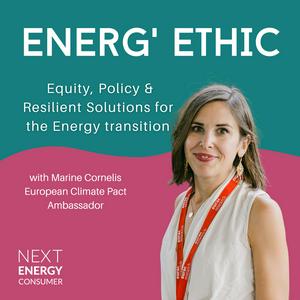
Descarga la app gratuita: radio.net
- Añadir radios y podcasts a favoritos
- Transmisión por Wi-Fi y Bluetooth
- Carplay & Android Auto compatible
- Muchas otras funciones de la app
Descarga la app gratuita: radio.net
- Añadir radios y podcasts a favoritos
- Transmisión por Wi-Fi y Bluetooth
- Carplay & Android Auto compatible
- Muchas otras funciones de la app
Energ’Ethic - Climate Justice and Energy Transition
Escanea el código,
Descarga la app,
Escucha.
Descarga la app,
Escucha.
 Colombia