
Escucha gratis este podcast en la aplicación: Descarga gratuita en la App Store
radio.net
Sleep timer
Favoritos
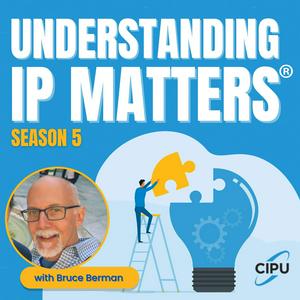
Understanding IP Matters
The Center For Intellectual Property Understanding
Último episodio
58 episodios
The Meaning of IP Value Today
20/10/2026 | 44 minSend us Fan Mail
Some startups have filed 300 patents in every country in the world and still ended up in bankruptcy court, unable to sell a single one. Efrat Kasznik, president of Foresight Valuation Group and an IP management instructor at Stanford Business School, returns to Understanding IP Matters to explain why patent counts alone no longer impress sophisticated investors, and what does. Bruce Berman talks with Kasznik about the exit bottleneck trapping roughly 1,300 unicorns, why software companies are scrambling to rebrand themselves as AI companies, how trade secrets get valued when a company has never bothered to inventory them, and why IP keeps getting buried inside goodwill on corporate balance sheets. The strongest idea: patents, trade secrets and data are only as valuable as the business model and the people built around them.
KEY TAKEAWAYS
A patent portfolio only has value if it is tied to a real product and a viable business model.
Investors are currently concentrating roughly 70 percent of funding into AI, cybersecurity, deep tech and defense.
SaaS companies face a difficult shift from fixed subscription pricing to usage based AI pricing, and investors can tell the difference.
Data itself is hard to protect through patents or copyright, so companies lean on contracts and trade secret law instead.
Many companies only discover what trade secrets they actually have once litigation forces them to make a list.
IP backed lending is becoming a real option for companies trying to stay private longer without raising new equity.
A company's complementary assets, like distribution and infrastructure, often explain more of a deal's value than the IP itself.
Acquired intellectual property shows up on a buyer's balance sheet, but internally developed IP never does.
Investors respond more to comparable deal pricing than to general claims about a company's IP strength.
CONNECT & SUBSCRIBE
Learn more about CIPU: understandingip.org
Connect with Efrat Kasznik: https://www.linkedin.com/in/ekasznik/
00:00 Introducing Efrat Kasznik
01:10 Which sectors investors see as hot right now
03:10 Do patents still matter for startup valuation
04:43 Why data is hard to protect through IP
06:48 What investors look for in an exit
09:36 How IP helps bridge the exit bottleneck
13:12 AI investment and the pressure to rebrand
17:38 Agentic AI patents and coming litigation
18:56 How AI is reshaping law firm billing
21:55 Is IP more important for startups today
23:08 Valuing trade secrets that were never catalogued
29:21 Why some unicorns over patent and still fail
33:09 AI adoption gaps between the US and China
35:06 Why IP still gets buried inside goodwill
39:22 What really shapes investor perception of IP
Support the show
Understanding IP Matters is brought to you by the nonprofit Center for Intellectual Property Understanding (CIPU) with generous support from its partners and sponsors. The podcast provides leading innovators and experts the space to share their IP stories.
Subscribe on your platform of choice or visit understandingip.org.
To reach us: explore@understandingip.orgBridging the Disconnect - IP Memes Matter
06/10/2026 | 51 minSend us Fan Mail
In Spider-Man 2002, newspaper editor J. Jonah Jameson shouts an iconic line: "Run down to the patent office, copyright the name "Green Goblin." I want a quarter every time someone says it." But here's the thing... that's not how copyrights work. Even smart, engaged people mix up basic IP concepts, and that confusion has real economic consequences.
Corey Salsberg, Vice President and Global Head of IP Affairs at Novartis, joins Bruce Berman to unpack why intellectual property, despite driving over 44 percent of American GDP and a third of the US workforce, remains poorly understood by the public and even most members of Congress. Salsberg traces the disconnect to a lack of education, a communication problem in a soundbite culture, and a tendency to see patents as barricades rather than bridges. He also digs into what AI means for inventorship, why the pharmaceutical patent cliff threatens future medicines, and why human connection still matters in a world of AI generated content. The strongest idea: we already have a great IP story, we just need to tell it better.
KEY TAKEAWAYS
Roughly one third of the American workforce is tied up in IP driven industries, and IP is linked to over 44 percent of US GDP.
Most people, including the large majority of members of Congress, receive little to no education about how patents and copyrights actually work.
The US patent system is written into the Constitution and was the third act passed by the very first Congress.
Only a human being can currently be recognized as an inventor because inventorship requires recognizing and appreciating the significance of what was created, something AI cannot do on its own.
Roughly 90 percent of drug candidates that are scientifically validated still fail in clinical trials, and only 20 to 30 percent of approved medicines ever turn a profit.
Developing a new medicine can cost between two and five billion dollars, which is why patent protection is needed to offset the financial risk of R&D.
A pharmaceutical patent cliff between 2025 and 2030 threatens significant revenue that funds future drug development.
Framing patents as an economic bridge rather than a barricade can help build common ground with people who hold anti-IP views.
Congress passed the Bayh-Dole Act, created the Federal Circuit, and passed the Hatch-Waxman Act in the early 1980s specifically to help the US regain global leadership in innovation.
Everyday products, from Levi's jeans to Eddie Van Halen's guitar equipment, carry an IP story that can make patents and copyrights relatable to non-lawyers.
CONNECT & SUBSCRIBE
Learn more about CIPU: understandingip.org
Connect with Corey Salsberg: https://www.linkedin.com/in/corey-salsberg/
00:00 Why IP stories go untold
00:46 Introducing Corey Salsberg
01:28 Where the IP disconnect begins
02:16 The historical roots of the patent system
03:19 One third of US jobs tied to IP
04:12 The education gap, even in law school
05:09 The Spider-Man copyright joke
05:42 IP's communication and attention span problem
07:44 Mark Twain's crab quote on patents
08:33 Politicians and the declining IP voice
09:19 IP through four industrial revolutions
10:22 The surprisingly recent age of modern medicine
12:02 What is and isn't patentable
13:29 The Chakrabarty decision and modern biotech
14:28 Gene patents and the ACLU case
15:17 AI, inventorship, and who owns a patent
17:44 Why AI cannot legally be an inventor
19:11 Patents as a bridge, not a barricade
21:18 Drug pricing is not an IP issue
22:35 The multi-billion dollar cost of a new medicine
23:47 Aspirin, antibiotics, and early pharma patents
24:19 Why most medicines never become profitable
25:38 AI, R&D efficiency, and future drug possibilities
27:28 Federal research cuts and the academia gap
29:41 Private funding and its risks for science
30:12 Why human connection still matters
32:09 Corey's father and his path into patent law
34:10 Do C-suites really understand IP?
36:17 IP champions among industry CEOs
38:03 What's happening with IP reform in Congress
40:38 How the US became a pharma innovation leader
43:19 Teaching IP as part of general education
45:33 The story behind Levi's rivets and jeans
46:29 Eddie Van Halen's guitar patents
48:04 AI is turning everyone into an IP creator
49:08 Taylor Swift, the NFL, and IP advocacy
49:30 Dolly Parton's rights of publicity
50:02 Closing thoughts and what's next
Support the show
Understanding IP Matters is brought to you by the nonprofit Center for Intellectual Property Understanding (CIPU) with generous support from its partners and sponsors. The podcast provides leading innovators and experts the space to share their IP stories.
Subscribe on your platform of choice or visit understandingip.org.
To reach us: explore@understandingip.orgPatents, Power, and the Fight Between David and Goliath
22/09/2026 | 38 minSend us Fan Mail
America built its patent office before it had paved roads in its own capital, and that decision still shapes how invention works today.
Bruce Berman is joined by Eric Hintz, an invention historian at the Smithsonian Institution's National Museum of American History, for a conversation that traces the roots of the U.S. patent system back to the Constitutional Convention and forward through the rise of corporate research labs. Hintz explains why the framers designed a patent system meant to be accessible to anyone, how independent inventors and corporations have alternated the upper hand for over a century, and how figures like Robert Kearns and Samuel Rubin illustrate both the promise and the limits of protecting an invention as an individual.
The conversation matters well beyond patent attorneys. It touches on how innovation actually gets funded, commercialized, and credited, and why the health of the independent inventor matters to entrepreneurs, investors, and anyone who cares about where the next big idea will come from.
Understanding IP Matters is produced by the Center for Intellectual Property Understanding (CIPU). Subscribe on your platform of choice or visit understandingip.org.
Learn more about CIPU: understandingip.org
Eric Hintz / Smithsonian National Museum of American History: https://www.linkedin.com/in/eric-s-hintz-phd/
REFERENCES & LINKS
American Independent Inventors in an Era of Corporate R&D by Eric Hintz
Men of Progress, 1862 painting by Christian Schussele, National Portrait Gallery
Zorina Khan, economic historian at Bowdoin College
Kara Swanson, Northeastern University School of Law, research on the invention of Ned
Robert Kearns and the intermittent windshield wiper story
National Museum of American History patent model collection
00:00 Introduction
00:18 Meet Eric Hintz of the Smithsonian
01:05 The Constitution's patent and copyright clause
02:11 How European monarchies handled patents
03:30 America's democratic, egalitarian patent system
04:19 The pendulum between inventors and corporations
05:53 The rise of corporations in the 1880s
07:01 Robert Kearns and the windshield wiper case
07:50 The America Invents Act of 2011
09:02 From garages to global companies
10:16 Three ways independent inventors made money
12:42 Samuel Rubin and the Duracell partnership
17:00 The old Patent Office building in Washington
19:27 Patent models at the Smithsonian collection
20:56 The Men of Progress painting
23:36 The story of Ned, an enslaved inventor
26:07 How corporate R&D marketed against inventors
28:41 Why predatory patent practices carry little stigma
31:48 Why innovation cannot be kept down
36:03 Closing thoughts on America's inventors
Support the show
Understanding IP Matters is brought to you by the nonprofit Center for Intellectual Property Understanding (CIPU) with generous support from its partners and sponsors. The podcast provides leading innovators and experts the space to share their IP stories.
Subscribe on your platform of choice or visit understandingip.org.
To reach us: explore@understandingip.orgA Leader in the $370B Character Licensing Boom
12/05/2026 | 35 minSend us Fan Mail
Character licensing is a $370 billion global industry — and most people have never heard of it. Bruce Berman sits down with David Born, CEO of Born Licensing and one of the world's leading experts in character and IP licensing for advertising. From placing Buddy the Elf in a UK supermarket ad to helping Geico license Angry Birds, David breaks down how brands use intellectual property to create instant emotional recognition in marketing campaigns. He explains how licensing deals are structured and valued, how licensors protect their brands from overexposure, and why smaller or emerging characters can actually offer better ROI than the hottest properties. David also shares how he built Born Licensing into one of the fastest-growing companies in Europe without any formal legal training — and why he thinks licensing is the most underrated business skill in the world.
KEY TAKEAWAYS
Character licensing is a $370 billion global industry that most consumers interact with daily without realizing it.
Brands license IP in advertising through multiple methods — placing characters in ads, using existing footage, recreating iconic scenes, or rotoscoping characters from original films.
Licensing fees are determined by scope: territory, term, media channels, and usage type all factor into the final value of a deal.
Top-tier licensors like Disney and Marvel are extremely selective about who they work with — protecting brand equity is a higher priority than volume of deals.
Lesser-known or dormant characters can offer better commercial terms and faster approval processes, making them attractive for companies new to licensing.
David Born built Born Licensing into an FT 1000 fastest-growing European company by filling a gap no one else was serving: helping ad agencies navigate IP licensing.
Consumers will pay more for licensed products — the brand association adds perceived premium value that can offset royalty costs.
AI presents both opportunities and challenges for the licensing world, with major licensors still uncertain about how to embrace it without compromising IP protection.
Without formal legal training, David relies on deep industry experience, strong licensor relationships, and his lawyer sister for more complex legal questions.
The best measure of a successful licensing campaign is authentic fan response — when fans love seeing their character used well, it's a win for everyone.
Learn more about CIPU: understandingip.org
Born Licensing: bornlicensing.com
Born to License Podcast: Search "Born to License" on your podcast app
Understanding IP Matters is produced by the Center for Intellectual Property Understanding (CIPU). Subscribe on your platform of choice or visit understandingip.org.
00:00 - Introduction & guest welcome
02:13 - How character licensing entered David's life
04:33 - Who listens to Understanding IP Matters
05:15 - Types of IP licensing in advertising
07:05 - How licensing deals are valued
08:35 - Geico x Angry Birds case study
09:08 - Measuring campaign success
11:07 - Born Licensing's two business divisions
12:39 - Major vs. lesser-known characters
15:22 - Brand equity and saying no to deals
17:29 - Operating without a legal background
19:15 - Compensation and equity structures
20:11 - FT 1000 fastest-growing company recognition
21:39 - Filtering opportunities for licensors
22:59 - Born to License podcast
24:44 - Lessons for tech and content licensing
25:29 - The cost and value of licensing
27:40 - AI and the future of character licensing
31:31 - Content authenticity and IP tracking
32:32 - David's first awareness of IP
33:50 - Final thoughts for listeners
Support the show
Understanding IP Matters is brought to you by the nonprofit Center for Intellectual Property Understanding (CIPU) with generous support from its partners and sponsors. The podcast provides leading innovators and experts the space to share their IP stories.
Subscribe on your platform of choice or visit understandingip.org.
To reach us: explore@understandingip.orgHow the University of Kentucky is Building AI-Forward Culture and Driving Economic Impact
31/03/2026 | 46 minSend us Fan Mail
Protecting intellectual property at a university should come before sharing it
Ian McClure, Vice President of Research and Innovation at the University of Kentucky, makes the case that intellectual property isn't a barrier to innovation — it's the scaffolding that makes innovation possible. In a wide-ranging conversation with host Bruce Berman, Ian discusses how UK is leading a $200 million AI transformation strategy, why spinning out startups generates 50% more local economic impact than publishing alone, and how universities must evolve their promotion and tenure systems to truly reward innovation.
Drawing on his background in M&A law, IP transactions, and his tenure as president of the Association of University Technology Managers (AUTM), Ian brings a rare combination of legal, commercial, and academic expertise to every topic — from the ethics of AI adoption to the practical challenge of getting researchers to file a provisional patent before they publish.
Key Takeaways
Spinning out a startup from university research generates 50% more local economic impact than publishing alone without IP protection.
The value of intellectual property exists if — and only to the extent — it is enforceable. Willingness to enforce matters as much as the scope of the patent.
Universities are uniquely positioned to study AI adoption because they host every level of sophistication, from first-generation students to decades-experienced AI researchers.
UK's Commonwealth AI Transdisciplinary Strategy (CATS AI) is a $200 million, three-to-five-year holistic framework for preparing an entire institution for the AI era.
Startup IP strategy is central to tech transfer: IP protection attracts outside capital, creates jobs, and keeps economic benefits local.
The promotion and tenure system at most universities still biases researchers toward publication over patenting — and changing those incentives is a major needle-mover.
AI is accelerating the pace of drug discovery and research, compressing timelines that once took years into months.
IP is the necessary governance layer that enables responsible AI innovation without stifling it the way premature over-regulation might.
Universities must balance curiosity-driven basic research with use-inspired research that responds to state and industry needs.
Fear of AI is valid and must be acknowledged — but institutions need structured, flexible frameworks to help every stakeholder move forward.
00:00 Introduction & opening quote
02:06 Ian's role at University of Kentucky
02:34 Challenges of AI adoption at a research university
05:30 The CATS AI strategy: origins and scope
08:00 How UK measures success across the institution
11:54 Addressing fear and resistance around AI
13:44 IP challenges at the intersection of AI and research
17:43 Licensing AI tools and IP as innovation scaffolding
21:42 UK's Microsoft Copilot partnership explained
22:09 Choosing an enterprise AI partner
25:38 Key concerns for tech transfer executives today
28:27 The case for university spin-outs
31:15 Why researchers resist filing patents before publishing
32:26 Reforming promotion and tenure to reward innovation
35:47 Enforceability: the mantra Ian teaches in law school
38:16 Balancing basic research with industry-responsive research
41:25 Ian's first encounter with IP: a merger that fell apart
43:31 Final thoughts: IP, AI, and embracing the transformation era
Support the show
Understanding IP Matters is brought to you by the nonprofit Center for Intellectual Property Understanding (CIPU) with generous support from its partners and sponsors. The podcast provides leading innovators and experts the space to share their IP stories.
Subscribe on your platform of choice or visit understandingip.org.
To reach us: explore@understandingip.org
Más podcasts de Economía y empresa










Podcasts a la moda de Economía y empresa
























Acerca de Understanding IP Matters
‘Understanding IP Matters,’ is a popular podcast series that enables successful entrepreneurs, inventors, content creators, executives and experts to share their IP story - the good, bad and amazing. The series is brought to you by the Center for Intellectual Property Understanding, an independent non-profit established in 2016. CIPU provides outreach to improve IP awareness, enhance value and promote sharing. www.understandingip.org
Sitio web del podcastEscucha Understanding IP Matters, Dinstinto y muchos más podcasts de todo el mundo con la aplicación de radio.net
Descarga la app gratuita: radio.net
- Añadir radios y podcasts a favoritos
- Transmisión por Wi-Fi y Bluetooth
- Carplay & Android Auto compatible
- Muchas otras funciones de la app
Descarga la app gratuita: radio.net
- Añadir radios y podcasts a favoritos
- Transmisión por Wi-Fi y Bluetooth
- Carplay & Android Auto compatible
- Muchas otras funciones de la app

Understanding IP Matters
Escanea el código,
Descarga la app,
Escucha.
Descarga la app,
Escucha.
 Colombia