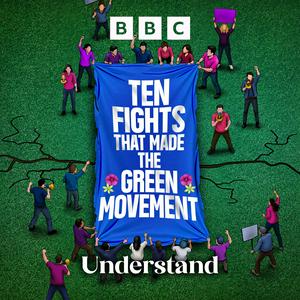
Understand

BBC Radio 4
Understand
Último episodio

82 episodios

  • Understand

    How Reading Made Us: 2. How Reading Made Our Feelings

    23/03/2026 | 42 min
    Reading seems an unremarkable skill. When we say something is as “easy as ABC”, we mean it is very easy indeed. In fact, learning to read has dramatic and irreversible consequences for people and for societies. Learning to read permanently alters your brain. It changes the emotions you experience and the way you relate to others. When a society learns to read the consequences are dramatic: wars break out, revolutions erupt and new political systems spring into being. Reading made us who we are. With time spent reading - and even reading ability - starting to nosedive, Times writer James Marriott explores how reading changed humanity, and what might happen if we stop.
    In this programme, James asks whether the spread of novel reading in the 18th century caused a moral revolution, whether a book played a role in the abolition of slavery, and whether the rise of reading, a solitary and slightly lonely activity, was one of the factors setting us on the path to our atomized and isolated modern society.
    Contributions from:
    - Jung Chang, author
    - Steven Pinker, professor of psychology at Harvard University
    - Sarah Maxwell, founder of Saucy Books
    - Robert Darnton, historian
    - Naomi Alderman, writer and presenter
    - Joseph Henrich, professor of anthropology at Harvard University
    - Maryanne Wolf, professor and Director of the Center for Dyslexia, Diverse Learners, and Social Justice at UCLA
    Producer - Beth Sagar-Fenton
    Editor - Chris Ledgard
  • Understand

    How Reading Made Us: 1. How Reading Made Our Brains

    16/03/2026 | 41 min
    Reading seems an unremarkable skill. After all, everyone can read. Even small children. When we say something is as “easy as ABC”, we mean it is very easy indeed. In fact, learning to read has dramatic and irreversible consequences for people and for societies. Learning to read permanently alters your brain. It changes the emotions you experience and the way you relate to others. When a society learns to read the consequences are dramatic: wars break out, revolutions erupt and new political systems spring into being. Reading made us who we are.

    For centuries people have been reading more and more. Recently the trend has gone into reverse. The number of people who pick up a book has been falling steadily for twenty years. Now half of adults no longer read regularly.

    How will this change us?
    Over three episodes, Times writer James Marriott explores how reading made us, and what might happen if we stop.
    In this first programme, James finds out how unnatural the process of reading is, and the complex alchemy our brains create to make words on the page make sense to us, and asks what we gain - and lose - when we learn to read.
    Guests include:
    - Professor Maryanne Wolf, Director of the Center for Dyslexia, Diverse Learners, and Social Justice at UCLA
    - John Burn-Murdoch, chief data reporter for the Financial Times
    - Naomi Alderman, writer and presenter
    - Dr Joseph Henrich, Professor of Anthropology at Harvard University
    Producer - Beth Sagar-Fenton
    Editor - Chris Ledgard
  • Understand

    How Reading Made Us: Trailer

    05/03/2026 | 1 min
    The story of how reading made us and what might happen if we stop - with James Marriott.
  • Understand

    An American Journey: 4. Life and Liberty

    16/02/2026 | 42 min
    As James Naughtie concludes his series about the ideas tying America's birth 250 years ago to the United States today, he examines freedom, asking whose freedom, and what kind?
    He begins in Gettysburg, attending a re-enactment on the battlefield made famous by an address from President Abraham Lincoln in which he asked whether the United States "could long endure". That question is being asked again now, as Americans experience profound disagreements over many of the ideas in this series - economic opportunity, justice, freedom; even what it means to be an American. As he hears, American history itself has become a battlefield. And so speaking to historians with different perspectives, and senior political leaders from both parties, James assesses how dangerous this moment is for United States.
    Producer: Giles Edwards
  • Understand

    An American Journey: 3. Establishing Justice

    09/02/2026 | 42 min
    James Naughtie continues his look at the ideas tying America's founding to the modern United States, asking how 'justice' has been understood by different generations of Americans.
    In this third episode, James travels to Alabama in the American South, to understand how the Civil Rights movement sought to connect American reality with the promises in its founding documents. He hears from people in Texas on both sides of the debate about abortion, revealing how a movement built to oppose abortion rights brought millions of Christians into politics and dramatically shifted the politics of America's highest court. And in Midwestern Wisconsin, he hears how political division has come to the administration of justice itself.
    Producer: Giles Edwards

Más podcasts de Gobierno

Acerca de Understand

NEW in Understand: How Reading Made UsDid learning to read rewire our brains and change the way we live today? And with reading on the decline, what does this mean for our ability to think? With writer James Marriott.Understand from BBC Radio 4 - unravelling the complexities of the biggest stories and subjects that really matter right now.
Sitio web del podcast

Escucha Understand, British Council Language Assistants y muchos más podcasts de todo el mundo con la aplicación de radio.net

Descarga la app gratuita: radio.net

  • Añadir radios y podcasts a favoritos
  • Transmisión por Wi-Fi y Bluetooth
  • Carplay & Android Auto compatible
  • Muchas otras funciones de la app

Understand: Podcasts del grupo

Aplicaciones
Redes sociales
v8.8.3 | © 2007-2026 radio.de GmbH
Generated: 3/23/2026 - 10:22:47 PM