

Escucha gratis este podcast en la aplicación: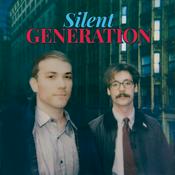 Descarga gratuita en la App Store
radio.net
Sleep timer
Favoritos
122 episodios
Checking In
08/09/2026 | 2 minIn this announcement Nathan shares some recent health changes that are going to affect podcast output in the short term.
Links:
Ep. 1: Flâneur [UNLOCKED]
Ep. 37: Male Desire w/ Charles Livingston [UNLOCKED]
Ep. 59: Outerwear [UNLOCKED]
Artwork:
Photographed by Katie
Recorded on 8/24/2026Ep. 116: Settling Down w/ Sam [TEASER]
01/09/2026 | 3 minFull episode available on Patreon: https://www.patreon.com/SilentGeneration
What does it mean to “settle down”? What is the difference between “settling down” and “committing”? Does the phrase “settling down” have negative connotations, and do those negative connotations come from men? Do men fear “settling” down more than women? How does “settling down” differ between straight men and gay men? Why do so few gay men struggle to find partners, let alone get married? Are fewer and fewer people achieving these milestones because of structural reasons, or because they don’t actually want to?
On this week’s episode of Silent Generation, Nathan is joined by a listener named Sam to try and answer these questions.
Links:
Sam’s Instagram
Ever Heard of the Taxi Cab Theory? Here's the Research That Backs It Up by Sydney Meister
The Epidemic of Gay Loneliness by Michael Hobbes
Artwork:
The mystery of the gay wedding photos
Recorded on 8/9/2026Ep. 115: Landscape Architecture
25/08/2026 | 1 h 21 minOver the course of the 19th century, the field of landscape architecture emerged as the practice of gardening became increasingly professionalized. The first person to call themselves a “landscape architect” and popularize the term in the United States remains the only landscape architect that most Americans know by name: Frederick Law Olmsted. Unbeknownst to many, his career was heavily intertwined with the English-American landscape architect Calvert Vaux, with the two having collaborated on many of America’s most famous parks.
On this week’s episode of Silent Generation, Nathan and Sebastien begin by examining two of Olmsted and Vaux’s most well-known projects: Central Park and the Buffalo Parks System. They then compare the development around Golden Gate Park to Central Park, debating the degree to which the development surrounding urban parks factors into their greatness. Next they detail how Park Avenue in New York City once sported 56 feet of greenspace for pedestrians, only for it to get whittled down to 20 feet to accommodate car traffic in the late 1920s. The episode concludes with a deep dive into the Brazilian landscape architect Roberto Burle Marx, with an examination of two of his modernist landscapes: the Copacabana Promenade and the Edmundo Cavanelas Residence.
Links:
Pinterest board: https://www.pinterest.com/silentgeneration/landscape-architecture/
Frederick Law Olmsted | Designing America
The Seven S’s of Olmsted Design by Dr. Charles E. Beveridge
Photograph of 2nd Ave and 42nd St in NYC in 1861
Stunning pictures that show how Central Park has drastically changed since the 1980s by
Asta Thrastardottir
Just how bad was Central Park in the 1970s?
About Buffalo Park System - Olmsted Network
Buffalo: Delaware Park - Segregation by Design
Comparing Golden Gate Park to Other Major Urban Parks by Tessa McLean
Casting Shade on Shadows: S.F. Supervisor Targets a Favorite Tool for Blocking Housing by Io Yeh Gilman
San Francisco Family Zoning Plan - San Francisco Planning
New York City Wants to Bring More Park to Park Avenue by John Surico
Park Avenue’s Park Is Coming Back. Partially. Eventually. by Christopher Bonanos
Manhattan's Park Avenue would look more like a park under plan pushed by Mamdani by Liam Quigley
Mayor Mamdani Unveils Design Concepts to Put the ‘Park’ Back in Park Avenue
Landscape Film, Roberto Burle Marx (2018)
Revisiting the Constructed Edens of Roberto Burle Marx by Holland Cotter
Re-Thinking Roberto Burle Marx by Edward J. Sullivan
The Full Brazilian by Isabela Ono
Brazilian Artist Roberto Burle Marx’s Most Mesmerizing Gardens by Madeleine Luckel
The History of the Copacabana Sidewalk: From Its Origin in Portugal to Burle Marx's Intervention by Nicolás Valencia
The Battle for Central Park by Hoog
The Cultural Landscape Foundation
The Full Brazilian by Isabela Ono
Artwork:
Piccadilly Gardens in the mid-1960s
Recorded on 8/17/2026Ep. 114: National Park Service Rustic
11/08/2026 | 56 minNational Park Service Rustic, also known as “parkitecture,” was the dominant architectural style of national parks from roughly 1916 to 1942. Many early examples of the “rustic” style were commissioned by private railroad companies, such as the Fred Harvey company, in order to lure tourists out west to fledgling national parks. The style came to be characterized by harmony with the natural environment, locally sourced materials, and vernacular features.
On this week’s episode of Silent Generation, Nathan and Sebastien begin by synopsizing the early history of the National Park Service. They then discuss famous examples of National Park Service Rustic such as the Old Faithful Inn in Yellowstone, Desert View Watchtower in the Grand Canyon, and the Ahwahnee Hotel in Yosemite. Particular attention is paid to the work of Mary Colter, one of the first female architects, who is notable for designing her buildings to harmonize with both the natural environment and the cultural heritage of the places she built them. The episode concludes with an examination of how car-oriented development caused the National Park Service to abandon the style after WWII.
Links:
Pinterest Board: https://www.pinterest.com/silentgeneration/national-park-service-rustic/
Old Faithful Inn
Architecture in the Parks: A National Historic Landmark Theme Study: Old Faithful Inn
Inside Yellowstone's Old Faithful Inn
Inside Yellowstone’s Old Faithful Inn — “The Beginning of Rustic Architecture in National Parks” by Kate Daniel
Mary Elizabeth Jane Colter
Mary Colter and Her Buildings at Grand Canyon
Mary Colter's Bright Angel Lodge
Mary Colter and the Grand Canyon - Parkography Podcast
Mary Colter: The forgotten architect of the US Southwest by Erin Van Rheenen
Mary Colter, Builder Upon the Red Earth by Virginia Grattan
Mary Colter’s ”Geologic Fireplace”
The Architect Behind Parkitecture by Teresa Bitler
Building History: Mary E. J. Colter at Grand Canyon - Linda Reeder
On The Trail: Grand Canyon Architecture
Tracing the Yosemite Valley Railroad
Post Cards Related to the Yosemite Valley Railroad
Parkitecture: A Rustic Back-to-Nature Architectural Aesthetic
19: Parkitecture and Historic Hotels - Exploring the National Parks
US national parks told to remove signs on mistreatment of Native Americans, climate, Wash Post reports - Reuters
America’s National Parks at 100 (2016)
Artwork:
Ahwahnee Hotel, Yosemite NP, 1960
Recorded on 8/7/2026Ep. 113: Shoegaze [TEASER]
04/08/2026 | 10 minFull episode available on Patreon: https://www.patreon.com/SilentGeneration
Shoegaze is a subgenre of rock and roll that first emerged in the British Isles in the late 1980s. The term was coined by Andy Ross, a British music executive, who observed shoegaze artists “shoegazing” (looking down at their feet to play with guitar pedals) during a 1991 show in London. Interest in the subgenre peaked shortly thereafter with the release of My Bloody Valentine’s sophomore album Loveless, and shoegaze effectively died by 1994. Despite the subgenre’s brief initial popularity, shoegaze has experienced a revival every subsequent decade, leaving modern listeners to question what makes its sound so enduring.
On this week’s episode of Silent Generation, Nathan and Sebastien begin by detailing shoegaze’s early influences (Phil Spector’s Wall of Sound technique, ‘60s psychedelic rock, and new wave) before describing what the subgenre actually sounds like. With that context established, they then discuss the music of Cocteau Twins, My Bloody Valentine, Slowdive, and Gleemer. The episode rounds out with an examination of “zoomergaze” (the newest revival of shoegaze) to try and answer the question of what makes the subgenre so appealing to Gen Z.
Links:
Spotify Playlist: https://open.spotify.com/playlist/4YijO72un5g7jh3qMt98ft
Shoegaze Classics Spotify Playlist
Shoegaze: a Beginner's Guide by Ella Fraser-Thoms
Feedback, Distortion, an Exploration of Sound: A Brief History of Shoegaze - Underground England
Rock for Dreamers: History and Transcendence of the Shoegaze Music Genre - Sound of Life
The 50 Best Shoegaze Albums of All Time - Pitchfork
124 - Simon Reynolds on Shoegaze, My Bloody Valentine, Cocteau Twins, Sonic Youth, Pavement & More - Music Maps Podcast
Simon Reynolds - Still in a Dream of Shoegaze, Slackers, and the Reinvention of Rock, 1984-1994 - C86 Show - Indie Pop
Shoegaze as an Aesthetic
“Venus in Furs” by the Velvet Underground by Erich Kuersten
“Relentless Wall of Sound”: Nadine Shah Describes her Favourite Velvet Underground Track by Kelly Murphy
History & Impact Of The Wall Of Sound
Phil Spector’s “Wall of Sound”: The Technique That Changed Music Forever by Nathan Fields
Hunting Phil Spector - Homicide: Los Angeles (2024)
Cocteau Twins - History
Unpacking the Unique Sound of Cocteau Twins - Stained Glass Stories
Why Does Gen Z LOVE Shoegaze? by Kelsie x The Yellow Button
From Shoegaze to Zoomer Gaze: the Evolution of a Gen Z Musical Phenomenon by Whynow
Artwork:
Slowdive - 3 old live acts (1991-1993)
Recorded on 7/27/2026
Más podcasts de Arte
 Desinteligencia ArtificialArte
 BibliotequeandoArte, Educación, Libros
 Biblioteca PersonalArte, Cultura y sociedad, Libros
 CONSULTORIO DE FLOREZArte
 Máquinas De EscribirArte, Libros
 Vidas prestadasArte, Cultura y sociedad, Libros, Música
 Urbi et OrbiArte, Cultura y sociedad, Educación, Filosofía
 Un Libro Una HoraArte
 Club de lectura de MPFArte, Economía y empresa, Educación, Inversión, Libros, Superación personal
Podcasts a la moda de Arte
 Designing Forward ↗️Arte, Diseño
 Qué estás leyendo. El podcast de libros de EL PAÍSArte, Cultura y sociedad, Libros
 The Magnus ArchivesArte, Artes escénicas, Ciencia ficción, Drama, Ficción
 El hombre más rico de BabiloniaArte, Economía y empresa, Empresa, Inversión, Libros
 Fashion Neurosis with Bella FreudArte, Cultura y sociedad, Moda y belleza, Relaciones
 Audiolibros Pigeon: FinanzasArte, Economía y empresa, Empresa, Inversión, Libros
 پلی لیست | PlayListArte, Música
 The New Yorker: The Writer's Voice - New Fiction from The New YorkerArte
 El tiempo que nos dieronArte, Libros
 Between The Covers : Conversations with Writers in Fiction, Nonfiction & PoetryArte, Ficción, Libros
 Noviembre NocturnoArte
 كنوز السيرة للشيخ عثمان الخميسArte, Islam, Libros, Religión, Religión y espiritualidad
Acerca de Silent Generation
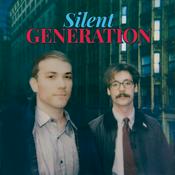
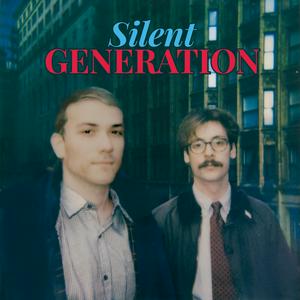
Silent Generation is a Chicago-based cultural analysis podcast that surveys the cultural consequences of car-oriented development in the mid-20th century. It explores what was lost between the Silent Generation and Generation Z. Topics discussed include aesthetics, fashion, history, and urbanism.Find us on Instagram: silent.generation
Sitio web del podcastEscucha Silent Generation, Desinteligencia Artificial y muchos más podcasts de todo el mundo con la aplicación de radio.net
Descarga la app gratuita: radio.net
- Añadir radios y podcasts a favoritos
- Transmisión por Wi-Fi y Bluetooth
- Carplay & Android Auto compatible
- Muchas otras funciones de la app
Descarga la app gratuita: radio.net
- Añadir radios y podcasts a favoritos
- Transmisión por Wi-Fi y Bluetooth
- Carplay & Android Auto compatible
- Muchas otras funciones de la app

Silent Generation
Escanea el código,
Descarga la app,
Escucha.
Descarga la app,
Escucha.
 Colombia