
Escucha gratis este podcast en la aplicación: Descarga gratuita en la App Store
radio.net
Sleep timer
Favoritos
213 episodios
France Burns. Trump Backs Putin. Brazil Votes.
23/10/2026 | 51 minKey Topics
Protests over the cost of living and failing public services escalated into major riots in France.
France’s political deadlock and rising debt have intensified debate over pensions and the country’s future.
Young people feel squeezed by housing costs and a system that protects older generations.
Declining trust in democracy is fueling support for more radical political movements.
The panel questions whether U.S. deals with Russia could weaken pressure on Moscow.
A possible summit on Ukraine without Ukraine raises concerns about its sovereignty and influence.
Ukraine’s strikes on Russian infrastructure are discussed as a source of strategic leverage.
European support remains important to Ukraine’s ability to resist pressure.
Brazil’s runoff election reflects voter anger over crime, corruption, and weak economic growth.
China’s growing economic role and Trump’s influence are reshaping politics across Latin America.
Links
Yaroslav Trofimov - https://www.wsj.com/news/author/yaroslav-trofimov
Eduardo Porter - https://www.theguardian.com/profile/eduardo-porter
Steven Erlanger - https://www.nytimes.com/by/steven-erlanger
Ivo Daalder - https://www.ivodaalder.com/
Belfer Center for Science and International Affairs — belfercenter.org
World Review with Ivo Daalder — belfercenter.org/world-review-ivo-daalderMidterms & Squeezing Ukraine, Putin to the Rescue?, The Saudi Front
16/10/2026 | 51 minKey Topics
U.S. pressure on Ukraine — How Trump’s approach to Zelensky and Ukraine is shaping the war and diplomatic negotiations.
Intelligence and Starlink support — Why intelligence-sharing, targeting, and communications can be as critical as weapons on the battlefield.
U.S.–Russia relations and the diesel deal — The implications of reported U.S. energy dealings with Moscow for sanctions, oil markets, and Putin’s position.
Europe’s support for Ukraine — Whether European countries can sustain support and compensate if U.S. backing weakens.
NATO’s security challenges — Alliance cohesion, hybrid threats, and the changing demands of collective defense.
U.S. domestic politics and foreign policy — How political pressures in Washington, including the midterms, may influence decisions abroad.
Houthi attacks and Saudi Arabia’s security — The impact of attacks on airports and energy infrastructure.
Drones and asymmetric warfare — How lower-cost weapons challenge conventional military defenses.
Red Sea security and global trade — The risks that regional conflict poses to shipping routes and supply chains.
The future of U.S. alliances — How uncertainty about American commitments is affecting the calculations of partners in Europe, Ukraine, and the Gulf.
Links
Carla Anne Robbins - https://www.cfr.org/experts/carla-anne-robbins
Shona Murray - https://events.euronews.com/euronews-on-air/speaker/1136912/shona-murray
Elise Labott - https://substack.com/@eliselabott
Michael Shear - https://www.nytimes.com/by/michael-d-shear
Ivo Daalder - https://www.ivodaalder.com/
Belfer Center for Science and International Affairs — belfercenter.org
World Review with Ivo Daalder — belfercenter.org/world-review-ivo-daalderOctober 7 Three Years on, U.S. Oil Deal with Putin, Ebola Outbreak Spreads
09/10/2026 | 51 minThe panel assesses the Middle East after years of regional war, asking whether Israel’s military gains have come at the expense of lasting security, political stability, and international support. They also discuss how the conflict has reshaped American politics and weakened confidence in U.S. leadership across the region.
The conversation then turns to Ukraine, where battlefield developments, pressure on civilian infrastructure, and proposed business deals with Russia raise new questions about the path to peace. Finally, the group considers the rapidly expanding Ebola outbreak in Congo and whether a more inward-looking U.S. response could leave both America and the world less prepared.
Links
Matthew Kaminski - https://cepa.org/author/matthew-kaminski/
Anton Troianovski - https://www.nytimes.com/by/anton-troianovski
Yasmeen Abutaleb - https://www.washingtonpost.com/people/yasmeen-abutaleb/
Ivo Daalder - https://www.ivodaalder.com/
Belfer Center for Science and International Affairs — belfercenter.org
World Review with Ivo Daalder — belfercenter.org/world-review-ivo-daalderXi is Feted, US Leaves Iraq, Reversing Brexit
02/10/2026 | 51 minChina, Iraq, and Brexit: three shifts with global consequences
Ivo Daalder is joined by Ken Moriyasu, Carla Anne Robbins, and Giles Whittell to examine the strategy and symbolism behind three major international stories. The panel discusses Xi Jinping’s Washington visit and how the language around World War II could support Beijing’s preferred historical narrative. They consider whether the White House understood the significance of its messaging, and what the summit reveals about the wider U.S.-China relationship. The conversation then turns to the U.S. withdrawal from Iraq. The guests explore whether the move benefits Iran, what it could mean for Iraq’s security and the fight against ISIS, and how American allies might interpret Washington’s changing commitments. Finally, they look at Britain’s revived Brexit debate. With economic growth and trade increasingly central to the discussion, the panel considers what renewed EU ties could mean for the UK—and what rejoining would require.
In this episode:
Xi’s visit and the politics of historical narratives
U.S.-China competition and strategic messaging
The consequences of the U.S. exit from Iraq
Iran’s influence, Iraqi security, and the ISIS threat
Britain’s changing debate about Brexit and EU membership
What these stories suggest about U.S. global priorities
Guests:
Ken Moriyasu, Carla Anne Robbins, and Giles WhittellTrump's Busy Week, Russia Threatens, The Far Right Wins in Europe
25/09/2026 | 51 minKey Topics
What Trump’s UN speech and meeting with Xi tell us about the current state of diplomacy
How seriously to take Europe’s warnings about Russian threats
The challenges NATO faces in deterring—and responding to—gray-zone attacks
Whether Germany’s far-right gains foreshadow a wider European trend
Why cultural identity and distrust of established parties are reshaping politics
Links
Karen DeYoung - https://www.washingtonpost.com/people/karen-deyoung/
Steve Erlanger - https://www.nytimes.com/by/steven-erlanger
Jamie Dettmer - https://www.politico.eu/staff/jamie-dettmer-3/
Ivo Daalder - https://www.ivodaalder.com/
Belfer Center for Science and International Affairs — belfercenter.org
World Review with Ivo Daalder — belfercenter.org/world-review-ivo-daalder
Más podcasts de Comentando la noticia







Podcasts a la moda de Comentando la noticia


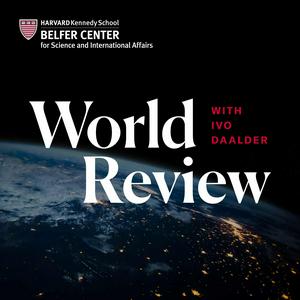
Acerca de World Review with Ivo Daalder
Global events move fast—World Review helps you keep up. Each Friday, former U.S. Ambassador to NATO Ivo Daalder brings together leading journalists and experts to break down what’s happening, why it matters, and what comes next.
A Belfer Center for Science and International Affairs podcast from Harvard Kennedy School. ivodaalder.substack.com
Sitio web del podcastEscucha World Review with Ivo Daalder, Las entrevistas de Julio Sánchez Cristo y muchos más podcasts de todo el mundo con la aplicación de radio.net
Descarga la app gratuita: radio.net
- Añadir radios y podcasts a favoritos
- Transmisión por Wi-Fi y Bluetooth
- Carplay & Android Auto compatible
- Muchas otras funciones de la app
Descarga la app gratuita: radio.net
- Añadir radios y podcasts a favoritos
- Transmisión por Wi-Fi y Bluetooth
- Carplay & Android Auto compatible
- Muchas otras funciones de la app

World Review with Ivo Daalder
Escanea el código,
Descarga la app,
Escucha.
Descarga la app,
Escucha.
World Review with Ivo Daalder: Podcasts del grupo
 Colombia