

Escucha gratis este podcast en la aplicación: Descarga gratuita en la App Store
radio.net
Sleep timer
Favoritos
332 episodios
The Test Shut Off at 75 and I Knew I Failed. I Was Wrong.
07/08/2026 | 10 minStart a FREE SIMCLEX at: SIMCLEX.com
The screen goes black at question 75. You're certain you failed. You cry in the parking lot, you google "shut off at 75 did I fail" forty times, you grieve for 48 hours — and then: PASS. This story happens to thousands of nursing grads every cycle, and this episode explains why. Jon Haws RN breaks down how the NCLEX's adaptive algorithm is designed to make EVERYONE feel like they're drowning, why the better you're doing the harder your test feels, why a minimum-question shut-off is a neutral signal, and the parking-lot protocol for protecting your next 48 hours. Feeling dumb in there is often literally the sensation of passing. Make the shut-off boring before test day: start a SIMCLEX free — first 15 questions on us at SIMCLEX.com. Keywords: NCLEX shut off at 75, did I fail the NCLEX, NCLEX shut off at 85 did I pass, computer adaptive test NCLEX, NCLEX good pop up, NCLEX anxiety.
#nclex #nclexprep #nclexrn #shutoffat75 #nclexanxiety #newgradnurse #nursingstudent #nclex2026 #testanxiety #nextgennclex #nursetok #futurenurse #nclexstudyingPass Any Nursing School Exam With Ease [2026 Update]
05/08/2026 | 9 minTRY NURSING.com FOR FREE AT: https://nursing.com
The most-requested episode in the history of this podcast — completely re-recorded and updated for 2026, with a FREE printable study template. Jon Haws RN breaks down the 5-step system for passing any nursing school exam: studying the test before the content, turning objectives into questions, retrieval over re-reading (highlighting is banned), the 3-2-1 spacing method, and rehearsing real test conditions — the step that separates knowing it from proving it under pressure. Plus the worst exam of Jon's life and what it taught him about why hard-working students fail. Free template in the show notes. Prepping for boards? Start a SIMCLEX free — first 15 questions on us at SIMCLEX.com. Keywords: how to study for nursing school exams, nursing school study tips, study less score higher nursing, nursing exam study plan, retrieval practice nursing school.
#nursingschool #nursingstudent #studytips #nursingschooltips #studentnurse #futurenurse #nursingexams #studygram #studytok #nclexprep #nursingschoolhacks #medsurg #rnstudent #nursetokMy Instructor Failed Me By One Point. On Purpose.
03/08/2026 | 11 minTry SIMCLEX for FREE at: SIMCLEX.com
A 79.4. Passing was an 80. "I don't round." If you've ever felt like a nursing instructor was looking for a reason to fail you, this episode is for you — no instructor-bashing, just the truth about why subjective clinical grading keeps hurting good students, and the exact 5-move playbook to protect yourself: documentation habits, email trails, appeal deadlines, and how to fight with a rubric instead of emotions. Jon Haws RN shares his own story of being the student who stopped raising his hand — and the message from a 34-year-old career changer that inspired this episode. You belong here. From NURSING.com — tools built for the students the system isn't serving. Keywords: nursing instructor unfair grading, nursing school grade appeal, clinical evaluation unfair, failing nursing school by one point, toxic nursing instructors.
#nursingschool #nursingstudent #nursingschoolproblems #futurenurse #studentnurse #nursesoftiktok #nursetok #nursingschoolstruggles #clinicals #nursingclinicals #gradeappeal #nursingschooladvice #rnstudent #nclexThe 30-Day NCLEX Plan for People Who Are Working Full Time
22/07/2026 | 11 minTake Free SIMCLEX HERE
If you're working full-time, raising kids, or both, this episode is your entire NCLEX prep roadmap: 30 days, about 2 hours a day, built for people with real jobs and real lives. Jon Haws, RN, CCRN walks through the complete 4-phase system, day by day:
PHASE 1 — Days 1–3: DIAGNOSE. Take a full-length adaptive diagnostic under real test conditions (not a static quiz), audit your results by client-need category, identify your bottom 3 weak areas, and build your 30-day calendar around YOUR shifts — including why night shifters should never study after a twelve.
PHASE 2 — Days 4–19: BUILD. The exact daily 2-hour session structure: 30 minutes of content review on ONE topic, 60 minutes of targeted practice questions, 30 minutes of rationale review (including the rationales for answers you got RIGHT). Plus the weekly rhythm — 5 build days, 1 light day, 1 true rest day — and the Day 12 midpoint simulation that tells you whether your plan is working or your study source needs to change.
PHASE 3 — Days 20–26: SIMULATE. Shift from content to conditions. Two full-length adaptive simulations, your 3-miss reset ritual, pacing practice, and how to make the dreaded shut-off boring before test day.
PHASE 4 — Days 27–30: TAPER. Light review only, no new content, a full day completely off, and the test-day mindset that changes everything: hard questions mean the algorithm thinks you're good — feeling dumb in there is literally the sensation of passing.
By Day 30 you'll have completed 4 full adaptive simulations, 16 targeted build sessions, and ~800 focused questions — on 2 hours a day, around a full-time job.
Step zero of the plan is free: start a SIMCLEX at SIMCLEX.com — the first 15 questions are on us. It's the most realistic NCLEX simulation there is, with a true adaptive engine and every Next Gen item type. Full day-by-day calendar download in the show notes.
Keywords: 30 day NCLEX study plan, NCLEX study schedule working full time, NCLEX prep 2 hours a day, NCLEX study plan while working, computer adaptive NCLEX practice, Next Gen NCLEX simulation, free NCLEX practice questionsWhy 'Just Do More Questions' Is the Worst NCLEX Advice in Nursing School
20/07/2026 | 9 minSIMCLEX.com (start free — first 15 questions free)
"Just do more questions" — the advice every nursing student gets and the reason so many walk into the NCLEX unprepared for what it actually is. Jon Haws RN breaks down computer-adaptive testing, why you can miss 45% of questions and still pass, why static question banks train the wrong skill, and how to rehearse the shut-off before test day. Start a SIMCLEX free — first 15 questions on us at SIMCLEX.com. Keywords: NCLEX study tips, computer adaptive test NCLEX, NCLEX question banks, how NCLEX scoring works, Next Gen NCLEX.
Más podcasts de Cursos
 Aprende inglés con Trainlang | Nivel A1 Beginner (Temporada 2)Cursos, Educación
 La Fonda Filosófica (audio)
 Ingles Para PrincipiantesAprendizaje de idiomas, Cursos, Educación, Tutoriales
 Let's Master English! An English podcast for English learnersAprendizaje de idiomas, Cursos, Educación
 El Podcast de la Electricidad IndustrialCursos, Educación
 Curso de autodisciplinaCursos, Educación
 Real English Conversations Podcast | English Fluency For Newcomers And International ProfessionalsAprendizaje de idiomas, Cursos, Educación
 Neuropsicología y EducaciónCursos, Educación
Podcasts a la moda de Cursos
- El Podcast de la Electricidad IndustrialCursos, Educación
- Ingles Para PrincipiantesAprendizaje de idiomas, Cursos, Educación, Tutoriales
 Aprende Inglés RápidoCursos, Educación
 Python for Everybody (py4e.com)Cursos, Educación, Tecnología
- La Fonda Filosófica (audio)
- Curso de autodisciplinaCursos, Educación
 Con Doble EneCursos, Educación
- Real English Conversations Podcast | English Fluency For Newcomers And International ProfessionalsAprendizaje de idiomas, Cursos, Educación
 COMA y PUNTOCursos, Educación
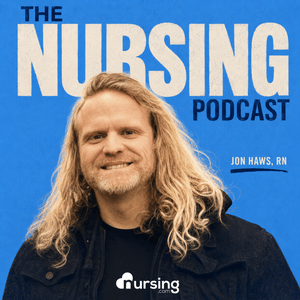
Acerca de Nursing Podcast by NURSING.com (NRSNG) (NCLEX® Prep for Nurses and Nursing Students)
Helping Nursing Students Succeed. Period.
Free Nursing School and NCLEX Cheat Sheets at nursing.com/freebies
Welcome to the NURSING.com Show from NURSING.com . . . #1 Nursing Podcast and the leader in nursing student education.
New motivational episodes 2-3 times per week covering:
Struggling Students - common questions and concerns from students.
Tips and Nurse Life - how to succeed as a nursing student and nurse.
Interviews - discussion with through leaders, entrepreneurs, and authors.
Anatomy and Physiology and Nursing Care for various disease processes.
Follow us on social media @nursing.com_ on Instagram or @nursing.comofficial on Facebook
From the leading nursing education website (NURSING.com) comes the top nursing podcast. With pharmacology episodes, test taking tips, student struggles, interviews (with leading nurse advocates like Kati Kleber, Nurse Bass, Nurse Nacole, and more), NCLEX review, we cover the information that nurses need to know to accelerate their career and become incredible RNs.
Jon Haws RN, the host has worked as a critical care registered nurse in a Level I Trauma hospital in Dallas, TX.
Jon is the creator of NURSING.com. Visit the site and check out the books on Amazon.com We discuss current trends in the ICU, anatomy, physiology, nursing care, and much more. Our goal is to change nursing education forever by making it more accessible, cutting the fluff, and teaching students how to think like nurses through modern technology.
For full disclaimer information visit: nursing.com
NCLEX®, NCLEX-RN® are registered trademarks of the National Council of State Boards of Nursing, INC.
Sitio web del podcastEscucha Nursing Podcast by NURSING.com (NRSNG) (NCLEX® Prep for Nurses and Nursing Students), Aprende inglés con Trainlang | Nivel A1 Beginner (Temporada 2) y muchos más podcasts de todo el mundo con la aplicación de radio.net
Descarga la app gratuita: radio.net
- Añadir radios y podcasts a favoritos
- Transmisión por Wi-Fi y Bluetooth
- Carplay & Android Auto compatible
- Muchas otras funciones de la app
Descarga la app gratuita: radio.net
- Añadir radios y podcasts a favoritos
- Transmisión por Wi-Fi y Bluetooth
- Carplay & Android Auto compatible
- Muchas otras funciones de la app
Nursing Podcast by NURSING.com (NRSNG) (NCLEX® Prep for Nurses and Nursing Students)
Escanea el código,
Descarga la app,
Escucha.
Descarga la app,
Escucha.
 Colombia