Powered by RND
PodcastsArteHuman Centered

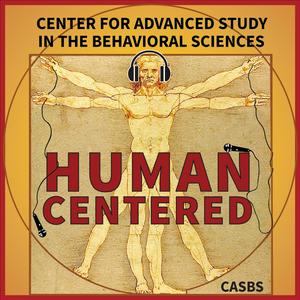
Human Centered

Center for Advanced Study in the Behavioral Sciences
Human Centered
Último episodio

Episodios disponibles

5 de 83
  • In Edward Said's Shadow
    Edward Said famously wrote most of "Orientalism" during his 1975-76 CASBS fellowship. The book criticized Western worldviews and representations of the East (or 'Orient') and their perpetuation of romanticized or colonial mindsets. A half-century later, "Orientalism" continues to shape scholarship, frame debates, and resonate in disparate regions and contexts. Four 2024-25 CASBS fellows representing different disciplines – A. Shane Dillingham, Thomas Blom Hansen, Camilla Hawthorne, and Shirin Sinnar – discuss the enduring influence and impact of Said and his landmark book.EDWARD SAID WORKS REFERENCED IN THIS EPISODEOrientalism (Pantheon, 1978)"The One State Solution," New York Times, 10 January 1999Representations of the Intellectual (Penguin Random House, 1996)Other works emerging from Edward Said's CASBS fellowshipEPISODE GUESTSA. Shane Dillingham: ASU faculty page | Personal website | CASBS pageCamilla Hawthorne: UCSC faculty page | Personal website | CASBS pageThomas Blom Hansen: Stanford faculty page | CASBS pageShirin Sinnar: Stanford faculty page | CASBS pageEdward Said on CASBSIn evaluating his CASBS fellowship in 1976, Edward Said noted that "...the Center does not pay enough attention (in its selection of Fellows) to revisionist and/or radical scholars in the humanities and social sciences. There are a great many intellectual developments taking place, many of them because of thinkers whose work departs from (if does not explicitly reject) the conventions of Establishment scholarship."In addition to this constructive criticism, Said remarked in general that "...the quiet and the absence of immediate pressures were, for me, a very welcome change from past years, when deadlines, a thousand daily commitments, and the mad pressures of teaching in a large university (in a large city) made continuity of work and reflection almost impossible." Said further reported that Orientialism was "exactly four-fifths complete." In accounting for his "extremely valuable and productive year," he wrote: "I do not think I could have done this sort of work anywhere else...the working conditions are...comfortable in the best way for a scholar..."Of his work on Orientalism, Said further noted: "The other more or less special advantage to this year was to have time to change directions in my work, to move from a highly theoretical kind of speculation to a very concrete historical investigation. Many of my ideas about such matters as the history of traditions, the growth of scientific and disciplinary knowledge, the ideology of scholarship, the relationship between “knowledge” and the imagination took new, concrete forms. Without such a year – and it is impossible to say where else I could have had such a year – I would still be making statements without being sure as their historical and concrete validity. Moreover, I found that I had the time to pursue leads only to prove that they were the wrong ones; the important thing was to have the time to let my work take me where it would, and not be afraid.”Excerpted from Edward Said, "Evaluation of fellowship year 1975-76," letter to CASBS director Gardner Lindzey, August 19, 1976 (CASBS files) Other works referenced in this episodeTimothy Brennan, Places of Mind: A Life of Edward Said (Bloomsbury, 2022)Stuart Hall, "The West and the Rest: Discourse and Power," in Essential Essays, Vol. 2 (Duke Univ. Press, 2018 [1992])Camilla Hawthorne, "Mapping Black Geographies," Transactions of the Institute of British Geographers (2024)Sophia Azeb, "The 'No-State Solution'," The Funambulist (2017)Sophia Azeb, "Who Will We Be When We are Free?" The Funambulist (2019) Center for Advanced Study in the Behavioral Sciences (CASBS) at Stanford UniversityExplore CASBS: website|Bluesky|X|YouTube|LinkedIn|podcast|latest newsletter|signup|outreach​Human CenteredProducer: Mike Gaetani | Audio engineer & co-producer: Joe Monzel |
    --------  
    1:08:47
  • Colin Camerer: Econ's Neurovisionary
    An absorbing conversation featuring Colin Camerer (CASBS fellow, 1997-98), among the world's most accomplished scholars in both behavioral economics and neuroeconomics, with economist Stephanie Wang (2024-25). Camerer discusses his groundbreaking work on the neuroeconomics of self-control and habit formation; offers insights on generating ideas for, building, then scaling behavioral models; and explains why neuroscience remains a wide-open field awaiting the contributions of so-far mostly reluctant economists and other social scientists.COLIN CAMERER: Caltech faculty page | Camerer research group | on Google Scholar | Wikipedia page | bio at the Decision Lab | bio at MacArthur Foundation | STEPHANIE WANG: Pitt faculty page | Personal website | on Google Scholar | CASBS bio |Works discussed or mentioned in this episode:C. Camerer, Behavioral Game Theory: Experiments in Strategic Interaction. Princeton University Press, 2003.C. Camerer, "Can Asset Markets Be Manipulated? A Field Experiment with Racetrack Betting," Journal of Political Economy, 1998.C. Camerer, et al., "The Golden Age of Social Science," Proceedings of the National Academy of Sciences, 2021.C. Camerer, et al., "A Neural Autopilot Theory of Habit: Evidence from Consumer Purchases and Social Media Use," Journal of the Experimental Analysis of Behavior, 2024.S. Wang, C. Camerer, et al., "Looming Large or Seeming Small? Attitudes Toward Losses in a Representative Sample," Review of Economic Studies, 2025.F. Ramsey, "Truth and Probability" (1926), published in F. Ramsey, The Foundations of Mathematics and Other Logical Essays (1931)U. Malmendier, S. Nagel, "Depression Babies: Do Macroeconomic Experiences Affect Risk Taking?" Quarterly Journal of Economics, 2011.M. Cobb, The Idea of the Brain: The Past and Future of Neuroscience, Basic Books, 2020.M. Gaetani, "CASBS in the History of Behavioral Economics," CASBS website, 2018.Also of interest:S. Wang, et al., eds., "Mindful Economics: A Special Issue in Honor of Colin Camerer," Journal of Economic Behavior and Organization, forthcoming.  Center for Advanced Study in the Behavioral Sciences (CASBS) at Stanford UniversityExplore CASBS: website|Bluesky|X|YouTube|LinkedIn|podcast|latest newsletter|signup|outreach​Human CenteredProducer: Mike Gaetani | Audio engineer & co-producer: Joe Monzel |
    --------  
    45:58
  • Grand Master of the Sociology of Immigration & Assimilation
    For decades, Alejandro Portes (CASBS fellow 1980-81) has been among our most distinguished scholars elucidating the causes and consequences of immigration and assimilation. René D. Flores (CASBS fellow 2023-24) engages Portes in a conversation spanning large swaths of Portes's formidable intellectual biography, including his personal journey from Cuba and its influence on his academic trajectory, as well as his approach to social science inquiry and its delivery of insights leading to some of his most celebrated and consequential works.ALEJANDRO PORTES: Princeton faculty page | CV | Univ. of Miami faculty page | Wikipedia page | on Google Scholar | Biographical sketches of Portes: American Sociological Association | National Academy of Education | Princeton | National Institutes of Health | Proceedings of the National Academy of Sciences | Robert K. Merton's full quote about Alejandro Portes is contained in the September/October 1998 issue of Footnotes, a publication of the American Sociological Association. Access the full text.  Works referenced in this episodeAlejandro Portes, "Rationality in the Slum: An Essay on Interpretive Sociology," Comparative Studies in Society and History, v13 n3, June 1972.Alejandro Portes, "Dilemmas of a Golden Exile: Integration of Cuban Refugee Families in Milwaukee," American Sociological Review, v34 n4, August 1969.Alejandro Portes and Robert Bach, Latin Journey: Cuban and Mexican Immigrants in the United States. Univ. of California Press, 1985.Alejandro Portes and Min Zhou, "The New Second Generation: Segmented Assimilation and its Variants," Annals of the American Academy of Political and Social Science, November 1993.Alejandro Portes and Ruben Rumbaut, Immigrant America: A Portrait, Univ. of California Press, 2024 (fifth ed.)Alejandro Portes and Ruben Rumbaut, Legacies: The Story of the Immigrant Second Generation, Univ. of California Press, 2001.Jennifer Lee and Min Zhou, The Asian American Achievement Paradox, Russell Sage Foundation, 2015. (Notably, Jennifer Lee was a CASBS fellow in 2002-03; Min Zhou was a CASBS fellow in 2006-06.)Bonus: 2019-20 CASBS fellow Catherine Ramírez discusses the influence of Alejandro Portes in "What Does Assimilation Mean?" Public Books, Feb. 27, 2020. The essay was written as part of CASBS's partnership with Public Books. Ramírez writes, "By showing that there are many strata in society into which people assimilate, and many outcomes of assimilation, Portes and his coauthors have enriched our understanding of the processes by which people become American, however precarious that status may be.” René D. Flores: Univ. of Chicago faculty page | CASBS page | on Google Scholar | Personal website |    Center for Advanced Study in the Behavioral Sciences (CASBS) at Stanford UniversityExplore CASBS: website|Bluesky|X|YouTube|LinkedIn|podcast|latest newsletter|signup|outreach​Human CenteredProducer: Mike Gaetani | Audio engineer & co-producer: Joe Monzel |
    --------  
    54:52
  • Can AI Take Common Sense from a Baby?
    Generative AI tools built on large language models are increasingly "intelligent" yet lack a baby's common sense – the ability to non-verbally generalize to novel situations without additional training. What can developmental science contribute to AI? Tech journalist and former CASBS fellow John Markoff chats with 2023-24 CASBS fellow David Moore, a developmental scientist with expertise in infant cognition, on evaluating the efforts of DARPA's Machine Common Sense program as well as prospects and concerns associated with creating AIs with common sense.DAVID MOORE: Personal website | Claremont Infant Study Center | Wikipedia page | DARPA Machine Common Sense programRelated resource:David Moore, et al. "Leveraging Developmental Psychology to Evaluate Artificial Intelligence," 2022 IEEE International Conference on Development and Learning (ICDL), Nov. 2022. DOI: 10.1109/ICDL53763.2022.9962183Recommended by David Moore:Esther Thelen and Linda B. Smith. A Dynamic Systems Approach to the Development of Cognition and Action. MIT Press, 1994.  Read John Markoff's latest book, Whole Earth: The Many Lives of Stewart Brand  (Penguin Random House, 2022)  Center for Advanced Study in the Behavioral Sciences (CASBS) at Stanford UniversityExplore CASBS: website|Bluesky|X|YouTube|LinkedIn|podcast|latest newsletter|signup|outreach​Human CenteredProducer: Mike Gaetani | Audio engineer & co-producer: Joe Monzel |
    --------  
    37:17
  • Make the Atmosphere Great Again
    Given deeply polarized domestic politics and insufficient international commitment to the Paris Accord, can we reduce greenhouse gas emissions and avert some of the worst effects of climate change before it's too late? It's an elemental question that warrants despair, yes, but plenty of hope too. Political scientist Leigh Raymond, a 2021-22 CASBS fellow, explores the implicated issues through a conversation about "Into the Clear Blue Sky: The Path to Restoring Our Atmosphere" with its author, sustainability scientist Rob Jackson. Jackson launched the book project as a 2019-20 CASBS fellow.ROB JACKSON: Faculty page | Stanford profile | CASBS profile | Jackson on Google Scholar | Global Carbon Project | Publisher page for Into the Clear Blue Sky: The Path to Restoring Our Atmosphere (Simon & Schuster, 2024)Media related to Into the Clear Blue Sky: KQED Forum | The Times | Scientific American | Aeon | Wired | Times Literary Supplement | The Conversation | Chemical & Engineering News | Civil Eats | more Scientific American | Literary Hub | Heatmap | Environmental Health News | Orion | Fast Company | Inside Climate News | The Wall Street Journal | Atmos | ACS Publications |LEIGH RAYMOND: Faculty page | on Google Scholar | Publisher page for Reclaiming the Atmospheric Commons: The Regional Greenhouse Gas Initiative and a New Model of Emissions Trading (MIT Press, 2016) | 2017 book award announcement |"What Climate Policies do Americans Want from Their Legislatures?" Good Authority (July 5, 2022)"Building Support for Carbon Pricing - Lessons from Cap-and-trade Policies," Energy Policy 134 (2019)"Framing Market-Based Versus Regulatory Climate Policies: A Comparative Analysis," Review of Policy Research (2022)  Center for Advanced Study in the Behavioral Sciences (CASBS) at Stanford UniversityExplore CASBS: website|Bluesky|X|YouTube|LinkedIn|podcast|latest newsletter|signup|outreach​Human CenteredProducer: Mike Gaetani | Audio engineer & co-producer: Joe Monzel |

    --------  
    57:26

Más podcasts de Arte

Acerca de Human Centered

Conversations about projects and research undertaken by scholars & affiliates of the Center for Advanced Study in the Behavioral Sciences (CASBS) at Stanford University; interviews with renowned fellows from CASBS history; and audio versions of occasional CASBS live events. CASBS is a scholarly community like no other for collaborative, cross-disciplinary, generative research. It brings together deep thinkers to address wicked problems and significant societal challenges. It empowers them to challenge boundaries and assumptions in order to advance our understanding of the full range of human beliefs, behaviors, interactions, and institutions. As a leading incubator of human-centered knowledge, CASBS is a place that is, well…human centered. Producer: Mike Gaetani | Engineer & co-producer: Joe Monzel Learn more about CASBS> website: casbs.stanford.edu | X: @CASBSStanford | LinkedIn: CASBS at Stanford |


Sitio web del podcast

Escucha Human Centered, Club de lectura de MPF y muchos más podcasts de todo el mundo con la aplicación de radio.net

Descarga la app gratuita: radio.net

  • Añadir radios y podcasts a favoritos
  • Transmisión por Wi-Fi y Bluetooth
  • Carplay & Android Auto compatible
  • Muchas otras funciones de la app
Aplicaciones
Redes sociales
v7.23.11 | © 2007-2025 radio.de GmbH
Generated: 11/17/2025 - 12:26:01 AM