
Escucha gratis este podcast en la aplicación: Descarga gratuita en la App Store
radio.net
Sleep timer
Favoritos
100 episodios
Muzzle Aggression Progression Part 2
05/11/2026 | 1 h 31 minIn this episode, Jerry Bradshaw discusses:
Why the right training program matters more than just having the right equipment on hand.
The importance of good decoy work.
The steps of muzzle aggression progression.
What you are looking for at each progression step, and what to avoid.
Key Takeaways:
The ultimate goal is to teach your dog to bite through the muzzle.
Increase depth and duration variably over time. It is important to remember that dogs do have a limit to what they're willing to do.
The goal of all civil work that we do with dogs is to teach them that they own the space in front of them, that they can, with their aggression, push and pull decoys, and they can, with their aggression, make the decoy move back.
Comparison is the thief of joy - every dog is going to hit a duration wall that is a little bit different.
"Frustration is the enemy in muzzle work - that's where we lose the biting through the muzzle and go to, perhaps, barking, spinning. We don't want energy unloading and spinning and just muzzle punching and so forth. Those are all conflict behaviors that are signaling to us that the dog can't get what he wants." — Jerry Bradshaw
Episode References:
The Working Grip Foundation: https://workinggrip.org/
Stewart Hilliard's Kynology: https://kynology.org/
Get Jerry's book Controlled Aggression on Amazon.com
Contact Jerry:
Website: controlledaggressionpodcast.com
Email: JBradshaw@TarheelCanine.com
Tarheel Canine Training: www.tarheelcanine.com
YouTube: tarheelcanine
Twitter: @tarheelcanine
Instagram: @tarheelk9
Facebook: TarheelCanineTraining
Protection Sports Website: psak9-as.org
Patreon: patreon.com/controlledaggression
SlideShare: Tarheel Canine
Calendly: https://calendly.com/tarheelcanine
Tarheel Canine Seminars: https://streetreadyk9.com/
Tarheel Canine Student Portal: https://tcstudentportal.com/
Sponsors:
ALM K9 Equipment: almk9equipment.com
PSA & American Schutzhund: psak9-as.org
Tarheel Canine: tarheelcanine.com
The Drive Company: thedriveco.com
The Drive Company Instagram: instagram.com/thedrive.co
Dog Armour: dogarmour.com
Dog Armour Instagram: instagram.com/dogarmourpro
Rogue Arsenal: roguearsenal.com
Rogue Arsenal Instagram: instagram.com/rogue_arsenal_official
Kirby K9: k9irby.com
Train hard, train smart, be safe.
Show notes by Podcastologist Chelsea Taylor-Sturkie
Audio production by Turnkey Podcast Productions. You're the expert. Your podcast will prove it.Muzzle Aggression Foundation 1
23/10/2026 | 1 h 17 minIn this episode, Jerry Bradshaw discusses:
Teaching your dog to bite through the muzzle.
Recognizing conflict behaviors during muzzle work and how to fix them.
Five types of muzzles, their use through progression, and other prerequisites for muzzle work.
Modifying muzzles and using them safely for all involved in the training process.
Evaluating muzzle engagement and decoy work properly for muzzle fighting with your dog.
Utilizing training progression for habituation and duration, and developing muzzle training across multiple prerequisites.
Key Takeaways:
A proactive dog is trained, not born. Muzzle work takes a step further to prepare your dog to engage a human without any manifestation of prey, whether that's equipment or prey cues, including movement.
We aren't just trying to gain tolerance from our dogs while wearing the muzzle; we want them to predict good things when it is on and come to love it.
An initial evaluation should be brief and controlled, with attention to whether the dog attempts to bite through the muzzle.
If engagement is lacking, revisit foundational work and gradually adjust the picture rather than rushing the progression.
"If your muzzle work is showing any of those signs of conflict - barking, spinning, fading in intensity, and pawing at the muzzle - we've got to go back and fix it." — Jerry Bradshaw
Episode References:
The Working Grip Foundation: https://workinggrip.org/
Stewart Hilliard's Kynology: https://kynology.org/
Get Jerry's book Controlled Aggression on Amazon.com
Contact Jerry:
Website: controlledaggressionpodcast.com
Email: JBradshaw@TarheelCanine.com
Tarheel Canine Training: www.tarheelcanine.com
YouTube: tarheelcanine
Twitter: @tarheelcanine
Instagram: @tarheelk9
Facebook: TarheelCanineTraining
Protection Sports Website: psak9-as.org
Patreon: patreon.com/controlledaggression
Slideshare: Tarheel Canine
Calendly: https://calendly.com/tarheelcanine
Tarheel Canine Seminars: https://streetreadyk9.com/
Tarheel Canine Student Portal: https://tcstudentportal.com/
Sponsors:
ALM K9 Equipment: almk9equipment.com
PSA & American Schutzhund: psak9-as.org
Tarheel Canine: tarheelcanine.com
The Drive Company: thedriveco.com
The Drive Company Instagram: instagram.com/thedrive.co
Dog Armour: dogarmour.com
Dog Armour Instagram: instagram.com/dogarmourpro
Rogue Arsenal: roguearsenal.com
Rogue Arsenal Instagram: instagram.com/rogue_arsenal_official
Kirby K9: k9irby.com
Train hard, train smart, be safe.
Show notes by Podcastologist Chelsea Taylor-Sturkie
Audio production by Turnkey Podcast Productions. You're the expert. Your podcast will prove it.Decoys Stop Helping the Dogs!
21/08/2026 | 1 h 12 minIn this episode, Jerry Bradshaw discusses:
Training proactive, powerful dogs in proactivity.
Preventing early cues in training for your canine.
Teaching your dog that their actions initiate activity from the target.
Morphing reactivity into proactivity.
Having a training progression to move away from the handler and decoy help of early foundational training.
Key Takeaways:
You want your dog to be willing to initiate, even if there's no reaction or triggers from the decoy.
As humans, it is easy for us to identify that a random extremity is part of a larger human being. It takes dogs longer to look at that picture and figure out that what they are seeing is attached to the target, which is a passive human being.
Have a plan: if your dog is struggling with proactivity to go back to foundational elements. Don't get in the habit of assisting them with movement every time.
Allow context to work for you. Avoid creating anticipation and let the training and context work by changing the picture the dog sees.
"So don't be lazy. Set up your civil sessions, your scenarios, and make sure, as the dog comes into the training area, that we're setting up these situations that were not leaving clues on the ground in the form of equipment." — Jerry Bradshaw
Episode References:
The Working Grip Foundation: https://workinggrip.org/
Stewart Hilliard's Kynology: https://kynology.org/
Get Jerry's book Controlled Aggression on Amazon.com
Contact Jerry:
Website: controlledaggressionpodcast.com
Email: JBradshaw@TarheelCanine.com
Tarheel Canine Training: www.tarheelcanine.com
YouTube: tarheelcanine
Twitter: @tarheelcanine
Instagram: @tarheelk9
Facebook: TarheelCanineTraining
Protection Sports Website: psak9-as.org
Patreon: patreon.com/controlledaggression
Slideshare: Tarheel Canine
Calendly: https://calendly.com/tarheelcanine
Tarheel Canine Seminars: https://streetreadyk9.com/
Tarheel Canine Student Portal: https://tcstudentportal.com/
Sponsors:
ALM K9 Equipment: almk9equipment.com
PSA & American Schutzhund: psak9-as.org
Tarheel Canine: tarheelcanine.com
The Drive Company: thedriveco.com
The Drive Company Instagram: instagram.com/thedrive.co
Dog Armour: dogarmour.com
Dog Armour Instagram: instagram.com/dogarmourpro
Rogue Arsenal: roguearsenal.com
Rogue Arsenal Instagram: instagram.com/rogue_arsenal_official
Kirby K9: k9irby.com
Train hard, train smart, be safe.
Show notes by Podcastologist Chelsea Taylor-Sturkie
Audio production by Turnkey Podcast Productions. You're the expert. Your podcast will prove it.Attention at a Distance
24/07/2026 | 46 minIn this episode, Jerry Bradshaw discusses:
The importance of mandatory eye contact and how to generalize for distance work.
Moving from negative reinforcement to positive punishment to move from escape to avoidance.
Training progressions to train mandatory eye contact with your dog.
Transitioning from lure to reward to variable reward.
Key Takeaways:
To get your dog to pay attention to your face, consider putting a food reward in your mouth - like hot dogs, cheese, or chicken.
Build duration before you build distance in your training progression. If they aren't paying attention at 2 feet, they're not going to pay attention at 20 feet.
You have to take the training wheels off as you move between training progression levels.
When you get to trial, you have to operate on an extinction condition - there is no reinforcement or rewards on the field, so it is better to have your dog on a very, very thin variable reward schedule by that point. That only comes through training progressions and systematic generalization.
"If we never get to the point where the dog understands there's a correction for inattention, then that's not going to be a very reliable tool for us for attention at a distance. We want to generalize it. We want to continue to create a systematic desensitization to all the things that the decoy might do." — Jerry Bradshaw
Episode References:
The Working Grip Foundation: https://workinggrip.org/
Stewart Hilliard's Kynology: https://kynology.org/
Get Jerry's book Controlled Aggression on Amazon.com
Contact Jerry:
Website: controlledaggressionpodcast.com
Email: JBradshaw@TarheelCanine.com
Tarheel Canine Training: www.tarheelcanine.com
YouTube: tarheelcanine
Twitter: @tarheelcanine
Instagram: @tarheelk9
Facebook: TarheelCanineTraining
Protection Sports Website: psak9-as.org
Patreon: patreon.com/controlledaggression
Slideshare: Tarheel Canine
Calendly: https://calendly.com/tarheelcanine
Tarheel Canine Seminars: https://streetreadyk9.com/
Tarheel Canine Student Portal: https://tcstudentportal.com/
Sponsors:
ALM K9 Equipment: almk9equipment.com
PSA & American Schutzhund: psak9-as.org
Tarheel Canine: tarheelcanine.com
The Drive Company: thedriveco.com
The Drive Company Instagram: instagram.com/thedrive.co
Dog Armour: dogarmour.com
Dog Armour Instagram: instagram.com/dogarmourpro
Rogue Arsenal: roguearsenal.com
Rogue Arsenal Instagram: instagram.com/rogue_arsenal_official
Kirby K9: k9irby.com
Train hard, train smart, be safe.
Show notes by Podcastologist Chelsea Taylor-Sturkie
Audio production by Turnkey Podcast Productions. You're the expert. Your podcast will prove it.Dogs Under Pressure!
17/07/2026 | 1 h 21 minIn this episode, Jerry Bradshaw discusses:
Different ways to deliver pressure reliably to your canine while tracking how the dog is doing while under that pressure.
Understanding the baseline bite pressure.
Reading your canine's body language while in a bite.
How training under pressure is a progressive thing that never ends.
Training emotional regulation in your dog from a young age.
Training under the assumption that something is going to go wrong and, at some point, something will bother your dog.
Key Takeaways:
When we don't bring civil aggression and pressure into the biting, we can get failures in the bite. Build in the training now, build the resiliency, give your dog something to lean into when things get stressful.
When trained to handle pressure, police canines can be used to bring suspects into custody in a way that is safer for both the suspect and the officers involved.
Where most training gets in trouble is when an inexperienced decoy is working with an inexperienced dog, or when training progressions are rushed.
You do not have to go to the lengths of physically hurting dogs in order to create resilience. People do that when they don't actually understand what they're doing.
Stress inoculation is an ongoing training process for the dog's whole life. It is not something that will be finished at any point. It must happen both gradually and variably.
Not everything boils down to genetics. Environment and training are also key to getting the most out of any dog.
"Conditioning is training. You have to show the dog the pictures. You have to run through the processes. You have to be aware of what you can do with this dog and where he is in the levels of training. Stress and pressure then become predictable and addressable by the dog. This is so important. If they never see stuff, it's not predictable." — Jerry Bradshaw
Episode References:
The Working Grip Foundation: https://workinggrip.org/
Stewart Hilliard's Kynology: https://kynology.org/
Get Jerry's book Controlled Aggression on Amazon.com
Contact Jerry:
Website: controlledaggressionpodcast.com
Email: JBradshaw@TarheelCanine.com
Tarheel Canine Training: www.tarheelcanine.com
YouTube: tarheelcanine
Twitter: @tarheelcanine
Instagram: @tarheelk9
Facebook: TarheelCanineTraining
Protection Sports Website: psak9-as.org
Patreon: patreon.com/controlledaggression
Slideshare: Tarheel Canine
Calendly: https://calendly.com/tarheelcanine
Tarheel Canine Seminars: https://streetreadyk9.com/
Tarheel Canine Student Portal: https://tcstudentportal.com/
Sponsors:
ALM K9 Equipment: almk9equipment.com
PSA & American Schutzhund: psak9-as.org
Tarheel Canine: tarheelcanine.com
The Drive Company: thedriveco.com
The Drive Company Instagram: instagram.com/thedrive.co
Dog Armour: dogarmour.com
Dog Armour Instagram: instagram.com/dogarmourpro
Rogue Arsenal: roguearsenal.com
Rogue Arsenal Instagram: instagram.com/rogue_arsenal_official
Kirby K9: k9irby.com
Train hard, train smart, be safe.
Show notes by Podcastologist Chelsea Taylor-Sturkie
Audio production by Turnkey Podcast Productions. You're the expert. Your podcast will prove it.
Más podcasts de Educación










Podcasts a la moda de Educación




























Acerca de Controlled Aggression
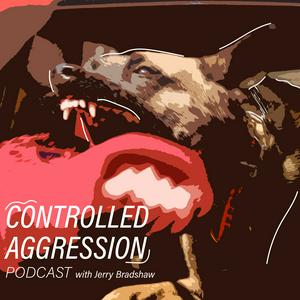
Want to learn about K9 obedience, police dog training, learning theory and more? Jerry Bradshaw has been a sports competitor and police dog trainer for 25 years, and as the executive director of the Protection Sports Association he's been around the world competing and training K9s. Welcome to the Controlled Aggression podcast.
Sitio web del podcastEscucha Controlled Aggression, BBVA Aprendemos juntos y muchos más podcasts de todo el mundo con la aplicación de radio.net
Descarga la app gratuita: radio.net
- Añadir radios y podcasts a favoritos
- Transmisión por Wi-Fi y Bluetooth
- Carplay & Android Auto compatible
- Muchas otras funciones de la app
 Colombia

