
Escucha gratis este podcast en la aplicación: Descarga gratuita en la App Store
radio.net
Sleep timer
Favoritos
414 episodios

Extended Interview: Sacha Baron Cohen
19/10/2026 | 27 minIn an extended interview, Sacha Baron Cohen tells 60 Minutes about early influences, creating his iconic characters and why he brought back Ali G.10/18/2026 The Vote, Up in the Air, Who iz Sacha Baron Cohen?
19/10/2026 | 42 minAs Democrats and Republicans battle for control of the House and Senate in the upcoming midterm elections, 60 MINUTES’ Lesley Stahl reports on the stress on our voting system as the Trump administration places demands on state and local election officials. Stahl travels to Utah, where Republican Lieutenant Governor Deidre Henderson explains why she’s resisting pressure from Washington, and then speaks with Harmeet Dhillon from the Department of Justice about the role of the federal government. Andrew Bast is the producer.
When the Strait of Hormuz was effectively closed at the start of the war with Iran, it didn’t just choke off oil and gas; it also trapped one-third of the world’s helium supply. Then, Iranian strikes hit Ras Laffan in Qatar, the largest natural gas and helium facility in the world, further rattling supply chains. Correspondent Jon Wertheim reports on how this disruption halfway across the world is affecting a range of American industries, from scientific research to semiconductor manufacturing. Lucy Hatcher is the producer.
60 MINUTES’ Ariel Levy travels to London to sit down with Sacha Baron Cohen, the actor behind Borat, Brüno, and Ali G, who has unleashed his iconic characters on unsuspecting people in the real world. The Golden Globe winner and Oscar nominee speaks with 60 MINUTES about his new film, the craft behind his form of undercover comedy, and the serious point behind his satire. Michael Karzis, Aaron Weisz and Ian Flickinger are the producers.Elizabeth Holmes & Theranos | 60 Minutes Archive
16/10/2026 | 13 minElizabeth Holmes claimed her start-up, Theranos, would revolutionizing blood testing, taking a pin-prick of blood and performing hundreds of laboratory tests. But as Norah O'Donnell reported in 2018, Theranos' machine never delivered on its promise, and Holmes is currently serving an 11-year prison sentence for defrauding investors.10/11/2026: In The Line Of Fire, Lost Sheep, Jon Batiste
12/10/2026 | 43 minSecret Service Director Sean Curran and Deputy Director Matt Quinn speak with 60 MINUTES in their first joint interview on the unprecedented number of threats against the President of the United States and other protectees. Correspondent Norah O’Donnell goes inside the agency to see how they are handling the rise in both foreign and domestic threats and deploying new technology, including drones. Michael Rey, Pat Milton and Julie Morse Goff are the producers.
There’s been a surge in violence in the West Bank in recent months where some militant settlers have been seeking to drive out the Palestinians who live there. With the Israeli elections weeks away, 60 MINUTES’ Lesley Stahl reports from the region on a group called the Hilltop Youth who have carried out violent attacks, the Jewish activists working to stop them, and the Palestinians being driven off the land. Shachar Bar-On is the producer.
Through the streets and subways of New York City, correspondent Bill Whitaker follows virtuoso Jon Batiste, a Grammy, Emmy, and Oscar winning musician, as he brings people together with music. Whitaker traces Batiste’s journey from Louisiana to The Juilliard School and beyond, dropping in on a recording session at Electric Lady in Greenwich Village and a moving performance at the Hollywood Bowl. Marc Lieberman and Cassidy McDonald are the producers.Sen. Thom Tillis's Extended Interview
07/10/2026 | 1 h 6 minRetiring North Carolina Republican Senator Thom Tillis speaks exclusively with 60 MINUTES about the political advisors he believes are responsible for undermining President Trump’s second term. In his only interview ahead of the release of his new book, "How to Lose Friends and Antagonize Presidents,” Tillis joins correspondent Ross Douthat for a candid conversation about the ups and downs of his relationship with President Trump, the state of the Senate and the Republican Party, and how his upbringing shaped his political outlook. Graham Messick is the producer.
Editor's note: This podcast is an extended version of the interview that was broadcast on 60 Minutes on Sunday, October 4th, 2026.
Más podcasts de Cine y Televisión










Podcasts a la moda de Cine y Televisión


















Acerca de 60 Minutes
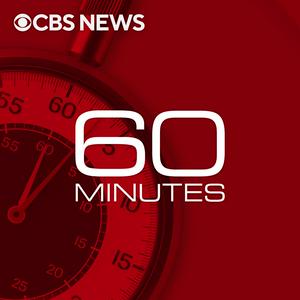
Get the best reporting and storytelling on television from 60 Minutes - on your schedule. Now you can listen to the show in its entirety every week. 60 Minutes is the most successful broadcast in television history with more than 80 Emmys under its belt. 60 Minutes offers unbiased reporting on politics, in-depth investigations and important adventures from around the world- like no one else.60 Minutes listeners can use discount code "MINUTES20" for 20% off all 60 Minutes products on ParamountShop.com.Watch 60 Minutes every Sunday night at 7 p.m. ET on CBS or stream it on Paramount+.
Sitio web del podcastEscucha 60 Minutes, Los originales y muchos más podcasts de todo el mundo con la aplicación de radio.net
Descarga la app gratuita: radio.net
- Añadir radios y podcasts a favoritos
- Transmisión por Wi-Fi y Bluetooth
- Carplay & Android Auto compatible
- Muchas otras funciones de la app
Descarga la app gratuita: radio.net
- Añadir radios y podcasts a favoritos
- Transmisión por Wi-Fi y Bluetooth
- Carplay & Android Auto compatible
- Muchas otras funciones de la app

60 Minutes
Escanea el código,
Descarga la app,
Escucha.
Descarga la app,
Escucha.
60 Minutes: Podcasts del grupo
 Colombia