
Escucha gratis este podcast en la aplicación: Descarga gratuita en la App Store
radio.net
Sleep timer
Favoritos
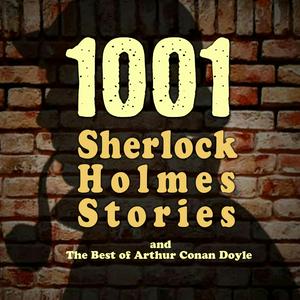
1001 Sherlock Holmes Stories & The Best of Sir Arthur Conan Doyle
Arthur Conan Doyle
Último episodio
325 episodios
DR. WATSON'S MEMOIRS: THE CASE OF THE DEPTFORD SHADOWS
25/10/2026 | 23 min🎙️ SHOW NOTES
Dr. Watson's Memoirs: The Case of the Deptford Shadows
Series: 1001 Sherlock Holmes Stories & The Best of Sir Arthur Conan Doyle
In this newly unearthed folio from Dr. Watson's dusty box, Holmes investigates a brutal double assault in Deptford — a case that marks the dawn of forensic science. When a faint thumbprint is discovered on a cash box, Holmes visits Scotland Yard's fledgling Fingerprint Bureau to learn the revolutionary technique of dusting for prints.
Armed with this new method, Holmes uncovers two distinct fingerprints — one on the cash box, another on a glass left behind in the kitchen — leading him to a pair of brothers whose greed and desperation have turned deadly. The case culminates in a tense confrontation at the docks, where Holmes's physical prowess and deductive brilliance bring the culprits to justice.
This story blends historical fact with Holmesian fiction, inspired by the real‑life Stratton Brothers case of 1905, the first British murder conviction based on fingerprint evidence.
🕵️ HOST NOTES
Before we close today's episode, a bit of real history behind the science featured in this story:
In 1901, Scotland Yard officially established its Fingerprint Bureau, the first of its kind in Britain. It was led by Detective Inspector Charles Stockley Collins, under the direction of Sir Edward Henry, whose classification system became the foundation of modern fingerprint identification.
Just four years later, fingerprints were used for the first time in Britain to secure a murder conviction. The case involved two brothers — Alfred and Albert Stratton — and became known as the Deptford Murders or the Mask Murders. A single thumbprint left on a cash box was enough to place one of the brothers at the scene, and the case became a landmark moment in forensic history.
Sherlock Holmes, of course, had been using fingerprint logic in fiction long before Scotland Yard adopted it in reality — always a step ahead of his time.
And speaking of Scotland Yard, Inspector G. Lestrade appears in the Holmes canon thirteen times, making him one of the most frequently recurring characters in the entire series. Though often skeptical, Lestrade consistently relied on Holmes when cases grew too complex for conventional police methods. Their relationship — part rivalry, part respect — remains one of the great threads running through the original stories.
This week, I'll be featuring two classic Holmes adventures involving Inspector Lestrade:
🔹 Wednesday at 4 PM ET:
"The Adventure of the Norwood Builder" Lestrade believes he's solved a murder — until Holmes proves otherwise.
🔹 Friday at 4 PM ET:
"The Adventure of the Six Napoleons" Lestrade and Holmes join forces to unravel a mystery involving smashed statues, a hidden pearl, and one of the most satisfying endings in the canon.
Join me for both — and next week, we'll open another folio from Dr. Watson's great dusty box.THE ADVENTURE OF THE REIGATE SQUIRE A SHERLOCK HOLMES ADVENTURE
23/10/2026 | 41 min🕵️ THE ADVENTURE OF THE REIGATE SQUIRE
1001 Sherlock Holmes Stories & The Best of Sir Arthur Conan Doyle Podcast
After a grueling case in France, Holmes and Watson retreat to the English countryside for rest — but peace is short‑lived. A burglary at the home of the Reigate Squire turns deadly, and Holmes, still recovering, must summon every ounce of his deductive power to unravel a web of deceit, blackmail, and murder. What begins as a simple break‑in becomes a test of Holmes's brilliance under pressure, revealing how even the smallest clue — a torn scrap of paper — can expose a killer hiding in plain sight.
🎧 A classic Holmes tale of wit, recovery, and revenge — where the detective's mind proves sharper than ever, even when his body falters.
🔎 If you enjoyed this episode…
Don't miss "The Million Dollar Bond Robbery" — one of Agatha Christie's finest early Poirot mysteries, now streaming at 1001 Classic Short Stories & Tales. A million dollars in Liberty Bonds vanish aboard a luxury liner, and Poirot solves the case without ever leaving his chair — a masterclass in deduction and misdirection.THE ADVENTURE OF SILVER BLAZE A SHERLOCK HOLMES ADVENTURE
21/10/2026 | 1 h 2 minArthur Conan Doyle was asked by the Strand Magazine to come up with his 12 favorite Sherlock Holmes adventures as part of a contest held by Stand Magazine in which the readers were asked to list their 12 favorites and the person closest ton Doyle's picks would win an autographed copy of the still-to-be-released 'Casebook of Sherlock Holmes'. That final book contained another group of great Holmes adventures, prompting another journalist to ask Doyle for some additional favorites. ACD added another 7, giving us 19. we begin with The Adventure of Silver Blaze, which didn't make the top 12 because Doyle had been challenged by a reader who believed his theory of the bicycle was "off track"- and it was. But Doyle really was proud of that story and placed in as his #13th favorite.
Learn more about your ad choices. Visit podcastchoices.com/adchoicesDR. WATSON'S MEMOIRS: HOLMES VS. DRACULA-THE HORROR AT WHITBY MANOR
18/10/2026 | 20 min🎙️ SHOW NOTES
DR. WATSON'S MEMOIRS: HOLMES vs. DRACULA — THE HORROR AT WHITBY MANOR
(1001 Sherlock Holmes Stories & The Best of Sir Arthur Conan Doyle)
In this chilling crossover from the vaults of Dr. Watson's Memoirs, the great detective faces a foe unlike any he has ever encountered. When a series of mysterious deaths strike the seaside town of Whitby, Holmes and Watson are summoned to investigate — only to find themselves confronting the ancient terror of Count Dracula himself.
Inside the crypts and shadowed manors of Yorkshire, science meets superstition, reason meets horror, and the world's most logical mind must face the impossible.
This original pastiche blends the gothic dread of Bram Stoker with the razor‑sharp deduction of Conan Doyle — a tale of lantern light, blood, and intellect against darkness.
Why listen:
A cinematic Holmes adventure steeped in Victorian horror
Atmospheric writing and sound design that pull you into the crypt
A perfect finale for the Dr. Watson's Memoirs cycle — where deduction meets the supernatural
🕵️♂️ THE DR. WATSON'S MEMOIRS SERIES SO FAR
The Whitechapel Murders: A Sherlock Holmes Adventure (Jack the Ripper investigation — the case that began the Memoirs)
https://www.bestof1001stories.com/show/1001-sherlock-holmes-stories-the-best-of-sir-arthur-conan-doyle/categories/dr-watson-memoirs/
(all of them are at this link)
The Queen's Shadow Case: The Wild West Show Comes to London (Holmes and Watson cross paths with Buffalo Bill's troupe and royal intrigue)
The Case of the Reading Angel Maker (featuring the Baker Street Irregulars) (A haunting mystery involving missing children and coded messages)
The Amateur Mendicant Society (featuring the Baker Street Irregulars) (A secret brotherhood, a beggar's network, and a deadly deception)
The Hunt for Sir Walter Raleigh's Ghost at Westminster (Political intrigue and spectral appearances in the heart of London)
The Case of the Missing Detective (Watson's desperate search when Holmes himself vanishes without a trace)
Holmes vs. Dracula — The Horror at Whitby Manor (The ultimate confrontation between logic and legend)
💡 SERIES OVERVIEW
Each Dr. Watson's Memoirs episode is an original pastiche written exclusively for the 1001 Stories Network — told in Watson's reflective voice, steeped in atmosphere, and crafted to feel like a long‑lost case file sealed for decades.
Listeners can follow the entire series at 1001 Sherlock Holmes Stories & The Best of Sir Arthur Conan Doyle, where new adventures continue to emerge from the fog‑shrouded streets of Victorian London.THE CASE OF THE DOG WHO CHANGED HIS MIND THE NEW ADVENTURES OF SHERLOCK HOLMES
16/10/2026 | 24 min1001 Sherlock Holmes Stories & The Best of Sir Arthur Conan Doyle
SHOW NOTES — "The Case of the Dog Who Changed His Mind"
The New Adventures of Sherlock Holmes
Original Broadcast: September 28, 1947 Written by: Anthony Boucher & Denis Green Starring: Basil Rathbone (Sherlock Holmes) and Nigel Bruce (Dr. Watson)
In this 1947 radio mystery from The New Adventures of Sherlock Holmes, Holmes and Watson are summoned to investigate the strange death of Lady Blenkinsop, an 89‑year‑old woman known for her zest for life and her refusal to surrender to age. Her sudden death — discovered behind a door bolted from the inside — immediately raises suspicion. Suicide is impossible. Murder seems impossible. And yet something is terribly wrong.
When the door is broken down, Lady Blenkinsop is found lifeless, slumped near a glass of ancestral wine… and beside her sits Bobo, her spoiled but fiercely devoted little pug. The dog's reaction to the commotion — barking at some people, shrinking from others — catches Holmes's attention. Something about Bobo's behavior is off, and Holmes realizes that the dog's sudden shift in temperament is not just curious… it's the key to the entire locked‑room puzzle.
As Holmes studies the crime scene, interviews the household, and observes Bobo's "change of mind," he uncovers a carefully engineered deception involving greed, manipulation, and a murderer who believed the perfect crime could be staged behind a bolted door. But Holmes, as always, sees what others overlook — and the dog who changed his mind becomes the witness who never speaks, yet tells the truth.
This episode is a classic example of the Boucher & Green era: clever plotting, sharp dialogue, and the unmistakable chemistry of Rathbone and Bruce at the height of their radio careers.
A NOTE TO OUR LISTENERS
Across the network at 1001 Stories for the Road, we are approaching the final chapters of H. Rider Haggard's The People of the Mist — and what a terrific story this has been to share. Adventure, danger, lost civilizations, and Haggard's trademark high‑stakes storytelling make this one of the most enjoyable long‑form tales we've brought to the network.
If you haven't tried it yet, start with Chapter 1 here: (link to be added)
It's a fantastic ride, and we think you'll love it.
SUPPORT THE 1001 STORIES NETWORK
If you're enjoying our Sherlock Holmes series, please take a moment to share the show with friends, leave a review at Apple Podcasts, or visit our new Facebook page where we're posting videos and highlighting all twelve 1001 Stories Network podcasts: Facebook.bestof1001stories.com
Your support keeps these classic stories alive for new generations of listeners.
Holmes andn Watson have an interesting case that only Holme's keenest senses can sniff out.
Más podcasts de Ficción









Podcasts a la moda de Ficción






















Acerca de 1001 Sherlock Holmes Stories & The Best of Sir Arthur Conan Doyle
SHERLOCK NOW THREE DAYS A WEEK! A truly enjoyable and growing collection of Sherlock Holmes Adventures and the best stories of Sir Arthur Conan Doyle, one of Britain's greatest storytellers. Narration by master storyteller Jon Hagadorn (1001 Stories Network). Now playing every Sun Noon ET, Wed 5PM ET, and FRI 5PM ET
Sitio web del podcastEscucha 1001 Sherlock Holmes Stories & The Best of Sir Arthur Conan Doyle, INSOMNIO y muchos más podcasts de todo el mundo con la aplicación de radio.net
Descarga la app gratuita: radio.net
- Añadir radios y podcasts a favoritos
- Transmisión por Wi-Fi y Bluetooth
- Carplay & Android Auto compatible
- Muchas otras funciones de la app
Descarga la app gratuita: radio.net
- Añadir radios y podcasts a favoritos
- Transmisión por Wi-Fi y Bluetooth
- Carplay & Android Auto compatible
- Muchas otras funciones de la app

1001 Sherlock Holmes Stories & The Best of Sir Arthur Conan Doyle
Escanea el código,
Descarga la app,
Escucha.
Descarga la app,
Escucha.
1001 Sherlock Holmes Stories & The Best of Sir Arthur Conan Doyle: Podcasts del grupo
 Colombia