Escucha gratis este podcast en la aplicación: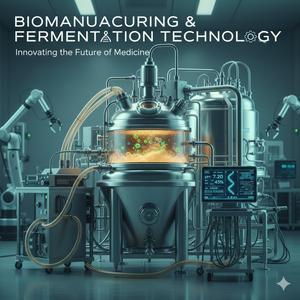 Descarga gratuita en la App Store
radio.net
Sleep timer
Favoritos
13 episodios

Microbial Cell Bank Lifecycle and Quality Control Architecture
07/1/2026 | 15 min
This episode details a Quality by Design (QbD) framework for managing microbial cell banks throughout their entire manufacturing lifecycle. It emphasizes that cell banking should be treated as a controlled unit operation rather than simple freezer storage, utilizing specific quantitative metrics like cumulative population doublings to define cell age. The sources outline a hierarchical architecture consisting of Master Cell Banks, Working Cell Banks, and End-of-Production banks to ensure genetic stability and operational consistency. Furthermore, the material explores how organism-specific cryopreservation and rigorous stability trending protect the critical quality attributes of various microbial strains. By integrating regulatory expectations with functional risk assessments, the text establishes a comprehensive blueprint for maintaining phenotypic integrity and production reliability. Overall, the documentation serves as a strategic guide for transforming cell banking into a sophisticated platform discipline for industrial biotechnology.
The Co-Design Framework: Harmonizing Biology, Control, and Scale
06/1/2026 | 16 min
This Part advocates for a shift from recipe-based fermentation toward a sophisticated co-design approach that integrates strain engineering, feeding strategies, and digital control. Modern bioprocessing must move beyond simple nutrient delivery to address the regulatory mechanisms and physical constraints that cause failure during industrial scale-up. The source explains how overflow metabolism and catabolite repression result from cellular resource allocation, suggesting that these issues can be managed through genetic rewiring and model-predictive control. Furthermore, the author highlights the importance of using scale-down simulators and digital twins to account for the spatial gradients and feast-famine cycles found in large reactors. Ultimately, the text presents a vision for predictive microbial manufacturing where biological systems and engineering frameworks are optimized simultaneously for maximum efficiency.
The Unified Logic: Bridging the Gap Between Fed-Batch and Continuous Control
05/1/2026 | 15 min
This part explores the evolving transition from traditional fed-batch fermentation to continuous flow systems in microbial bioprocessing. It highlights a fundamental shift in control philosophy, moving from time-dependent trajectories to the maintenance of steady-state regimes through advanced variables like dilution and retention. The source examines foundational tools such as chemostats alongside modern hybrid architectures like perfusion and multi-stage reactors that aim to maximize industrial productivity. Furthermore, it integrates these methods into a unified framework of dynamic optimal control, where computational models and real-time analytics balance economic goals with biological constraints. Ultimately, the text presents continuous processing not as a replacement for fed-batch methods, but as a sophisticated extension of metabolic control logic. Adopting these systems requires overcoming challenges in genetic stability and operational complexity through a strategic, staged implementation.
The Metabolic Architect: Mastering the Evolution of Fed-Batch Control
04/1/2026 | 16 min
This part explores the evolution of fed-batch fermentation from a basic nutrient replenishment method into a sophisticated metabolic control architecture. It explains how precisely managing the substrate feed rate allows engineers to dictate intracellular flux, prevent wasteful overflow metabolism, and protect the cell's respiratory capacity. The source categorizes various feeding strategies, ranging from predefined recipes to adaptive feedback systems like pH-stat and DO-stat control. Furthermore, it analyzes the physical constraints of high-cell-density operations, such as oxygen transfer limits and changes in broth rheology. Ultimately, the document presents fed-batch operation as a vital tool for balancing biological productivity with industrial scalability and economic efficiency.
The Feed Logic: Mastering Industrial Fermentation
03/1/2026 | 18 min
This part outlines a systematic framework for selecting and optimizing feeding strategies in industrial fermentation processes. The text provides a step-by-step decision tree that helps engineers choose between batch, fed-batch, and continuous operations based on biological traits and engineering constraints. It emphasizes managing metabolic overflow and oxygen transfer limits to maintain product quality and high yields. Detailed case studies illustrate how specific substrate-organism pairs, such as E. coli producing recombinant proteins, require tailored control philosophies like DO-stat or exponential feeding. Ultimately, the source serves as a technical manual for aligning feed logic with scale-up realities to prevent cellular stress and unwanted by-products.
Más podcasts de Ciencias
 Economía Entre LíneasEconomía y empresa, Educación, Ciencias, Ciencias sociales
 Fiebres LúcidasCiencias
 RadiolabHistoria, Ciencias, Cultura y sociedad, Documental, Ciencias naturales
 Materia OscuraCiencias
 Ruido de lluvia y truenos para dormirCiencias, CATEGORY_NATURE
 Universo curioso de la NASACiencias
 Punto BernalCiencias, Astronomía
 Palabra Plena, con Gabriel RolónCiencias, Física
 Coffee Break: Señal y RuidoCiencias, Astronomía
 Órbita Laika. El podcastCiencias
Podcasts a la moda de Ciencias
 Parque ExploraCiencias
- Economía Entre LíneasEconomía y empresa, Educación, Ciencias, Ciencias sociales
 BBC Inside ScienceCiencias
 This Podcast Will Kill YouSalud y forma física, Ciencias
 SolarisArte, Ficción, Ciencias, Cultura y sociedad, Tecnología, Ciencia ficción, Ciencias sociales
 AviPodcastCiencias
 Filosofía, Psicología, HistoriasArte, Historia, Ciencias, Ciencias sociales
 Shots de CienciaCiencias
 La Ciencia de A VivirCiencias
 DesArmando el universoCiencias, Ciencias naturales
 Inner Cosmos with David EaglemanEducación, Salud y forma física, Ciencias, Salud mental, Superación personal
 Astronomía y algo másOcio, Ciencias, Pasatiempos, Ciencias naturales
 The Nature Of with Willow DefebaughReligión y espiritualidad, Ciencias, Cultura y sociedad, Filosofía, Espiritualidad, CATEGORY_NATURE
 DiscoveryCiencias
 StarTalk RadioEducación, Ciencias
 The Michael Shermer ShowCiencias, Ciencias naturales
 Short WaveNoticias, Ciencias, Noticias diarias, Ciencias de la vida
- Podcast Desde el Sur: explorando el CosmosCiencias
 Let's Learn Everything!Ciencias
 RadioHumboldtCiencias, Ciencias de la vida
 Mindfacts: Historia y futuro de la Ciencia y la TecnologíaHistoria, Ciencias, Tecnología
 Science WeeklyCiencias
- Órbita Laika. El podcastCiencias
- Palabra Plena, con Gabriel RolónCiencias, Física
- Universo curioso de la NASACiencias
 Hidden BrainArte, Ciencias, Artes escénicas, Ciencias sociales
- Materia OscuraCiencias
 The world, the universe and usEducación, Noticias, Ciencias
 CrowdScienceCiencias
Acerca de Biomanufacturing & Fermentation Technology
Welcome to Biomanufacturing & Fermentation Technology, the podcast where microbes meet manufacturing and science turns into scalable reality. In each episode, we dive inside real bioprocesses. from lab-scale experiments to commercial fermenters. to unpack how products are actually made, fixed, and optimized in the real world. Expect candid conversations on fermentation failures and breakthroughs, scale-up war stories, regulatory realities, emerging technologies, and the decisions that separate a promising culture from a profitable process. Whether you are a scientist, engineer, entrepreneur, o
Sitio web del podcastEscucha Biomanufacturing & Fermentation Technology, Economía Entre Líneas y muchos más podcasts de todo el mundo con la aplicación de radio.net
Descarga la app gratuita: radio.net
- Añadir radios y podcasts a favoritos
- Transmisión por Wi-Fi y Bluetooth
- Carplay & Android Auto compatible
- Muchas otras funciones de la app
Descarga la app gratuita: radio.net
- Añadir radios y podcasts a favoritos
- Transmisión por Wi-Fi y Bluetooth
- Carplay & Android Auto compatible
- Muchas otras funciones de la app

Biomanufacturing & Fermentation Technology
Escanea el código,
Descarga la app,
Escucha.
Descarga la app,
Escucha.
 Colombia