
Escucha gratis este podcast en la aplicación: Descarga gratuita en la App Store
radio.net
Sleep timer
Favoritos
520 episodios
A Tale of Two Cities by Charles Dickens Book 1 chapter 6 "The Shoemaker" | Audiobook
18/10/2026 | 32 minA Tale of Two Cities by Charles Dickens Book 1 chapter 6 "The Shoemaker" narrated by Isaac BirchallSubscribe on YT or Join the Book Club on KO-FI and support me as an independent creator :Dhttps://ko-fi.com/theessentialreadshttps://www.youtube.com/channel/UCfOFfvo05ElM96CmfsGsu3g/joinPodcast Link: https://open.spotify.com/show/13b1qP3WhCWxam9yc49vIF?si=4e279ef4f5f143a0Summary:Manette talks with a very distant and quiet voice, as if it hasn’t been used for many years. He says that he is making a ladies’ shoe in the modern fashion after a template he had held. When asked his name he responds, “One Hundred and Five, North Tower.” Lucie makes her way over to him and noticing her hair, Manette opens up a knotted rag that wears around his neck and takes out some strands of hair.At first, he believes Lucie to his wife but claims that would be impossible as she is too young. Lucie then implores her father to weep for her if her voice or her hair recalls a loved one to him. She hints to him that a home far away awaits him, and that his “agony is over.” Manette collapses after this emotional event, and Lucie urges Lorry to take them back to England as fast as possible. At first, he is hesitant, but he soon agrees and heads off to arrange the affairs with Mr. Defarge. Later, they usher Mr. Manette down the stairs and into a coach and they sent off for England. SEO stuff I don't want to do. Charles Dickens' novel A Tale of Two Cities is one of the most sold books on the planet with over 200 million copies having been sold world wide. It is the most famous of Dickens' works and set in the bloody and violent French revolution. It blends the great history of the French revolution with the tale of a family. Raising enduring themes of imprisonment, injustice, social anarchy, resurrection, and the renunciation that fosters renewal, there is a reason that this novel has stood the test of time and has been enjoyed by readers all across the globe in many different languages.A Tale of Two Cities by Charles Dickens Book 1 chapter 5 "The Wine-shop" | Audiobook
14/10/2026 | 28 minA Tale of Two Cities by Charles Dickens Book 1 chapter 5 "The Wine-shop" narrated by Isaac BirchallSubscribe on YT or Join the Book Club on KO-FI and support me as an independent creator :Dhttps://ko-fi.com/theessentialreadshttps://www.youtube.com/channel/UCfOFfvo05ElM96CmfsGsu3g/joinPodcast Link: https://open.spotify.com/show/13b1qP3WhCWxam9yc49vIF?si=4e279ef4f5f143a0Summary:The setting moves to Paris. In a street, a wine cask falls to the street and breaks, flooding it with wine, and wish people who rush to drink as much as they can. Women take off their scarves and dip it in the wine, men cup their hands to drink, and even children get their fill. The wine shop is owned by Monsieur Defarge, a man of around 30. His wife, Mrs. Defarge sits behind the counter and watches everything that goes on around her. She signals to her husband to announce the presence of an older man and a young lady. Defarge looks over the strangers (Lorry and Lucie) and pretends not to notice them as he goes to speak to some familiar faces. They all refer to each other as Jaques as a way to identify each other as revolutionaries. Defarge soon sends the men out and then Lorry goes to see the wine shop owner. They converse for a few seconds and then Defarge guides Lorry and Lucie into the main building and up the stairs. They come to a dirty landing where the three men from before are gathered, Defarge tells them to go away and is accosted by Lorry for letting the man get looked at like an animal in a zoo. Defarge responds that he trusts the men and the look of what’s behind the door will do them well. Defarge then opens the door to reveal a white-haired man making shoes in a very dark room.SEO stuff I don't want to do. Charles Dickens' novel A Tale of Two Cities is one of the most sold books on the planet with over 200 million copies having been sold world wide. It is the most famous of Dickens' works and set in the bloody and violent French revolution. It blends the great history of the French revolution with the tale of a family. Raising enduring themes of imprisonment, injustice, social anarchy, resurrection, and the renunciation that fosters renewal, there is a reason that this novel has stood the test of time and has been enjoyed by readers all across the globe in many different languages.A Tale of Two Cities by Charles Dickens Book 1 chapter 4 "The Preparation" | Audiobook
11/10/2026 | 29 minA Tale of Two Cities by Charles Dickens Book 1 chapter 4 "The Preparation" narrated by Isaac BirchallSubscribe on YT or Join the Book Club on KO-FI and support me as an independent creator :Dhttps://ko-fi.com/theessentialreadshttps://www.youtube.com/channel/UCfOFfvo05ElM96CmfsGsu3g/joinPodcast Link: https://open.spotify.com/show/13b1qP3WhCWxam9yc49vIF?si=4e279ef4f5f143a0Summary:The next morning, Lorry arrives in Dover and gets out of the mail coach at the Royal George Hotel. After changing out of his travel clothes he transforms himself into his usual sixty-year-old businessman self. That afternoon, a waiter announces the arrival of Lucie Manette and says that the girl is ready to meet Mr. Lorry. Lorry meets the girl in her room and she says that she had word from the bank that some intelligence had been made respecting the small estate of her father – long presumed dead. After restating his duties as a businessman, Lorry tells miss Manette that the real reason she has been summoned to Paris is because her father has been found alive and has been taken to an old servant. Lucie is to go and restore her father to his health, and Mr. Lorry is to go and identify the man. Lucie then goes into shock, and he servant, Miss Pross rushes in to save her charge.SEO stuff I don't want to do. Charles Dickens' novel A Tale of Two Cities is one of the most sold books on the planet with over 200 million copies having been sold world wide. It is the most famous of Dickens' works and set in the bloody and violent French revolution. It blends the great history of the French revolution with the tale of a family. Raising enduring themes of imprisonment, injustice, social anarchy, resurrection, and the renunciation that fosters renewal, there is a reason that this novel has stood the test of time and has been enjoyed by readers all across the globe in many different languages.A Tale of Two Cities by Charles Dickens Book 1 chapter 3 "The Night Shadows" | Audiobook
07/10/2026 | 12 minA Tale of Two Cities by Charles Dickens Book 1 chapter 3 "The Night Shadows" narrated by Isaac BirchallSubscribe on YT or Join the Book Club on KO-FI and support me as an independent creator :Dhttps://ko-fi.com/theessentialreadshttps://www.youtube.com/channel/UCfOFfvo05ElM96CmfsGsu3g/joinPodcast Link: https://open.spotify.com/show/13b1qP3WhCWxam9yc49vIF?si=4e279ef4f5f143a0Summary:The narrator thinks about the secrets and mysteries that each human is to the every other. Lorry, as he rides in the mail coach with the two strangers, dozes in and out of sleep. His dreams are of the inner workings of Tellson’s Bank. But the shadows passing through the coach play tricks on him, and he dreams that he is digging someone out of a grave. He converses with this spectre and learns that the man has been buried alive for nearly 18 years. Lorry tells the spectre that he has been recalled to life and asks it if it wishes to live. He also asks “shall I show her to you? Will you come and see her?” The ghost has different answers to these questions all night, sometimes claiming that he would die if he were to see this woman, and at other times he pleads to see her immediately; at other times he weeps.SEO stuff I don't want to do. Charles Dickens' novel A Tale of Two Cities is one of the most sold books on the planet with over 200 million copies having been sold world wide. It is the most famous of Dickens' works and set in the bloody and violent French revolution. It blends the great history of the French revolution with the tale of a family. Raising enduring themes of imprisonment, injustice, social anarchy, resurrection, and the renunciation that fosters renewal, there is a reason that this novel has stood the test of time and has been enjoyed by readers all across the globe in many different languages.A Tale of Two Cities by Charles Dickens Book 1 chapter 2 "The Mail" | Audiobook
04/10/2026 | 13 minA Tale of Two Cities by Charles Dickens Book 1 chapter 2 "The Mail" narrated by Isaac Birchall
Subscribe on YT or Join the Book Club on KO-FI and support me as an independent creator :Dhttps://ko-fi.com/theessentialreadshttps://www.youtube.com/channel/UCfOFfvo05ElM96CmfsGsu3g/joinPodcast Link: https://open.spotify.com/show/13b1qP3WhCWxam9yc49vIF?si=4e279ef4f5f143a0Summary:The story officially starts on the Dover Road with the Dover Mail on a very steep hill. The passengers are walking along side the coach. The horses are not content and have made several attempts to turn around, but they are made to walk on. There is a steaming cold mist making its way up the hill, and it seems to be following them, and blocks out nearly all light. All passengers are cautious of one another and suspect each and all to be a potential highway robber. The guard is armed and has a blunderbuss close at hand. They are nearly at the top of the hill, and the coachman calls to the guard for the time; they are late. They finally get to the top of the hill. Through the mist the coachman and the guard hear a horse coming near, and the guard orders the passengers to get into the cab. One of the passengers remains half on the step blocking the entry for the other two, and everyone still listens. When the other horseman makes his way closer, the guard calls for him to slow down, and the other shouts out asking if it is the Dover Mail, and asks for a Mr. Lorry, to which the first passenger responds. He says that he knows the messenger and gets down into the road again, giving the other two passengers the opportunity to get inside the cab and shut the door again. The man comes closer and gives over a letter to the passenger. Mr Lorry reads the letter once to himself then out loud, and proceeds to give his response to the horseman aloud, “recalled to life.” No one understands this letter, but the passenger tells the horseman that the recipient will understand its meaning. The passenger gets back into the cab with the frightened other passengers, who are feigning sleep. The guard and the coachman talk briefly about the letter and answer, but they understand nothing. Jerry, the messenger, waits for the Mail to move out of hearing, and then starts on his journey too, thinking about the answer given by Mr. Lorry. SEO stuff I don't want to do. Charles Dickens' novel A Tale of Two Cities is one of the most sold books on the planet with over 200 million copies having been sold world wide. It is the most famous of Dickens' works and set in the bloody and violent French revolution. It blends the great history of the French revolution with the tale of a family. Raising enduring themes of imprisonment, injustice, social anarchy, resurrection, and the renunciation that fosters renewal, there is a reason that this novel has stood the test of time and has been enjoyed by readers all across the globe in many different languages.
Más podcasts de Drama








Podcasts a la moda de Drama






![Podcast La Casa 666 [Podcast de Terror]](https://co.radio.net/podcast-images/175/la-casa-666-podcast-de-terror.jpeg?version=0)
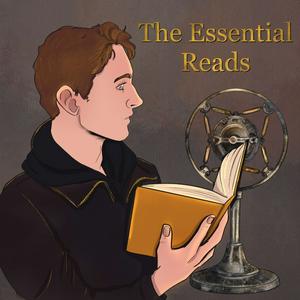
Acerca de The Essential Reads
The Essential Reads podcast is a collection of classic audiobooks from your favourite authors such as Orson wells, Robert Lewis Stevenson, Mary Shelley, and many more, narrated by Isaac Birchall. Join Isaac on his journey to help get these books to the masses in an easy accessible way. Support the show and Join the Book Club https://ko-fi.com/theessentialreads
Sitio web del podcastEscucha The Essential Reads, Relatos de la Noche y muchos más podcasts de todo el mundo con la aplicación de radio.net
Descarga la app gratuita: radio.net
- Añadir radios y podcasts a favoritos
- Transmisión por Wi-Fi y Bluetooth
- Carplay & Android Auto compatible
- Muchas otras funciones de la app
Descarga la app gratuita: radio.net
- Añadir radios y podcasts a favoritos
- Transmisión por Wi-Fi y Bluetooth
- Carplay & Android Auto compatible
- Muchas otras funciones de la app

The Essential Reads
Escanea el código,
Descarga la app,
Escucha.
Descarga la app,
Escucha.
 Colombia